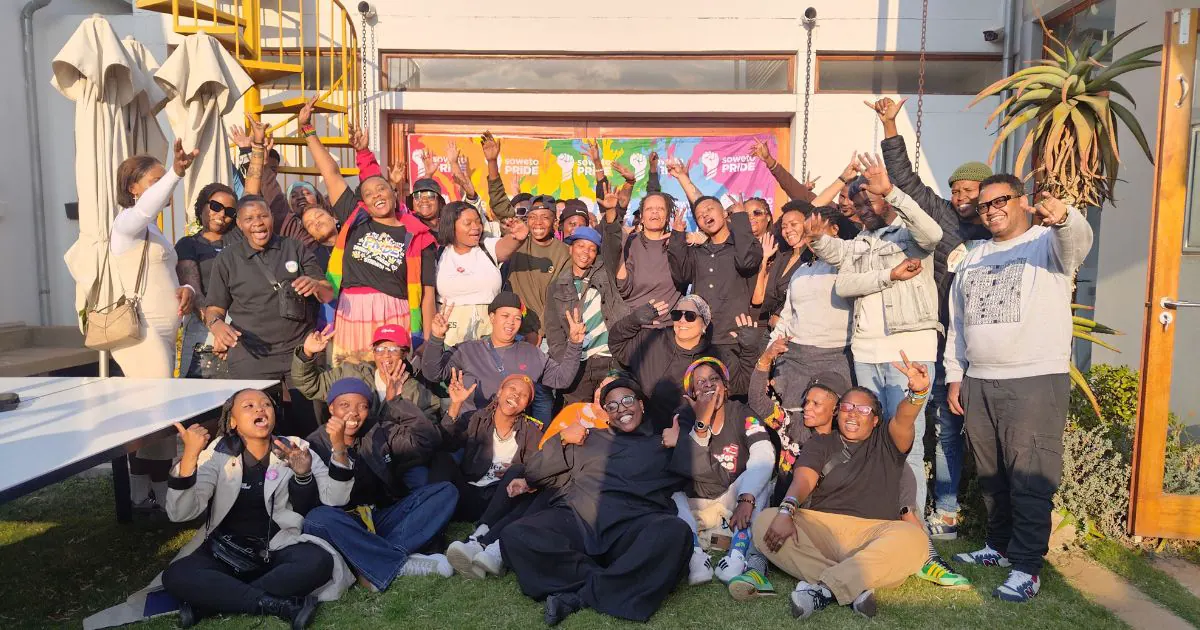
The Forum for the Empowerment of Women (FEW), House of Ditsie, and Kasi 2 Kasi hosted a Narrative Justice event in Johannesburg on September 19, ahead of the 22nd Soweto Pride. The event, held at the House of Iranti in Brixton, brought together young queer people from the Vaal and East Rand for a day of relaxation, conversation, yoga, and film screenings. This initiative aimed to create a space for healing, connection, and storytelling within the queer community. The event was a collaborative effort to center queer narratives and provide a platform for queer individuals to share their stories.
Jade Madingoane, executive director of FEW, emphasized the importance of narrative justice, which is rooted in the lived experiences of queer people. She highlighted that queer stories are often told on behalf of the community, rather than by the community itself. Madingoane stressed that sparking conversations around queer stories is crucial, as it allows queer individuals to narrate their own stories in their own voices. This approach enables the community to reclaim their narratives and challenge dominant discourses.
The event began with a yoga session led by Nicole from House of Ditsie, creating a relaxed atmosphere for attendees. The session also included tarot readings, offering participants an opportunity for reflection and spiritual connection. This was followed by the screening of four films, two of which featured South African television producer, writer, and actor Thishiwe Ziqubu. The films showcased the lives of queer individuals from different walks of life, providing a platform for representation and visibility.
Thishiwe Ziqubu, who played the character Shado in one of the films, attended the event and spoke about the importance of queer representation. Ziqubu emphasized that marginalized communities need to see themselves represented on screen, and that this representation can provide a voice and a sense of being seen and heard. As a transgender non-binary man, Ziqubu highlighted the significance of seeing oneself reflected in media, and the impact it can have on one's sense of identity and belonging.
The event also featured a conversation between Dr. Beverly Ditsie and Thishiwe Ziqubu about the importance of queer storytelling. Audience members were given an opportunity to engage with Ziqubu through questions and commentary. Dr. Ditsie emphasized the power of collaboration, highlighting that organizations can achieve more when working together rather than in isolation. The partnership with FEW was particularly important, as the community approaches another Soweto Pride.
For Dr. Ditsie, the Narrative Justice event was an example of what can be achieved when organizations collaborate and center queer narratives. She emphasized that queer people need to be at the forefront of telling their own stories, rather than relying on external narratives. The event provided a platform for queer individuals to reclaim their stories and challenge dominant discourses.
The Narrative Justice event demonstrated the importance of creating opportunities for queer people to tell their stories in their own voices. As Ziqubu put it, seeing queer people represented on screen can offer something fundamental: it makes them feel seen and heard. The event was a celebration of queer storytelling and a testament to the power of collaboration and community.
Key points
- Queer community comes together for Narrative Justice event in Johannesburg
- Event aimed to create a space for healing, connection, and storytelling within the queer community
- Collaboration between organizations is crucial for centering queer narratives and promoting representation