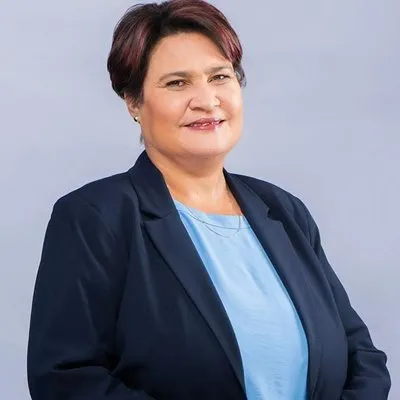
Namibia's Deputy Minister of Industries, Mines and Energy, Gaudentia Kröhne, has challenged NamPower to reduce the country's dependence on imported electricity. Speaking at the launch of NamPower's 2026-2030 Integrated Strategic Business Plan, Kröhne emphasized the critical role of the electricity sector in the country's industrialization ambitions. She highlighted the need for Namibia to process more of its minerals locally, grow businesses, and create jobs. Kröhne's speech was delivered by John Titus, Director of Energy in the Ministry of Industries, Mines and Energy.
Kröhne stated that the government's Sixth National Development Plan aims to achieve 70% national electricity access by 2030. This goal is to be achieved alongside increased local generation and stronger transmission infrastructure. She stressed that access to electricity has little meaning if it is beyond people's means, emphasizing the need for electricity affordability. Kröhne urged NamPower to make greater use of Namibia's renewable-energy resources, including solar and wind power, to reduce reliance on imported electricity.
The Deputy Minister pointed out that while regional electricity trade will remain important, NamPower should work towards reducing the country's dependence on imported power. This should be achieved while ensuring that electricity remains competitively priced. Kröhne noted that investment across the electricity system, including generation, transmission lines, energy storage, and skilled technical personnel, will be required to achieve this goal. She cited the Rosh Pinah solar plant and the Omburu battery project as examples of investments that could contribute to Namibia's transition towards greater use of renewable energy.
Kröhne also urged NamPower to support the expansion of electricity access, particularly in communities that remain without reliable power. She suggested that extending the conventional grid to every settlement may not always be the fastest or most affordable option. Instead, smaller local electricity systems and solar solutions could provide alternatives for some remote communities. Kröhne called on NamPower to work with regional electricity distributors and local authorities to identify practical electrification solutions.
The Deputy Minister emphasized the need for electrification projects to move quickly from planning and procurement to actual connections. She used the analogy that "a family cannot cook with a tender document" to stress the importance of swift implementation. Kröhne also linked reliable and affordable electricity to Namibia's plans to increase local value addition in the mining sector. She cited lithium as an example, where mining is just the beginning of the economic value chain.
Kröhne highlighted the potential impact of the transition to electric vehicles in Namibia. She noted that the country will need charging infrastructure and reliable electricity as electric transport expands. This transition could also enable Namibia to use more locally generated electricity within the transport sector rather than relying entirely on imported fuel. On innovation, Kröhne called on NamPower to create opportunities for engineers, technicians, and younger employees to develop and test new ideas.
The Deputy Minister emphasized that affordability remains a major concern, particularly for households that struggle to pay connection fees or purchase sufficient prepaid electricity. She noted that the government must continue providing support through electrification funding and targeted assistance. The Electricity Control Board must consider both affordability and reliable supply when reviewing electricity costs and tariffs. Ultimately, Kröhne stated that the success of NamPower's strategic plan should be measured by its impact on ordinary Namibians.
Key points
- Deputy Minister Gaudentia Kröhne challenges NamPower to reduce Namibia's dependence on imported electricity.
- NamPower's strategic plan aims to achieve 70% national electricity access by 2030.
- Kröhne emphasizes the need for electricity affordability and reliable supply in Namibia.