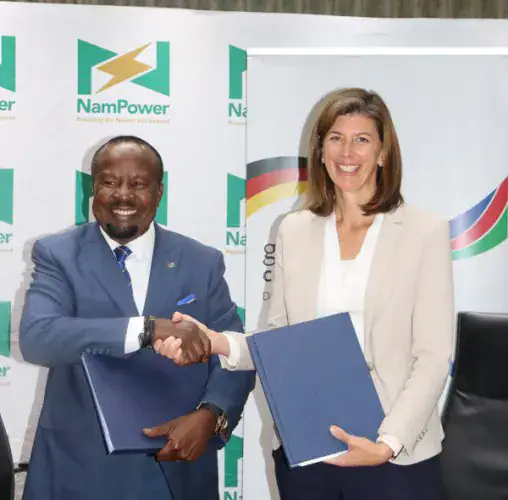
NamPower, Namibia's state-owned power utility, has set ambitious targets to increase its electricity self-sufficiency and renewable energy share. By 2028, the company aims to achieve 80% electricity self-sufficiency, and by 2030, it plans to generate 70% of its electricity from renewable sources. To achieve these goals, NamPower is advancing a generation and transmission expansion programme.
The current electricity landscape in Namibia presents several challenges. NamPower's installed generation capacity stands at 565 MW, while the maximum demand is approximately 700 MW. As a result, the utility imports about 47% of the country's electricity, with 46% coming from import power purchase agreements and 1% from Southern African Power Pool market purchases. Electricity demand is projected to increase by 40% from 4600 GWh in 2027 to 6500 GWh by 2033.
To address the supply gap and improve the integration of renewable energy into the national grid, NamPower is investing in new generation and transmission infrastructure. The company is developing several projects, including the 51 MW/51 MWh Omburu Battery Energy Storage System, which is scheduled to begin commercial operations in December 2026. This project is supported by a EUR20 million grant from Germany's KfW and N$100 million from NamPower.
Another major project under development is the 100 MW Rosh Pinah Solar Photovoltaic facility in the //Karas Region, with a projected cost of N$1.52 billion. Commercial operations are scheduled for April 2027, with funding provided jointly by KfW Development Bank and NamPower. Additionally, NamPower is developing the 40 MW Otjikoto Biomass Power Project, which is expected to be completed in the fourth quarter of 2027.
The Otjikoto Biomass Power Project is designed to generate approximately 300 GWh annually using wood chips harvested from encroacher bush within a 100 km radius of the facility. The project is expected to create more than 1500 direct jobs across construction, operations, and bush harvesting. Its financing package includes up to EUR100 million in debt funding from the French Development Agency, EUR28 million in combined climate grants, and N$400 million from the Namibian government.
Alongside generation investments, NamPower is planning three major 400 kV transmission corridors to increase grid capacity and accommodate additional electricity generation. The proposed projects include the 160 km Angola-Namibia transmission interconnector, the 270 km Omatando-Otjikoto 400 kV line, and the approximately 460 km Auas-Kokerboom 400 kV line. These transmission projects aim to facilitate bilateral electricity trade, increase electricity transfer capacity, and provide additional capacity for wind and solar power generation.
Beyond the projects scheduled for completion by 2028, NamPower has identified 1205 MW in longer-term strategic generation projects. These include the 430 MW Baynes Hydropower Project, 300 MW of large-scale wind generation, and more than 250 MW of flexible liquefied natural gas and gas-fired generation. NamPower has already secured N$900 million in grant funding to support its battery storage and biomass initiatives.
Key points
- NamPower targets 80% electricity self-sufficiency by 2028 and 70% renewable energy share by 2030.
- The company is investing in new generation and transmission infrastructure to address the supply gap and improve the integration of renewable energy into the national grid.
- NamPower has identified 1205 MW in longer-term strategic generation projects to further increase its electricity generation capacity.
Reporting sources
- NamPower targets 80% electricity self-sufficiency by 2028 · Windhoek Observer