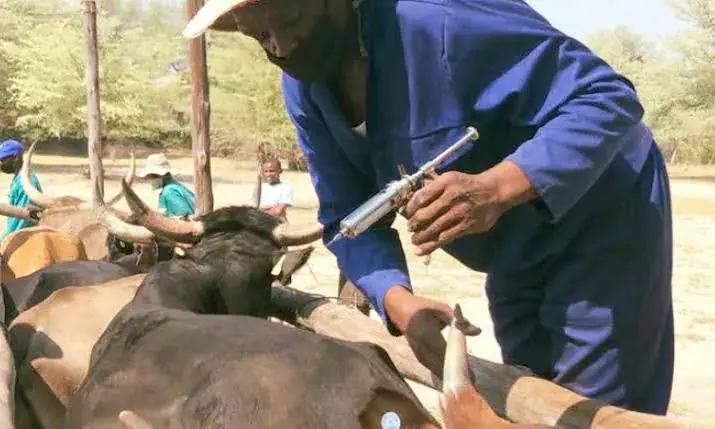
Members of parliament in Namibia have expressed concerns that the government's allocation of N$179 million to combat foot-and-mouth disease (FMD) may be insufficient to support affected farmers. The lawmakers raised these concerns during a debate on the 2026/27 mid-year budget review in the National Assembly. They emphasized the need for the government to do more to protect livestock farmers, particularly in light of the anticipated El Niño, which could impact rainfall and food production.
The allocation was announced by Finance Minister Ericah Shafudah last week, as part of the 2026/27 mid-year budget review. The funds were raised by reducing the spending budgets of all government offices, ministries, and agencies by 2%. However, some MPs questioned whether the allocation would provide enough support to farmers affected by the outbreak. Affirmative Repositioning MP George Kambala called for a livestock restocking programme to help communal farmers recover from the effects of the disease.
MPs also emphasized the need for the government to strengthen veterinary services, improve livestock identification and tracking systems, and provide more support to farmers. Kambala noted that removing value-added tax on imported agricultural inputs would provide limited relief if farmers could not sell their livestock due to disease restrictions. Meanwhile, MP Willem Amutenya urged the government to ensure that the N$179 million produces tangible results for farmers.
Amutenya called on the authorities to provide veterinary officials with enough equipment, improve disease monitoring, and keep farmers informed about the outbreak. He also suggested that the government assess the financial losses suffered by farmers and consider relief measures for those affected. Additionally, he recommended improvements to abattoirs and slaughterhouses in northern communal areas, particularly north of the veterinary cordon fence, to improve access to meat.
Other MPs, including Namibia Economic Freedom Fighters member Kalimbo Iipumbu, emphasized the need for the government to invest more in veterinary services, water infrastructure, livestock support, and disease control. Iipumbu noted that agriculture should create jobs and contribute to economic growth, rather than relying mainly on government support. He urged the government to increase local food production to reduce Namibia's dependence on imports and protect households from changes in international food prices.
The mid-year budget review, tabled on 22 October, lowered expected growth for 2026 to 2.3% from the 3.1% projected in February, mainly due to a forecast decline in diamond output. The review also highlighted the need for the government to support key sectors, including agriculture. The FMD outbreak has had a significant impact on the livestock sector, with about 240 workers at Savanna Beef Processors facing uncertainty over their jobs and incomes after the export abattoir was forced to halt operations.
The government's response to the FMD outbreak and the concerns raised by MPs will be crucial in determining the impact on the livestock sector and the broader economy. The authorities will need to balance the allocation of resources with the need to support affected farmers and prevent further spread of the disease. The implementation of measures to strengthen veterinary services, improve disease monitoring, and support farmers will be critical in mitigating the effects of the outbreak.
Key points
- Namibian MPs warn that the government's N$179 million allocation to fight FMD may be insufficient to support affected farmers.
- MPs call for the government to strengthen veterinary services, improve livestock identification and tracking systems, and provide more support to farmers.
- The FMD outbreak has had a significant impact on the livestock sector, with about 240 workers facing uncertainty over their jobs and incomes.