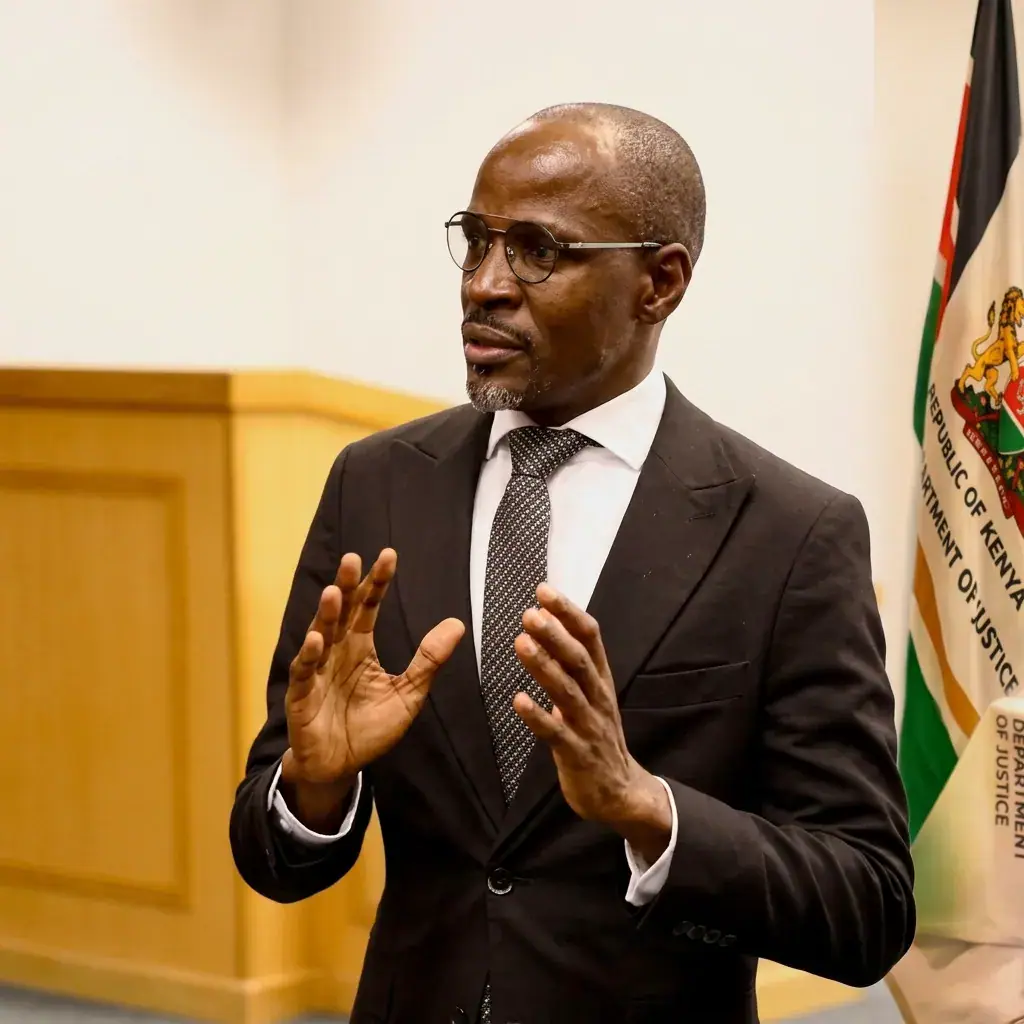
Namibia's Justice and Labour Relations Minister, Wise Immanuel, has sparked a national debate after questioning the practice of mothers naming their children. Speaking at a cultural event at the University of Namibia's Ogongo campus, Immanuel expressed concerns over the impact of this practice on the relationship between fathers and their children. He asked what culture allows a mother to name a child instead of the father, highlighting the changes in traditional practices.
Immanuel raised concerns that the practice of mothers naming children may contribute to fathers distancing themselves from their children. He suggested that when fathers feel excluded from decisions regarding their children, including the naming process, it may lead to confusion and affect their connection to the child. The minister described these changes as part of "cultural imperialism," which he believes is contributing to confusion in communities, particularly in marriages and relationships.
Immanuel's comments have elicited mixed reactions from various stakeholders. University of Namibia academic Petrus Mbenzi provided some context, noting that women have traditionally played a role in naming children. According to Mbenzi, the practice of naming a child is generally associated with the baby's father or paternal family, but a woman or nurse who assists a mother during childbirth can also name the baby based on the circumstances surrounding the child's birth.
Mbenzi further explained that in some cases, mothers and fathers give each other chances to name their babies. However, not everyone agrees with Immanuel's views. Masubia Traditional Authority senior councillor Raphael Mbala shared his cultural perspective, stating that in his culture, a child is named by both parents' families, usually by the grandparents. According to Mbala, the mother cannot name the child, as she would not know where to get the name from.
Mbala's comments highlight the diversity of cultural practices in Namibia. While Immanuel's concerns about the impact of changing traditional practices on family relationships are valid, others argue that mothers should have a say in naming their children. The debate is likely to continue, with different stakeholders weighing in on the issue.
The issue has significant implications for Namibian society, particularly in the context of cultural and social change. As the country continues to grapple with issues of identity and cultural heritage, Immanuel's comments have sparked a necessary conversation about the importance of preserving traditional practices while also acknowledging the role of women in modern society.
The minister's remarks have also raised questions about the role of government in promoting cultural preservation and social cohesion. As the debate continues, it remains to be seen how Namibian society will navigate these complex issues and find a balance between tradition and modernity.
Key points
- Minister Wise Immanuel questions the practice of mothers naming children
- Cultural practices around child naming vary across Namibia
- The debate highlights the challenges of balancing tradition and modernity in Namibian society