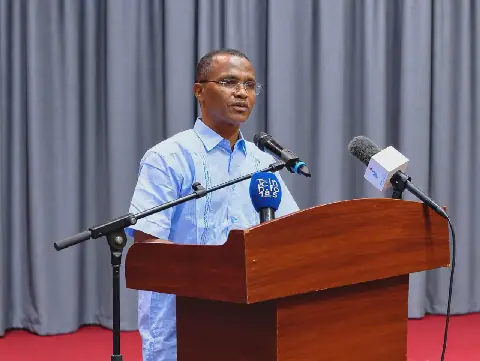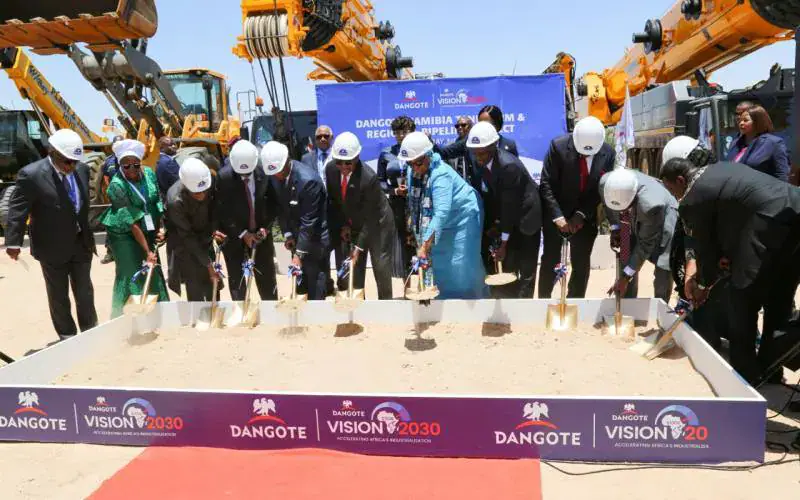
Namibia's President Netumbo Nandi-Ndaitwah has emphasized the need for the country to approach major investments with confidence and ambition. During a panel discussion with Nigerian industrialist Aliko Dangote, Nandi-Ndaitwah highlighted the importance of translating investments into lasting economic value for Namibia. This comes as the country considers Dangote Industries' proposed N$41 billion tank farm and regional pipeline project at Walvis Bay.
The proposed project is significant, not only in financial terms but also in what it could mean for Namibia's position in the regional energy and logistics economy. The project envisages a major petroleum storage facility and an extensive pipeline network connecting Walvis Bay to inland markets and neighbouring countries. This presents an opportunity for Namibia to strengthen its fuel security, reduce dependence on road transportation, and improve the efficiency of petroleum distribution.
The project also offers the possibility of attracting complementary investments, expanding economic activity, and creating opportunities for Namibian businesses. However, President Nandi-Ndaitwah emphasized that welcoming investment and asking informed questions about its broader economic implications are not mutually exclusive. There are legitimate considerations around local employment, skills transfer, procurement opportunities, land arrangements, taxation, and the participation of Namibian enterprises.
The comparison with Kenya's proposed Dangote refinery project, where government equity participation has reportedly featured in discussions, raises questions about whether Namibia considered similar participation. Different projects require different financing and ownership structures, and public equity is not necessarily the best option in every circumstance. What matters is that Namibia secures an arrangement that delivers sustainable national value.
By 2030, Namibia hopes to have commercial oil production underway. If exploration translates into commercially viable production, the country could find itself occupying a very different position in the regional energy market. The Dangote pipeline infrastructure could provide an opportunity to distribute locally refined petroleum products into the SADC region, and Walvis Bay could become an integrated energy hub serving both imported and domestically produced petroleum products.
Namibia should approach the relationship with a clear understanding of its own long-term economic ambitions. The opportunity extends beyond fuel storage and transportation, encompassing logistics, manufacturing, engineering, technology, employment, and the development of local businesses capable of participating in an expanding regional energy economy. Ultimately, Namibia should neither approach this investment with suspicion nor regard the announcement of billions as an achievement in itself.
The real measure of success will be whether the project contributes to economic diversification, strengthens domestic capacity, and positions the country to capture greater value from its strategic geographical location and emerging energy resources. Namibia should welcome Dangote's investment with confidence and have the ambition to see what this investment could make possible beyond Dangote's immediate commercial interests. That is how a country turns investment into development, and opportunity into national prosperity.
Key points
- Namibia's President Netumbo Nandi-Ndaitwah encourages the country to approach major investments with confidence and ambition.
- The proposed N$41 billion Dangote Industries tank farm and pipeline project could strengthen Namibia's fuel security and improve the efficiency of petroleum distribution.
- The project's success will be measured by its contribution to economic diversification, domestic capacity, and the country's strategic geographical location.
Reporting sources
- FEATURE | Dangote’s N$41 billion investment: Seeing beyond the opportunity · Windhoek Observer