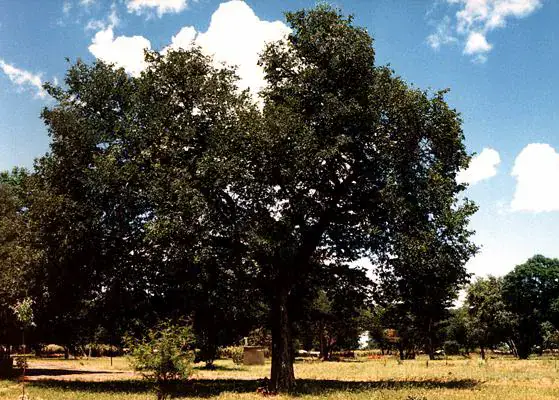
Namibia's indigenous forests are facing significant threats from illegal logging, unsustainable harvesting, and cross-border timber trafficking. The country's Zambezi teak, a valuable hardwood scientifically known as Baikiaea plurijuga, is particularly at risk. Found in the north-eastern woodlands, especially in the Kalahari Sands Woodland areas of the Zambezi and Kavango regions, Zambezi teak is prized for its durable, dense timber used in high-value products such as furniture, flooring, and construction.
The history of exploitation of Namibia's timber resources dates back to the twentieth century, with renewed commercial activity recorded from around 2010. By 2018, the situation had become alarming, prompting the government to introduce a moratorium to protect vulnerable woodlands. However, investigations by the Organised Crime and Corruption Reporting Project (OCCRP) revealed that the problem persisted, with extensive stockpiles of protected hardwoods, including Zambezi teak, kiaat, and African rosewood, documented despite restrictions.
Namibia has also been identified as a transit route for timber originating in neighbouring countries, including Angola, Zambia, and the Democratic Republic of Congo. Consignments move through Walvis Bay towards international markets. The scale of the challenge is reflected in recent enforcement figures, which show that more than 1,600 pieces of illegal timber and 1,800 planks from Angola and Zambia were seized in Kavango West during 2023 and 2024.
Authorities have continued to seize large quantities of illegally harvested timber, with 3,556 planks confiscated in Kavango East and Kavango West between April 2025 and March 2026. During the same period, 14 admission-of-guilt fines and six court cases involving alleged forestry offences were reported. These figures demonstrate that illegal timber activity remains a serious concern, even as enforcement efforts intensify.
In a positive development, Namibia launched its Wood Identification and Screening Centre in Windhoek in March 2026. Supported by over $2 million in American assistance, the facility uses forensic technology to identify timber species and help investigators establish whether consignments match their declared documentation. This is an important step towards making environmental crime investigations more scientific and prosecutable.
Preserving Zambezi teak and Namibia's indigenous forests is crucial for maintaining biodiversity, providing habitats for wildlife, protecting soils, regulating water systems, and sustaining communities whose livelihoods depend on forest resources. Properly managed, these forests can support local industries, skilled employment, and sustainable rural development. However, this requires effective inspections, reliable permits, adequate forestry personnel, cross-border cooperation, and meaningful prosecutions.
To ensure the long-term sustainability of its forests, Namibia must establish a comprehensive national forest inventory, determine sustainable harvesting limits, and ensure that communities benefit from protecting, rather than depleting, their natural resources. Legal harvesting, where permitted, must be transparent, traceable, and environmentally responsible. The country's forests are part of its natural heritage and an inheritance owed to future generations, making it essential to protect them for the benefit of all.
Key points
- The Namibian government introduced a moratorium in 2018 to protect vulnerable woodlands, but investigations revealed that the problem of illegal logging persisted.
- The Wood Identification and Screening Centre in Windhoek uses forensic technology to identify timber species and help investigators establish whether consignments match their declared documentation.
- Preserving Zambezi teak and Namibia's indigenous forests is crucial for maintaining biodiversity, providing habitats for wildlife, and sustaining communities whose livelihoods depend on forest resources.