The Namibia Statistics Agency has released the secondary census reports, revealing substantial differences in quality of life across the country. The reports examine emigration, fertility, and mortality rates, providing insight into the country's demographic trends. The data shows that women in rural areas have a higher average number of children compared to their urban counterparts. This disparity is also reflected in education, with women who completed secondary school having fewer children on average.
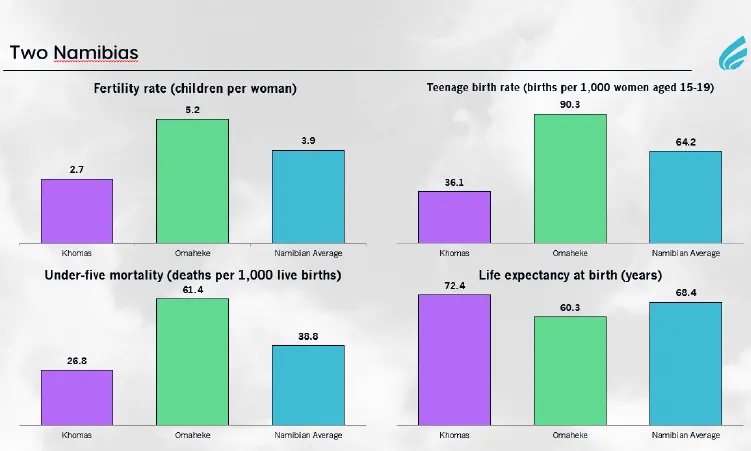
Fertility rates vary significantly across regions, with women in Kavango West expected to have 5.5 children over their lifetimes, double the 2.7 children of women in the Khomas region. The gap in fertility begins early, with the Kavango East region recording 108 births per 1,000 girls aged 15 to 19, and the Zambezi region recording 104. In contrast, the Khomas region has a significantly lower rate of 36 births per 1,000 girls in the same age group.
Education plays a significant role in predicting the number of children a woman will have. Women who completed secondary school have an average of 2.9 children, compared to 5.7 children for those who have never attended formal schooling. This highlights the importance of education in family planning and reproductive health. The data also shows that rural children face a higher under-five mortality rate compared to their urban counterparts.
Survival rates differ vastly across the country, with the Omaheke region recording 61.4 deaths of children under five years old per 1,000 live births. This is more than double the 26.8 deaths per 1,000 live births in the Khomas region. Hardap has the highest infant mortality rate in the country, at 42.6 deaths per 1,000 live births. Life expectancy at birth also varies significantly, with Khomas having a life expectancy of 72.4 years, compared to 60.3 years in Omaheke.
The significant disparities in quality of life have led to a substantial number of Namibians moving to other regions in search of a better life. About a quarter of those born in the Ohangwena region and a fifth of those from Omusati and Kavango West now live in a different region. The main reasons for migration are work and education, with 28% and 22% of migrants citing these reasons, respectively.
The centralised nature of the country has contributed to the disparities in quality of life. The poor quality of services and opportunities in other regions drives individuals to move in search of a better life. Decades of developmental neglect have exacerbated this issue. While some services in Khomas and Erongo are not of the best quality, the outcomes are worsened by the congestion of these services.
The 2023 census highlights the need for targeted interventions to address the disparities in quality of life across Namibia. The data shows that a third of Khomas residents and 41% of those in Erongo were born elsewhere in the country. This migration trend is likely to continue unless the underlying issues of poverty, lack of education, and poor healthcare are addressed. The government and stakeholders must work together to develop strategies that promote equitable development and improve the quality of life for all Namibians.
Key points
- Women in rural areas have a higher average number of children compared to their urban counterparts.
- The Omaheke region has one of the highest under-five mortality rates in the country.
- A significant number of Namibians are migrating to other regions in search of better opportunities.