Prime Minister Tjitunga Elijah Ngurare's recent emphasis on public procurement creating meaningful economic opportunities for Namibian businesses, particularly small and medium enterprises, young people, women, and communities, is a step in the right direction. As the country's largest procurer of goods and services, the government's spending can significantly stimulate domestic economic activity or perpetuate dependence on external suppliers. However, existing policies have not yielded desired results, raising concerns about the effectiveness of the current system.
The legislative framework aimed at promoting local participation has been in place for years, but many local businesses continue to struggle in translating opportunities into sustainable enterprises. By the end of September 2026, only 84 of approximately 260 public procuring entities had submitted procurement plans for the 2026/27 financial year. According to the Institute for Public Policy Research, only eight entities had met the December 2025 statutory deadline. This delayed submission of procurement plans puts smaller local enterprises at a disadvantage.
The tardy publication of procurement plans favors larger and better-capitalized companies, which are naturally better positioned to respond than smaller local enterprises. These larger companies have the necessary resources to prepare bids, arrange financing, secure materials, recruit employees, and establish partnerships. In contrast, smaller local businesses often lack the resources to compete effectively, undermining the objective of empowering local businesses.
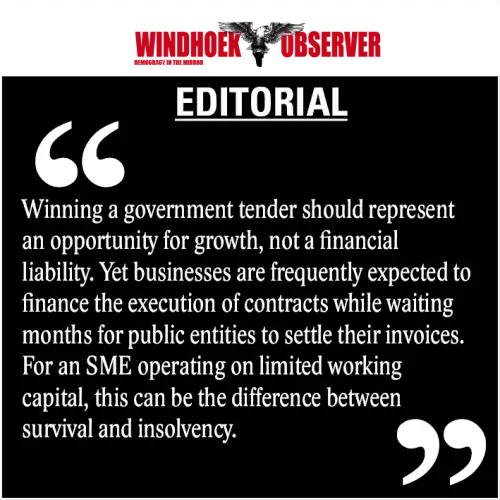
The problem is further compounded by delayed payments to local businesses that win government tenders. These businesses are frequently expected to finance the execution of contracts while waiting months for public entities to settle their invoices. For small and medium enterprises operating on limited working capital, this can be the difference between survival and insolvency. The delayed payments highlight the need for government to recognize prompt payment as an economic policy instrument.
To address these challenges, public institutions should honour contractual payment obligations within stipulated periods, with accountability mechanisms for persistent delays. Procurement officers and accounting officers must understand that their administrative inefficiencies have real consequences for businesses and employees. Additionally, local businesses must accept that preferential treatment cannot become a permanent substitute for competitiveness.
The objective should be to develop enterprises capable of meeting quality standards, delivering on time, and competing beyond Namibia's borders. To achieve this, a more deliberate partnership between government, financial institutions, and the private sector is required. Working-capital facilities, contract financing, and accessible credit guarantees could help viable Namibian businesses execute government contracts without carrying unsustainable financial risks.
Ultimately, the success of Namibia's procurement policy should not be measured by the number of tenders awarded to local companies but by the number of sustainable businesses created, jobs secured, products manufactured, and industries developed. Government tenders should be more than contracts to supply goods and services; they should be instruments of economic transformation.
Key points
- Government procurement plans must be published on time to empower local businesses.
- Delayed payments to local businesses winning government tenders hinder their growth.
- A partnership between government, financial institutions, and the private sector is necessary to develop competitive local enterprises.
Reporting sources
- Procurement must become an engine of local economic growth · Windhoek Observer