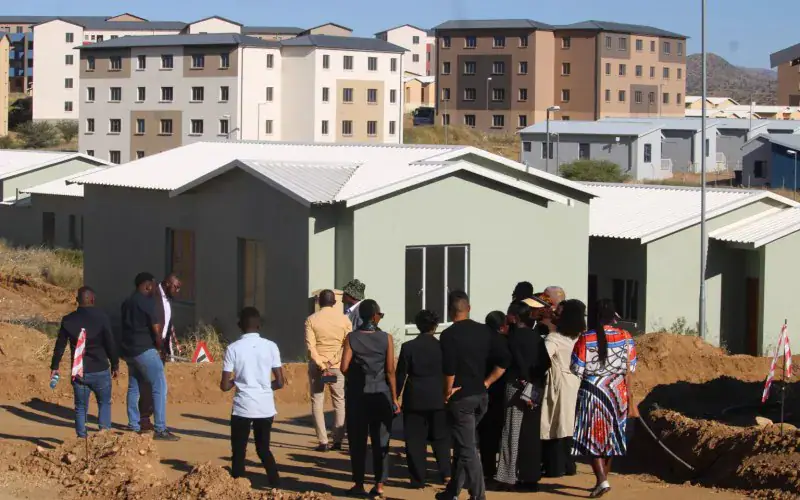
The National Housing Enterprise (NHE) of Namibia has requested N$662.29 million from the ministry of urban and rural development to expand affordable housing and serviced land delivery over the next three financial years. This request was made during a presentation to the parliamentary standing committee on urban and rural development and land reform on September 23, 2026. The funding is part of the Informal Settlement Upgrading and Affordable Housing Programme (ISUAHP).
The NHE plans to use the three-year allocation to finance the servicing of 4,215 residential plots and the construction of 750 affordable housing units. The programme is expected to create about 10,000 employment opportunities. According to the NHE, N$149.32 million is required during the 2026/27 financial year. The enterprise is working with the Development Bank of Namibia and the Development Bank of Southern Africa under a N$1.5 billion financing programme covering 27 project sites across the country.
The financing programme is intended to support about 2,300 housing units and 1,350 serviced plots. Since records began in 1983, the NHE has delivered 23,719 houses. Between January and August 2026, it completed 197 houses across nine towns, with Swakopmund accounting for 82 units and Walvis Bay 47 units. The enterprise plans to complete a further 249 houses by December 2026 at an estimated investment of N$80.06 million.
The planned construction includes 34 units at Meersig at a cost of N$22 million and 54 units in Oshakati at N$15.6 million. The NHE also reported a land-servicing pipeline of 891 erven in Katima Mulilo, Nkurenkuru, Walvis Bay, and Kalkfeld. It identified the availability of serviced land as a key constraint to sustained housing delivery.
The NHE updated Parliament on the Mass Housing Development Programme (MHDP), under which about 4,620 houses were completed and handed over before the programme stalled between 2015 and 2022. Following government decisions to transfer ownership back to the NHE, the enterprise is now managing 891 commenced but incomplete units.
The NHE said it would continue managing beneficiary allocations, bond registrations, mortgage financing, and loan-book administration for occupied units. For incomplete units, the enterprise said 401 technically outstanding houses would only be allocated after construction, structural certification, and the resolution of remedial or legal issues.
The NHE has received N$949.6 million in state recapitalisation during its 33-year statutory existence, averaging about N$28.7 million annually. To reach its target of delivering more than 5,000 houses over five years, the NHE called for accelerated land release, dedicated funding for bulk infrastructure, faster statutory approvals, and closer coordination between government departments, local authorities, and utility providers.
Key points
- The National Housing Enterprise seeks N$662.29m to expand affordable housing and serviced land delivery.
- The programme is expected to create about 10,000 employment opportunities.
- The NHE has delivered 23,719 houses since records began in 1983.