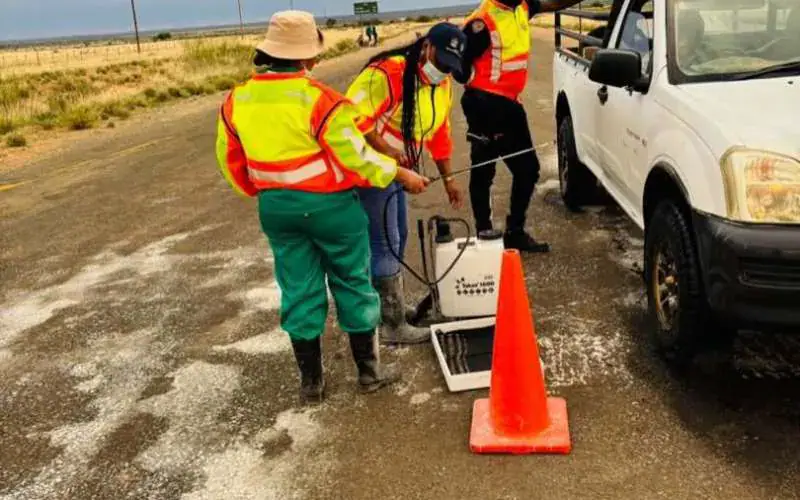
The Foot-and-Mouth Disease (FMD) outbreak has put Namibia's livestock industry under considerable pressure, raising important questions about disease control, recovery of international status, market access, and long-term sustainability. Producers need to understand the current situation and what lies ahead to make informed decisions about their farming businesses. The outbreak has geographically limited, but further testing is essential to confirm that the virus has not spread beyond the identified area.
Surveillance is crucial in managing an FMD outbreak, as it helps establish the true extent of the disease. Veterinary authorities must determine whether the virus has spread to other areas through animal movements, direct contact, or other transmission routes. Systematic surveillance, sampling, testing, and investigation of possible contact with infected animals or properties are necessary to contain the disease and demonstrate that the rest of the country is free from infection.
Ring vaccination is an important disease-control tool during an outbreak, as it reduces the susceptibility of animals to infection and can limit the spread of the virus. However, vaccination does not mean that the disease has been eradicated, and vaccinated animals must still be monitored. Veterinary authorities need to establish whether the virus is continuing to circulate, making further vaccination, surveillance, and testing essential.
Livestock movement restrictions cannot be lifted simply because of the financial consequences for farmers who depend on regular sales to maintain cash flow. Relaxing restrictions before the extent of the outbreak is properly understood could result in further spread of the virus, making disease control more complicated and delaying Namibia's efforts to regain its international disease status and restore access to export markets.
Producers have an important role to play in protecting the livestock industry during this period. They should strictly comply with all current DVS movement requirements, avoid unnecessary movement of livestock, maintain good biosecurity practices on their farms, monitor animals for signs of disease, and report any suspicions immediately to the nearest state veterinarian.
The immediate priority is to contain the outbreak and establish, through scientific evidence, that the virus has not spread beyond the affected area. The economic pressure on producers is real, and the industry wants to return to normal trading conditions as soon as possible. However, the success of the disease-control process will determine how quickly Namibia can move towards restoring its international status.
Efforts to restore market access must begin in parallel with disease-control activities. These are two equally important priorities that must be pursued simultaneously. While one focuses on containing the outbreak and establishing the evidence required for the recovery of disease status, the other must focus on identifying market opportunities, engaging potential trading partners, and addressing the requirements for reopening markets.
Key points
- Producers must strictly comply with all current DVS movement requirements and maintain good biosecurity practices on their farms.
- Surveillance and vaccination are crucial in managing the FMD outbreak and restoring Namibia's international disease status.
- Efforts to restore market access must begin in parallel with disease-control activities to minimize delays for the industry.
Reporting sources
- FMD: Understanding the challenges, the road to recovery · Windhoek Observer