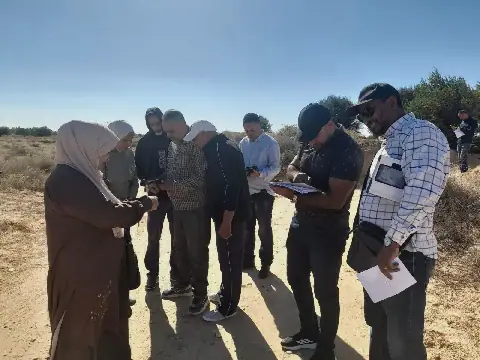
Members of Namibia's parliament have expressed concerns over the financial and administrative management of the country's land reform programme. During a debate on the appointment of four new members to the Land Reform Advisory Commission, lawmakers highlighted weaknesses in the management of land-reform resources. They warned that these weaknesses could undermine the work of the commission. The concerns were raised as the commission is set to play a crucial role in advising the government on land reform matters.
The concerns were led by Member of Parliament Inna Hengari, who emphasized the need for proper accounting and financial management in the land reform programme. She noted that the Land Acquisition and Development Fund's latest audit, for the financial year ending March 31, 2025, resulted in an adverse audit opinion. The Auditor-General found that the fund's financial statements did not fairly present its financial position and cash flows. Hengari cited the recognition of approximately N$24.4 million in land-tax income on a cash basis instead of an accrual basis as a major concern.
Hengari also pointed out that receivables were overstated by about N$11 million due to amounts paid by farm owners to the Namibia Revenue Agency but not yet transferred to the fund. She noted that this land-tax accounting problem was not new, having appeared in audit findings since 2018. Hengari called for reconciliation between the land valuation roll, land-tax assessments, collections by the NamRa, and transfers to the fund. She emphasized that reliable records were necessary for public accountability and to ensure that every Namibian could see how land-reform resources were raised, managed, and used.
Swapo Party chief whip Alpheus !Naruseb also weighed in on the debate, calling for a broader approach to land reform. He suggested that the commission should examine the entire land-reform value chain, rather than focusing solely on the acquisition of farms. !Naruseb emphasized that land reform should be measured not just by hectares acquired or beneficiaries resettled but by whether the land became a productive economic asset, supported livelihoods, created employment, and contributed to food security.
!Naruseb also highlighted concerns over the transparency of allocations of resettlement farms, the utilization of farms already acquired, and whether some acquired farms remained unallocated. He noted that limited financial resources, high market prices, and the withdrawal of farms offered for sale continued to affect the speed and scale of land acquisition. The commission would also need to address security of tenure, access to finance, productive infrastructure, and monitoring of beneficiaries after resettlement.
Swapo Party member of parliament Ephraim Nekongo warned that delays in constituting the commission could slow land acquisition and resettlement decisions. He emphasized that land remained closely linked to identity, culture, livelihoods, and dignity, arguing that no Namibian should feel landless in their own country. Nekongo noted that resettlement must not end with simply placing a beneficiary on a piece of land, but rather should include training, capacity building, resources, and empowerment to ensure that resettled farms were used productively.
The debate followed parliament's consideration of the appointment of four new members to the Land Reform Advisory Commission: Cardini Corinda Corinne Roman, Jeaneth Kuhanga, Mona-Lisa Nicoletta McKay, and Ermelinda L. Tjimune. The commission is established under the Agricultural (Commercial) Land Reform Act of 1995 and advises the minister on matters relating to land reform. The new members will serve for three years, from May 1, 2026, to April 30, 2029.
Key points
- Members of Namibia's parliament have called for greater oversight of the country's land reform programme, citing concerns over financial management and transparency.
- The Land Acquisition and Development Fund's latest audit resulted in an adverse audit opinion due to financial statement discrepancies.
- The Land Reform Advisory Commission will play a crucial role in advising the government on land reform matters, with a focus on ensuring accountability and transparency.