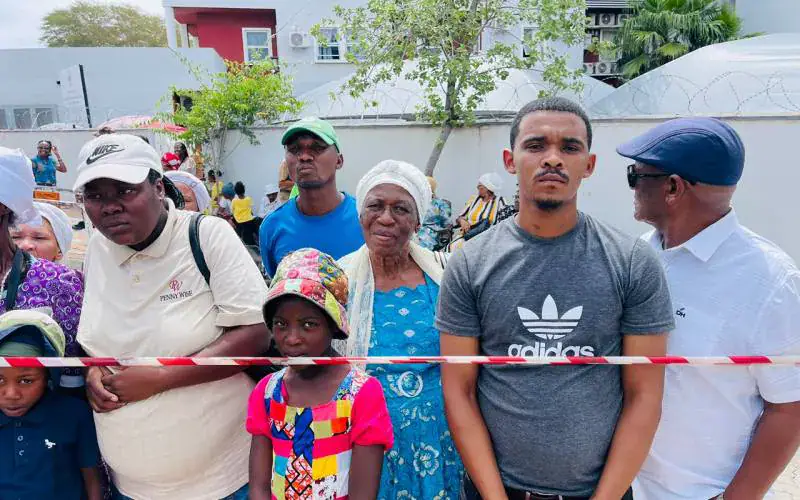
In a recent development, the /Khomanin traditional community in Namibia staged a protest at the Ministry of Agriculture, Fisheries, Water and Land Reform in Windhoek. The community had been seeking an audience with Minister Inge Zaamwani-Kamwi over a submission made in February requesting the acquisition of five farms during the current financial year. The community members insisted on meeting the minister directly, citing their prolonged efforts to reach her since February.
The /Khomanin community's February submission, compiled by a 10-member committee, emphasized the importance of land to their identity, spirituality, culture, and survival. They argued that poverty reduction and food security cannot be achieved without access to land. The community also claimed historical dispossession of their ancestral land in the Khomas region during German colonial rule and South African administration, despite Namibia's independence in 1990.
Minister Zaamwani-Kamwi eventually met with the community, explaining that she had been informed about their petition and planned peaceful demonstration. She acknowledged receiving their communication and said it had been referred to the relevant department for consideration. The minister mentioned that she had received a draft response and was reviewing it before signing, and eventually committed to providing feedback by Thursday morning at 11:00.
The community's land demands have been ongoing, with concerns over the allocation of land through the Land Acquisition and Development Fund. They questioned why returnees from Botswana had benefited from the allocation of six farms while the /Khomanin continued to seek access to land. This protest follows earlier demonstrations and disputes over land allocation, traditional authority, and the removal of Chief Julianne Qawanas.
The /Khomanin Association chairlady, Verona !Kharuxas, had previously told Urban and Rural Development Minister James Sankwasa that the community had traditionally removed Chief Qawanas and also sought her decertification for government contractual purposes. The community has expressed its determination to continue pursuing its demands for land and accountability from the government.
The minister's promised response on Thursday is expected to clarify the ministry's position on the issues raised in the February submission. The community's demands highlight the ongoing struggles of Namibia's historically dispossessed communities in accessing land and seeking redress. The government's response will be crucial in addressing these concerns and promoting land reform in the country.
The /Khomanin community's protest and the minister's response promise underscore the complexities of land reform and allocation in Namibia. The community's experiences reflect the broader challenges faced by many communities in the country, and the government's actions will be closely watched by stakeholders and observers. The outcome of this situation will likely have implications for land policy and reform efforts in Namibia.
Key points
- The /Khomanin community's protest led to a 24-hour response promise from Minister Inge Zaamwani-Kamwi on their land demands.
- The community's February submission emphasized the importance of land to their identity, spirituality, culture, and survival.
- The government's response will be crucial in addressing the community's concerns and promoting land reform in Namibia.
Reporting sources
- Zaamwani promises /Khomanin 24-hour response after land protest · Windhoek Observer