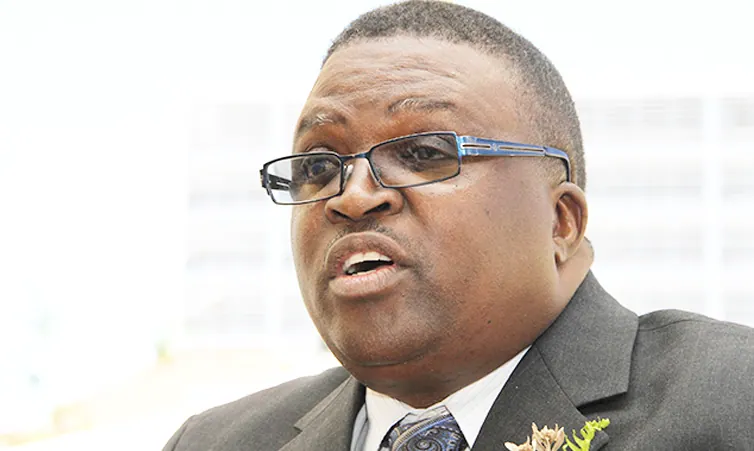
The Namibian government's health ministry has been accused of irregular spending, with the auditor general, Junias Kandjeke, revealing widespread financial irregularities. According to Kandjeke's audit report for the financial year ended 31 March 2025, the ministry spent over N$13 million through improper emergency procurement. The report states that despite listing items in its annual procurement plan, the ministry bypassed standard tender processes. This spending has raised concerns about the ministry's financial management.
The audit report highlights that the ministry used emergency procurement methods for acquiring various goods and services amounting to N$13 221 043.97. However, the goods and services did not meet the criteria or requirements for an emergency procurement method. In addition to emergency procurement abuses, the audit exposed illegal retrospective payments made to suppliers without required approvals. The accounting officer incurred N$377 313 during the financial year for goods and services delivered in previous financial years without proper authorisation.
The report also highlights another case of legal non-compliance, adding that an invoice amounting to N$245 844, relating to the 2023/24 financial year, was paid during the 2024/25 financial year without obtaining the required treasury authorisation. Furthermore, four operational subdivisions were exceeded by N$52 554, and one developmental subdivision was exceeded by N$4.4 million, resulting in unauthorised expenditure under Section 6(a)(iii) of the State Finance Act.
The auditor general flagged significant discrepancies in the ministry's financial record-keeping, including a negative miscellaneous revenue balance of N$27.6 million. The absence of detailed supporting schedules explaining the nature and origin of the negative balance limits transparency and increases the risk of misstatement in the financial statements. This has raised concerns about the ministry's financial management and accountability.
The audit findings further reveal millions paid in fixed overtime to staff members who were on full-time study leave, without evidence that any work was performed. This irregular spending has raised questions about the ministry's adherence to labour laws and regulations. The ministry's financial statements have also been understated due to outstanding commitments of N$36.7 million that were not submitted for processing before year-end.
Despite the irregular spending, the ministry left N$352.7 million (3.11%) of its total budget unspent. The auditor general, Junias Kandjeke, says this money could have been used for other national priorities. The ministry's failure to utilise its budget effectively has raised concerns about its financial planning and management.
The health ministry's irregular spending has significant implications for the country's healthcare system. The ministry's failure to manage its finances effectively may impact its ability to provide quality healthcare services to Namibians. The auditor general's report highlights the need for the ministry to improve its financial management and adhere to financial regulations to ensure accountability and transparency.
Key points
- The Namibian health ministry spent N$13 million without proper tender processes.
- The ministry made unauthorised payments to suppliers and exceeded budget allocations.
- The auditor general's report highlights significant discrepancies in the ministry's financial record-keeping.