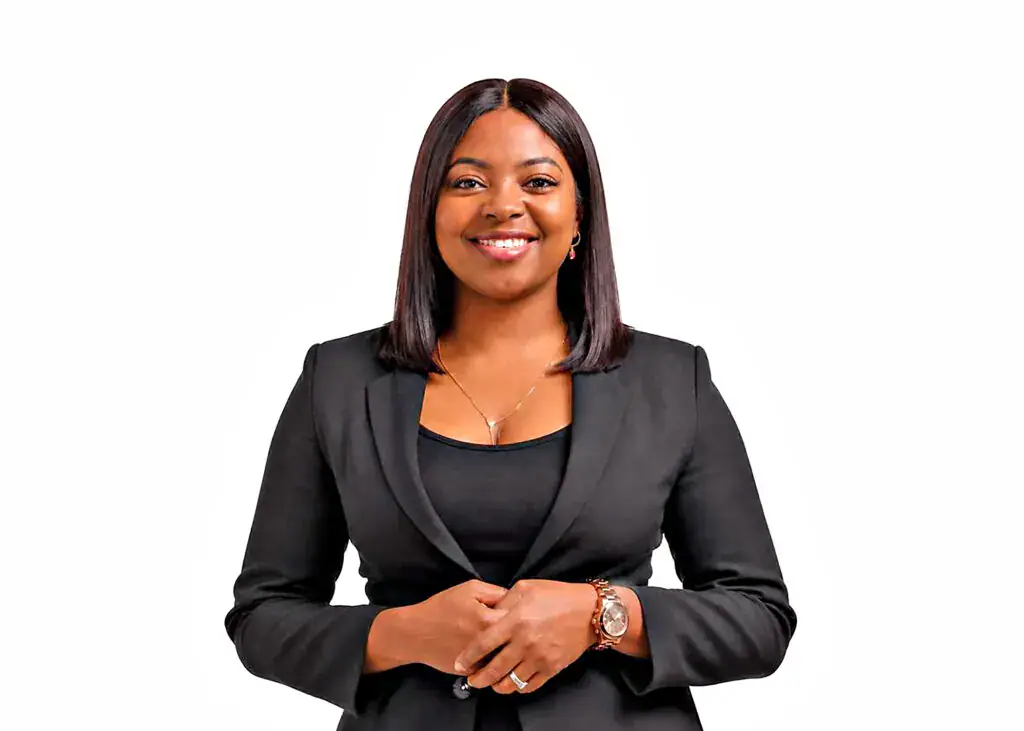
Sesilia Nekwaya-Okafor, Principal Economist at the Bank of Namibia, is investigating whether access to financial services in Namibia translates to tangible benefits for women. Her inquiry stems from her experience as a young intern at the Bank of Namibia, where she helped prepare a survey that raised questions about the effectiveness of financial inclusion. Today, Nekwaya-Okafor uses data to understand who benefits and who remains underserved, particularly women, rural communities, and informal businesses.
Nekwaya-Okafor's work with the Alliance for Financial Inclusion (AFI) focuses on helping policymakers measure the impact of financial services on people's lives. In 2026, AFI recognized her contribution with its Technical Leadership Award, and the Bank of Namibia received AFI's Institutional Leadership Award for its policy work and contribution to learning among member institutions. Nekwaya-Okafor emphasizes that national averages often mask disparities, and it's essential to break down data by gender, age, and location to create effective policies.
Nekwaya-Okafor's concern is that women are often treated as a single group, despite their diverse financial circumstances. She highlights the differences between a formally employed woman in Windhoek and a woman running a market stall or small farm in a rural area. Nekwaya-Okafor's interest in these questions is rooted in her upbringing in an underprivileged community in Windhoek, where her mother raised five children with limited resources. A Bank of Namibia bursary she received in high school was a turning point, creating opportunities that might have been difficult to access otherwise.
Nekwaya-Okafor's experience outside the central bank informs her understanding of financial inclusion. She co-manages Mrs Okafor's Kitchen, a restaurant she co-founded, which has employed five women and provided practical skills development. Running the restaurant has exposed her to the pressures facing small businesses, including managing cash flow, meeting operating costs, and accessing finance. Nekwaya-Okafor often looks at issues from two perspectives: as an economist and as an entrepreneur.
According to the 2025 Namibia Financial Inclusion Survey, the country's financial exclusion rate fell to 14% from 22% in 2017. Women recorded higher overall financial inclusion than men, at 87.6% compared with 84.2%. However, overall inclusion does not necessarily mean equal access to individual financial products. The survey found that 11.7% of women borrowed from formal banks, compared with 14.1% of men, highlighting the need to examine financial inclusion beyond account ownership.
Nekwaya-Okafor emphasizes that having a bank account and saving regularly does not necessarily mean that women can access credit to expand their businesses or protect themselves against unexpected financial difficulties. Hildeberth-Grace Haingura, a Windhoek-based student and entrepreneur, faces financial challenges while running her handmade beaded accessories business. She struggles to access finance, which limits her ability to purchase materials, improve production, and market her products.
Nekwaya-Okafor's work aims to determine whether policies and interventions are improving people's circumstances. Her involvement in Namibia's Financial Sector Strategy strengthened her interest in measuring the results of financial sector policies. Collecting data is only part of the work; the information must help determine whether policies are effective in addressing the needs of women and other underserved groups.
Key points
- Nekwaya-Okafor's work highlights the importance of collecting data to understand the impact of financial services on women's lives.
- The 2025 Namibia Financial Inclusion Survey shows that women have higher overall financial inclusion than men, but there is still a need to examine financial inclusion beyond account ownership.
- Nekwaya-Okafor's experience as an economist and entrepreneur informs her understanding of financial inclusion and economic empowerment.