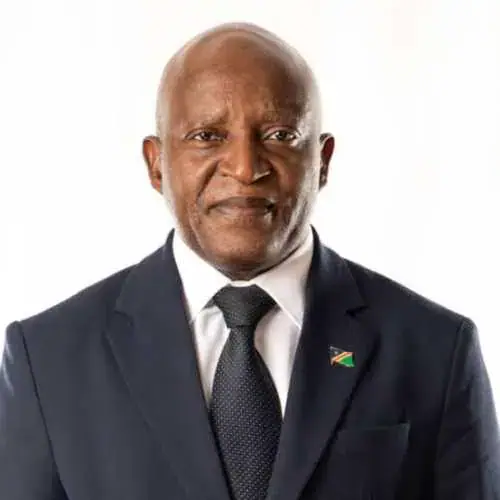
Namibia is facing significant challenges in achieving its 2030 Sustainable Development Goals, with persistent poverty, unemployment, hunger, and sanitation issues. According to Prime Minister Elijah Ngurare, the country must accelerate implementation and strengthen accountability, with only four years remaining to achieve the 17 global development goals. The country's progress is hindered by a lack of reporting coverage for nearly three in every 10 development indicators.
The 2025 Sustainable Development Goal (SDG) Indicator Framework and Portal, launched in Windhoek, shows that Namibia can report on 176 of the 248 indicators assessed, representing 71% reporting capacity. However, 72 indicators lack reporting coverage, despite an improvement from 66% in 2019. This gap is concerning, given the country's persistent development challenges and the difficulty of measuring the effectiveness of government interventions.
An independent international assessment, the 2025 Sustainable Development Report, identified major challenges and stagnating progress in Namibia's efforts to eradicate poverty, eliminate hunger, and promote decent work and economic growth. The report also highlighted challenges in clean water and sanitation, while progress towards reducing inequalities could not be assessed due to unavailable information.
The country's sanitation challenges are particularly concerning, with approximately 40% of households lacking adequate sanitation, and nearly seven out of every 10 households in marginalized communities without a toilet. According to the World Bank, 28.3% of Namibia's population lived below the international poverty line of $3 per person per day in 2025, while unemployment stood at 36.9% of the working-age population.
Prime Minister Ngurare emphasized that Namibia cannot afford to continue with 'business as usual,' particularly as poverty, income inequality, youth unemployment, food insecurity, and unequal access to social services remain major concerns. He stressed that the availability of statistics at one point in time does not necessarily mean the information remains current or can be used for subsequent reporting periods.
The updated framework provides a statistical foundation for assessing Namibia's development progress by identifying relevant indicators, available data sources, responsible institutions, and reporting gaps. The accompanying online portal aims to improve public access to development statistics and strengthen transparency, while encouraging government institutions to regularly update and validate the information they produce.
Namibia's implementation of the global agenda is aligned with the Sixth National Development Plan, covering 2025/26 to 2029/30, which prioritizes wealth creation, improved equality, and employment creation. The country's 2026 Sustainable Development Report index ranking places it 100th out of 169 countries, with an overall score of 67.1, highlighting the distance remaining between current development outcomes and the ambitions of the 2030 Agenda.
Key points
- Namibia lacks reporting coverage for 72 development indicators, hindering its ability to track progress towards the 2030 Sustainable Development Goals.
Reporting sources
- Missing data threatens Namibia’s 2030 development targets · Windhoek Observer