Namibia and Germany have agreed to refocus their 36-year development partnership on climate resilience, water security, biodiversity, green energy, and skills development. This new phase of cooperation aims to support Namibia's green industrialisation ambitions while expanding trade and investment opportunities, creating jobs, and protecting livelihoods and the environment. The partnership, which began in 1990, has been instrumental in Namibia's development since its independence. The two governments have identified two main areas of cooperation: advancing climate-resilient water security, biodiversity, and livelihoods, and harnessing Namibia's potential for a just green energy and skills transformation.
The strategic dialogue between the two governments, held in Opuwo last week, resulted in a renewed commitment to support Namibia's development priorities. The partnership will continue to support climate-resilient access to safe water and the sustainable management and conservation of Namibia's biodiversity. This cooperation is expected to contribute significantly to Namibia's sixth National Development Plan, particularly its priorities on economic growth and resilience, human development, and environmental sustainability. By focusing on green initiatives, the partnership aims to create a more sustainable and environmentally conscious future for Namibia.
Germany has been one of Namibia's main development partners since independence in 1990. The two countries have described their relationship as entering a new phase, with a focus on green energy and skills development. The partnership will support Namibia's efforts to mitigate the effects of El Niño within the existing cooperation framework. This includes exploring ways to enhance Namibia's preparedness and resilience to climate-related shocks. By working together, Namibia and Germany aim to reduce the impact of climate change on the country's development.
The green energy sector will form a key part of the partnership, with Germany and Namibia seeking to harness the country's renewable energy potential to support economic and ecological transformation. This cooperation will help Namibia transition to a more sustainable and environmentally friendly energy mix. The partnership will also focus on strengthening labour-market-oriented technical and vocational education and training, particularly to help young people access employment opportunities in Namibia's emerging green economy.
The governments of Namibia and Germany have identified advancing climate-resilient water security, biodiversity, and livelihoods as a key area of cooperation. This includes supporting climate-resilient access to safe water and the sustainable management and conservation of Namibia's biodiversity. By working together, the two countries aim to protect livelihoods and the environment while promoting sustainable development. The partnership will also contribute to Namibia's sixth National Development Plan, which prioritises economic growth and resilience, human development, and environmental sustainability.
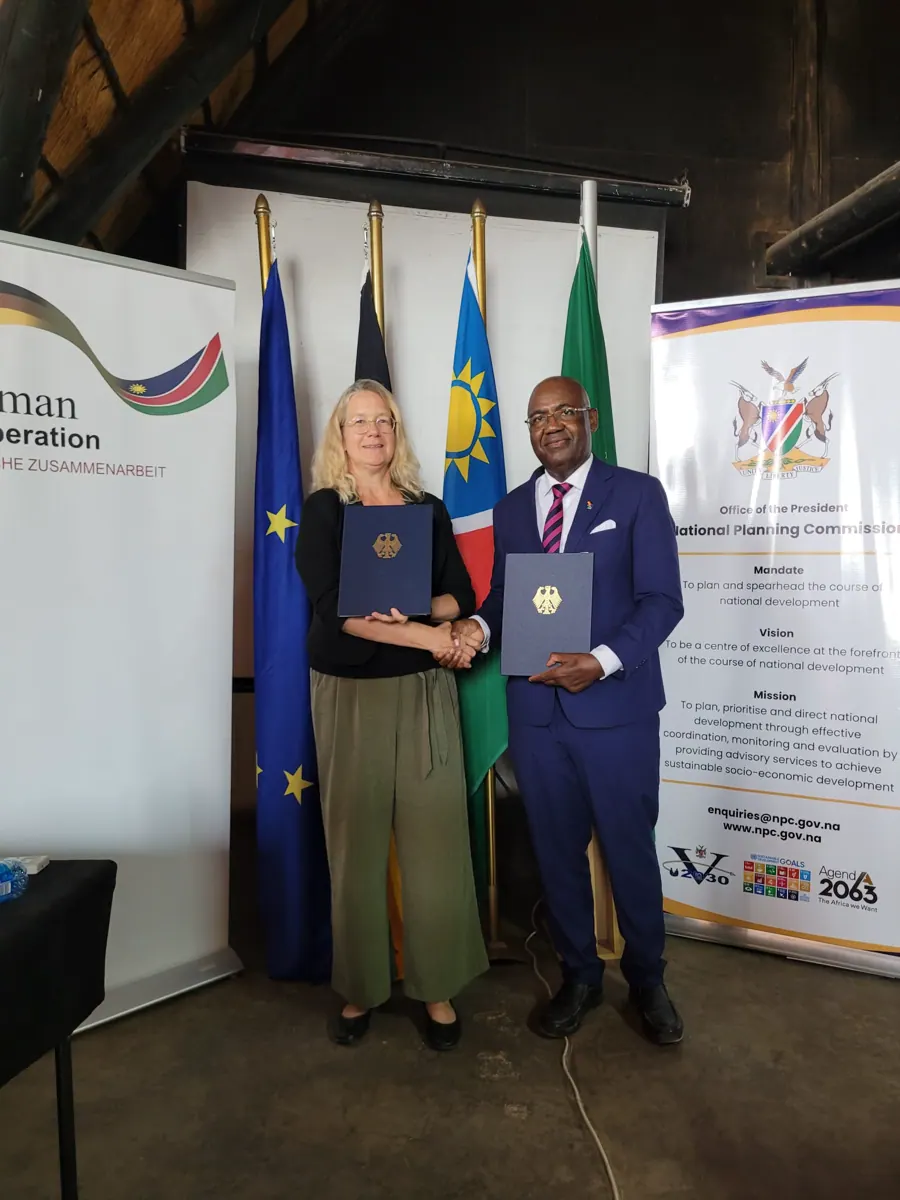
Birgit Gerhardus, head of division Southern Africa BMZ, and I-Ben Nashandi, executive director in the National Planning Commission, have played key roles in shaping the new phase of cooperation between Namibia and Germany. Their efforts have helped to refocus the partnership on green initiatives and sustainable development. The two countries have expressed their commitment to working together to achieve their development goals and promote a more sustainable future.
The renewed partnership between Namibia and Germany is expected to have a significant impact on the country's development. By focusing on green initiatives, the partnership aims to create jobs, promote economic growth, and protect the environment. The two countries have agreed to explore ways of supporting Namibia's preparedness to mitigate the effects of El Niño, which will help to reduce the impact of climate-related shocks on the country's development.
Key points
- The partnership will focus on advancing climate-resilient water security, biodiversity, and livelihoods.
- The partnership aims to harness Namibia's potential for a just green energy and skills transformation.
- The cooperation will contribute to Namibia's sixth National Development Plan, prioritising economic growth and resilience, human development, and environmental sustainability.