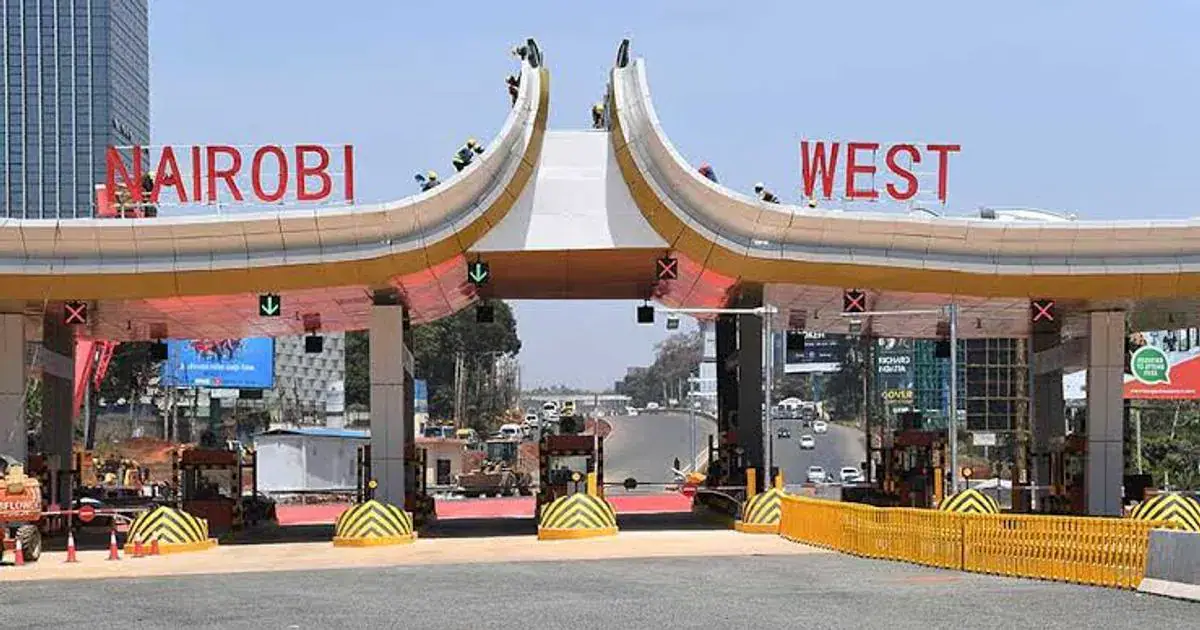
The Nairobi Expressway, a 27.1-kilometre elevated corridor, generated KSh 9.62 billion in revenue during the twelve months leading to December 2025. However, operational and financing costs climbed to KSh 14.73 billion over the same duration, leaving the project deep in the red. This widening deficit underscores the prolonged path to profitability for the flagship infrastructure asset.
The expressway saw an average of more than 245,333 vehicles utilise the double-decker route each day during the fourth quarter, marking a substantial jump from the daily average of 70,000 cars recorded in 2024. Despite the increased traffic, the financial woes of the expressway have deepened due to rising costs outpacing growing toll revenue.
The Nairobi Expressway is managed by Moja Expressway, a local subsidiary of China Road and Bridge Corporation (CRBC). The highway requires motorists to pay between KSh 170 and KSh 500 per trip, depending on vehicle classification and distance travelled. Toll tariffs have remained static since 2024, anchored to an exchange rate of KSh 143.75 per US dollar and an inflation benchmark of 6.85 per cent.
Although the Kenyan shilling has since rallied to trade around the KSh 130 mark against the dollar, the Ministry of Transport opted against lowering user charges. Maintaining the tariff structure provided a financial cushion for the concessionaire, sparing the operator from even steeper operational deficits.
The expressway was built at an estimated cost of KSh 86.8 billion and represents Kenya's pioneering major venture under the Public-Private Partnership (PPP) model. CRBC is slated to operate the highway for 27 years to recoup its capital before handing the asset over to the state.
Across the entire concession lifecycle, the facility is projected to collect KSh 302.5 billion in gross receipts, yielding an estimated net profit of KSh 106.8 billion, averaging about KSh 3.9 billion annually. Despite the current balance-sheet strain, Treasury officials have highlighted the road’s broader economic footprint, citing dramatic reductions in urban travel times and rising real estate valuations along the arterial corridor.
The state is increasingly banking on toll concessions to modernise critical transport links while keeping external sovereign borrowing and fiscal deficits in check. Kenya has advanced plans for its second major toll project: the 210-kilometre Rironi-Nakuru-Mau Summit highway, valued at KSh 182.72 billion, which will be constructed and run under a 30-year toll concession.
Key points
- The Nairobi Expressway's financial shortfall widened to KSh 5 billion despite having over 245,000 cars paying tolls daily.
- The expressway's concessionaire, Moja Expressway, is a local subsidiary of China Road and Bridge Corporation (CRBC).
- The project features four- and six-lane dual carriageways built along Mombasa Road, Uhuru Highway, and Waiyaki Way, serviced by 11 toll plazas and interchanges.