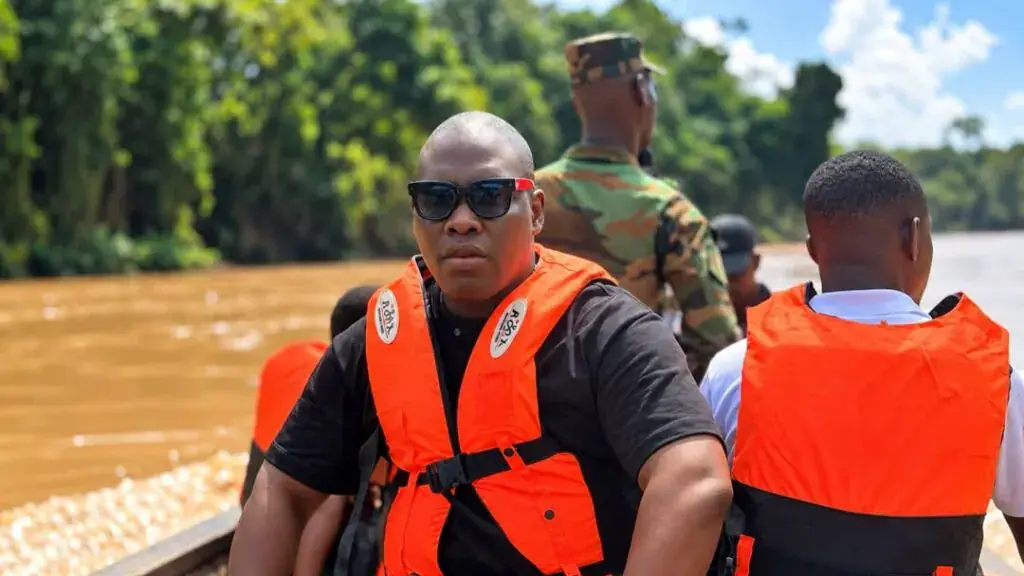
The National Anti-Illegal Mining Operations Secretariat (NAIMOS) has reported a significant decrease in illegal mining activities on the Tano River in Ghana. On October 30, 2026, NAIMOS spokesperson Paa Kwesi Schandorf announced that the number of changfan machines on the river has "greatly reduced" following months of raids. This development was shared with 15 journalists who visited the Tano River to witness the progress made under NAIMOS' Operation Water Shield campaign.
NAIMOS' Operation Water Shield, launched in September 2026, is an intelligence-led campaign targeting illegal mining along major river systems in Ghana. The campaign's priority water bodies include the Birim, Ankobra, Tano, Bia, Pra, and Offin rivers, as well as parts of the Black and White Volta systems. According to Schandorf, the operation has already recorded significant action on the Tano River, including the destruction of 92 changfan machines and the arrest of three suspected miners near the Jema-Asekrom Forest Reserve on October 19, 2026.
Despite NAIMOS' reported progress, residents of Jema-Asemkrom, a community near the Tano River, claim they are facing death threats from traditional leaders for exposing continued galamsey activity in their area. The residents made these allegations even after a NAIMOS taskforce visited and found mining still ongoing in their area. These accounts raise questions about the effectiveness of NAIMOS' efforts and whether the reduction observed on the stretch of river shown to journalists reflects the situation across the wider Tano basin.
NAIMOS has also been expanding its crackdown beyond the riverbanks to the supply chains that feed illegal mining. In recent operations, the secretariat seized 65 Changfang machines disguised as "fufu pounders" in Nzema East and Aowin, handing two suspects over to Enchi Police. This action followed an earlier push by NAIMOS to hunt down equipment sellers in Aowin and Enchi as part of its strategy to choke off the networks supplying machinery to illegal miners.
Schandorf cautioned against declaring victory too soon, noting that the destruction of hundreds of changfans on the Tano River does not immediately restore the river to its natural state. He emphasized that additional measures would follow under the Minister for Lands and Natural Resources, Emmanuel Armah-Kofi Buah, to protect and rehabilitate affected water bodies, in line with President John Dramani Mahama's vision for restoring water sources.
NAIMOS' efforts to combat illegal mining have been ongoing, with the secretariat conducting sustained enforcement efforts along the Tano River and other critical water bodies. The agency's Director of Operations, Colonel K.S. Appiah, has been credited with leading the sustained enforcement effort. NAIMOS has also been working to address the issue of illegal mining through community engagement and education.
The situation in Jema-Asemkrom highlights the challenges faced by communities affected by illegal mining and the need for sustained efforts to address the issue. The residents' allegations of threats and intimidation underscore the importance of protecting those who speak out against galamsey activity. NAIMOS has not addressed these allegations in its latest update, leaving concerns about the effectiveness of its efforts to combat illegal mining.
Key points
- NAIMOS reports a significant reduction in illegal mining on the Tano River.
- Residents of Jema-Asemkrom claim they face threats for exposing ongoing galamsey activity.
- NAIMOS' Operation Water Shield campaign aims to restore Ghana's water sources to their natural state.