A recent video circulating online showed a civilian woman lounging inside the cabin of NAF 930, filming herself and others mid-air like an influencer on a private jet. The incident has raised questions about the use of military aircraft for personal transportation. According to reports, the aircraft, along with its twin sister NAF 931, have been used for VIP transport, despite being configured for maritime patrol and Intelligence, Surveillance and Reconnaissance (ISR) missions.
The two ATR-42-500MP aircraft were part of a $73 million contract signed in March 2007 under the Olusegun Obasanjo administration and delivered in 2010 under the late President Umaru Musa Yar’Adua. The contract was between the Nigerian government and Alenia Aeronautica (now Leonardo of Italy) for two ATR-42MP aircraft, including crew training, logistics and spare parts. Nigeria became the first export customer for the type.
Before Nigeria, only the Italian Guardia di Finanza and the Italian Coast Guard operated the aircraft. The aircraft were delivered brand new in “green” configuration from ATR’s facility in Toulouse, France, before being converted to the maritime patrol configuration at Alenia’s plants in Brindisi and Turin-Caselle, Italy. While the first aircraft, NAF 930, was delivered in December 2009, the second aircraft, NAF 931, which crashed last Monday was formally delivered on March 29, 2010.
On October 15, 2022, NAF 930 made history as the first aircraft to land at the newly built Ekiti Cargo Airport. The ATR-42-500MP was deployed to commission the facility – a role typically reserved for Nigerian Civil Aviation Authority calibration aircraft, not a maritime patrol plane. On board was the then Minister of Aviation, Hadi Sirika.
The Nation newspaper reported it plainly: “The flight with registration number NAF 930 belonging to the Nigerian Air Force landed at the airport around 10:20 am.” A maritime patrol aircraft was used to cut a ribbon. That is not inter-agency support, that is abuse. Multiple online posts by civilians claim to have flown NAF 931, pointing to a pattern where family members and associates of the powerful treat military ISR assets as personal shuttles.
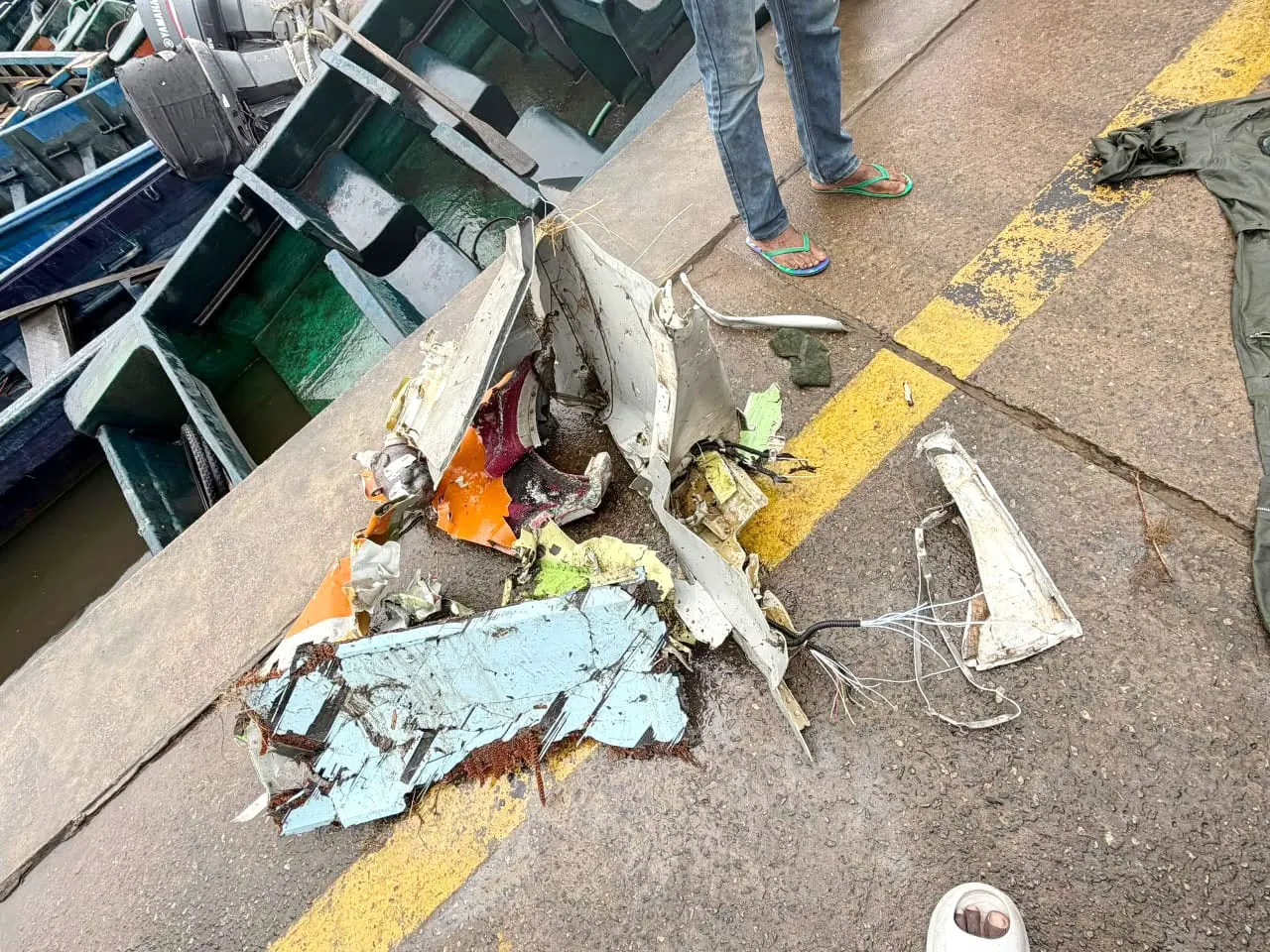
The crashed aircraft had returned from Programmed Depot Maintenance (PDM) in Germany in December 2024 after three years in storage. According to reports, since its return, the aircraft was deployed for “VIP movement, airlifting of students and personnel and other operational duties.” On its last day, it did not fly from Benin to Lagos as the NAF claimed, but developed an engine fault in Benin and was grounded overnight before taking off Monday morning for Lagos and crashing minutes after take-off.
The crash in Igbokoda was not an accident, but an inevitability of a system that prioritises the comfort of the powerful and their companions over the safety of the crew. Until the Nigerian government audits the flight logs of NAF 930 and 931 and until the Chief of the Air Staff explains to Nigerians why maritime patrol aircraft were carrying civilians, the blood of those 25 victims will remain on our collective conscience.
Key points
- The use of military aircraft for personal transportation has led to a fatal crash killing 25 people.
- The aircraft, meant for maritime patrol, were part of a $73 million contract signed in 2007.
- The incident has raised questions about the abuse of military assets and the need for accountability.