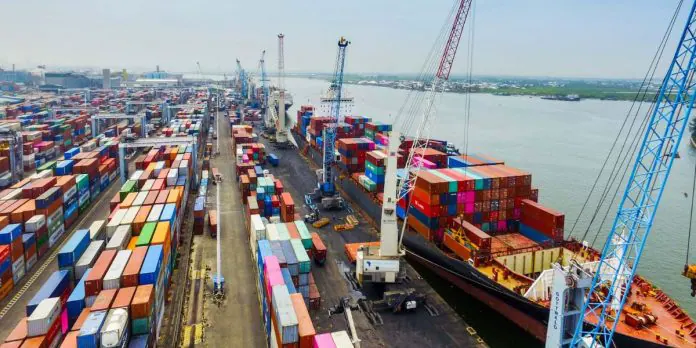
Nigerian manufacturers spent N1.35 trillion on alternative power in 2025, a significant increase from N1.11 trillion in 2024. This surge in expenditure is affecting the sector's competitiveness, despite showing signs of improvement. The real manufacturing output grew by 3.29 per cent year-on-year in Q1 2026, and capacity utilisation rose from 51.33 per cent in Q1 2025 to 57.50 per cent in Q2 2025.
The Manufacturers Association of Nigeria (MAN) disclosed these challenges at the opening ceremony of the Made-in-Nigeria Exhibition and the 54th Annual General Meeting (AGM) in Lagos. The event's theme was ‘Leveraging National Industrial Policy to Position Nigeria as Africa’s Industrial Hub’. MAN president, Otunba Francis Meshioye, highlighted that high energy costs are eroding gains in the sector.
Meshioye noted that energy remains a major cost factor for manufacturers, with expenditure supporting business continuity but also placing pressure on resources. He stated that this additional pressure could otherwise be applied to capacity expansion, technology acquisition, and productivity improvement. The dependence on imported inputs is another significant challenge.
In the first half of 2025, Nigeria imported raw materials worth N3.53 trillion, with about N1.72 trillion sourced from Asia alone. Meshioye warned that increasing local production of finished goods without strengthening domestic production of raw materials and intermediate inputs will limit local value addition. This situation calls for a strategic approach to boost industrial patronage.
Meshioye suggested that the upcoming national, state, and local government elections present an opportunity to drive growth by prioritising made-in-Nigeria items. He called on the Independent National Electoral Commission (INEC), political parties, and government agencies to source campaign materials, uniforms, and logistics locally. Furthermore, he urged President Bola Tinubu to fast-track the implementation of Executive Orders 003 and 005 and the Nigeria First Policy.
The director general of the National Institute for Policy and Strategic Studies (NIPSS), Prof. Ayo Omotayo, supported Meshioye's call. Omotayo stated that Nigeria cannot achieve a $1 trillion economy if manufacturing continues to contribute only 3.3 percent to GDP instead of the envisaged 25 percent. He cited India's success, where manufacturing contributes significantly to the country's economy.
Omotayo disclosed that NIPSS is working on a proposal to President Tinubu for a fast-track power solution dedicated to manufacturing. He challenged manufacturers to consider generating their own cheaper power rather than relying on the grid. Additionally, Omotayo called for a special raw materials policy to address the N3.4 trillion import bill and reduce dependence on foreign raw materials.
Key points
- Nigerian manufacturers spent N1.35 trillion on alternative power in 2025.
- Raw material imports hit N3.53 trillion in six months, affecting industrial competitiveness.
- MAN urges government support to drive growth and boost industrial patronage.