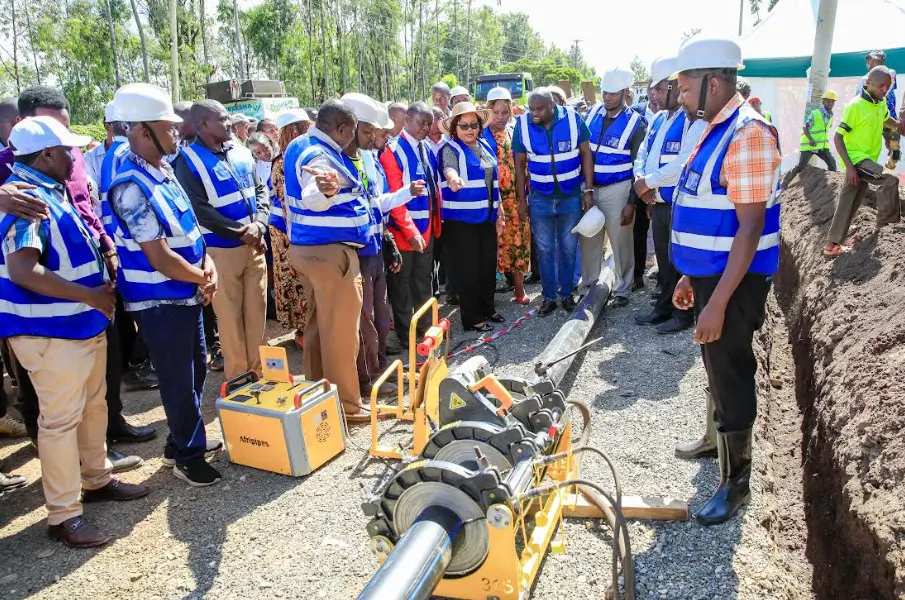
For years, thousands of residents in Mwea, Kirinyaga County, Kenya, relied on irrigation canals for drinking, cooking, and washing, exposing them to contaminated water and water-borne diseases. The situation is changing with the Mwea-Makima Water Project, providing clean and safe water to about 30,000 people in over 7,500 households across several wards. This development marks a significant shift for communities that previously depended on water from rice irrigation canals, which could expose residents to health risks from agricultural chemicals and other contaminants.
The Mwea-Makima Water Project, implemented by the Kirinyaga county government, has led to a substantial decline in water-borne diseases in the area. According to county health data, diarrhea cases recorded in Mwea dropped by 63% between the 2018/19 and 2025/26 financial years. Kirinyaga County Director of Public Health Peter Irungu stated that Mwea recorded 19,061 diarrhea cases in 2018/19, which decreased to 6,900 cases in 2025/26. This reduction demonstrates the importance of investing in safe water, sanitation, and hygiene.
Kirinyaga Governor Ann Waiguru emphasized that access to adequate water for domestic and irrigation purposes remains a priority for her administration. The county has invested in water pipelines, storage tanks, boreholes, and other infrastructure, implementing over 200 water projects across Kirinyaga during her tenure. These projects have improved access to clean water, supporting hygiene and sanitation in households and institutions. Governor Waiguru also pledged to complete ongoing water projects worth Sh100 million in Mwea before the end of her term.
The Mwea-Makima Water Project has extended water services to several areas, including Rurii, Mutiithi Town, Maendeleo, Thiba North and South, Haraka, Ngurubani Town, Kimbimbi, Mbui Njeru, and parts of Nyangati. County Executive Committee Member for Water Kinyua Mutugi stated that the project addressed a longstanding challenge that forced many families to depend on irrigation water for domestic use. He noted that water from irrigation canals could contain chemicals and other contaminants associated with agricultural activities, increasing residents' exposure to illnesses like typhoid, dysentery, and cholera.
Residents have reported a significant difference in their daily lives since accessing clean water. Henry Mugo, a hotel operator in Tebere Ward, stated that clean water has made a positive impact on businesses and households in areas that previously experienced difficulties getting reliable supplies. John Kaboco of Nyangati shared that the project has brought back memories of a time when residents had limited options and were forced to depend on irrigation canals or wait for rain. He noted that children were unable to drink the water, and residents could not clean clothes properly, leading to frequent illnesses.
The county government is complementing the gains in clean water provision with investments in sanitation infrastructure. The Kerugoya-Kutus Bulk Sewer Project has been constructed and operationalized to improve waste management and reduce health and environmental risks associated with the use of exhausters and other waste-disposal systems. Mutugi stated that the sewer project provides a more efficient way of managing waste in areas connected to the system, benefiting both public and private institutions.
The reduction in water-borne diseases in Mwea demonstrates the impact of investing in safe water, sanitation, and hygiene. Irungu warned that inadequate access to clean water and poor sanitation continue to expose communities to preventable diseases, including diarrhea-related illnesses, cholera, and dysentery, with children being the most vulnerable. The county government's efforts to improve access to clean water and sanitation infrastructure aim to sustain the gains made in Mwea and other areas.
Key points
- A 63% decline in diarrhea cases recorded in Mwea, Kirinyaga County, Kenya, following the implementation of the Mwea-Makima Water Project.
- The Mwea-Makima Water Project provides clean and safe water to about 30,000 people in over 7,500 households across several wards in Kirinyaga County.
- The Kirinyaga county government has implemented over 200 water projects across the county, improving access to clean water and supporting hygiene and sanitation in households and institutions.