The Kenyan Government has announced plans to address the rising mental health challenges among young creatives, including stress, depression, anxiety, and substance abuse. Youth Affairs, Creative Economy and Sports Cabinet Secretary Salim Mvurya stated that the mental health and overall well-being of young creatives remains a strategic priority for the Government. He cited the high-pressure environment faced by young artists and creatives, characterised by financial instability, intense social media scrutiny, and cyberbullying.
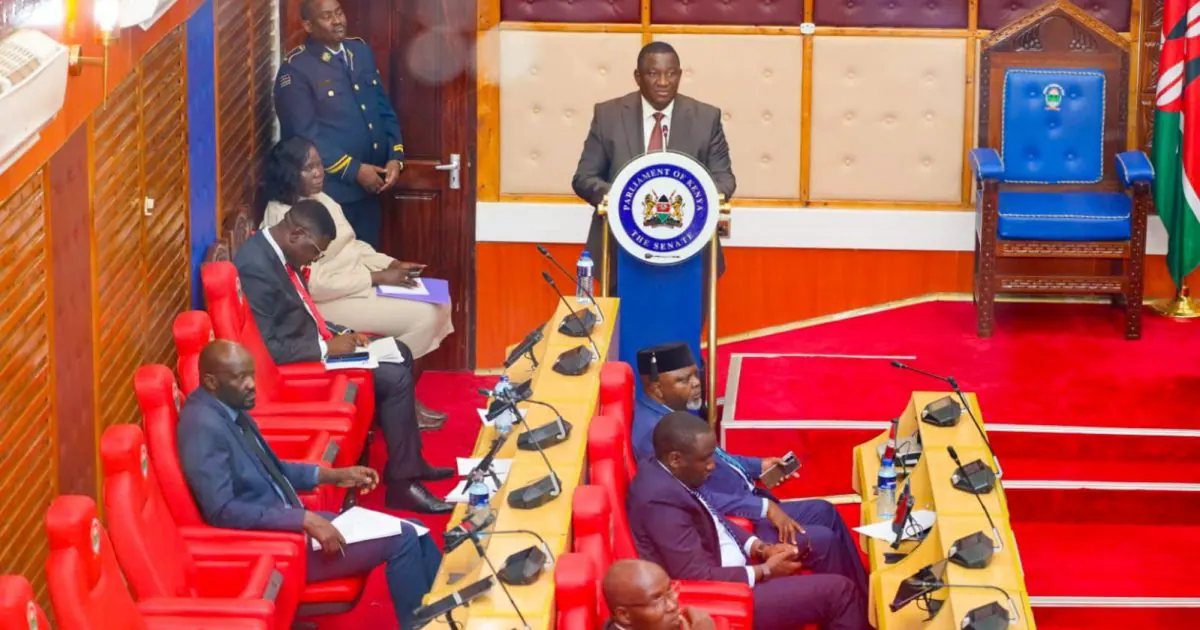
Mvurya appeared before the Senate Plenary to respond to questions on Government interventions to address suicide, depression, and mental health challenges among young creatives. He revealed that the Government does not currently have a disaggregated national registry showing suicide cases, attempted suicides, or specific mental health conditions by profession or sector. However, available national statistics indicate that between 400 and 500 reported suicide deaths occur annually across the population.
The Government is working towards establishing a unified National Suicide Registry under the Ministry of Health to improve the collection and management of suicide-related data. Mvurya outlined a two-pronged Government approach to supporting creatives facing mental health challenges, financial hardship, and addiction. The strategy will focus on reducing economic risks while expanding access to direct psychosocial support.
The Ministry is advancing an Inter-Agency Data Framework and a Creative Sector Wellness Policy, alongside plans to expand helplines and peer-support mechanisms for people working in the creative sector. Mvurya stated that these measures are intended to provide a stronger support system for creatives navigating the financial, social, and psychological pressures associated with their careers.
In addition to addressing mental health challenges, Mvurya announced that the Government is developing a comprehensive national database of Kenyan athletes who have won medals at regional, continental, and international competitions. The database will improve documentation of Kenya’s sporting achievements, talent tracking, policy planning, and recognition of sporting excellence.
The Government is also reviewing the welfare of retired sports personalities who have contributed to Kenya’s reputation on the international stage. Mvurya cited various interventions undertaken in partnership with sports federations, Athletics Kenya, the Football Kenya Federation, county governments, and athletes’ welfare organisations, including employment and career-transition opportunities, goodwill ambassador positions, and institutional placements.
Furthermore, Mvurya highlighted enhanced Government rewards for athletes who win medals at global competitions, including Sh3 million for gold medalists, Sh2 million for silver medalists, and Sh1 million for bronze medalists. The Government has also enhanced allowances for athletes and officials travelling abroad for international competitions.
Key points
- The Kenyan Government to establish a unified National Suicide Registry
- A comprehensive national database of Kenyan athletes to be developed
- Enhanced rewards for athletes who win medals at global competitions