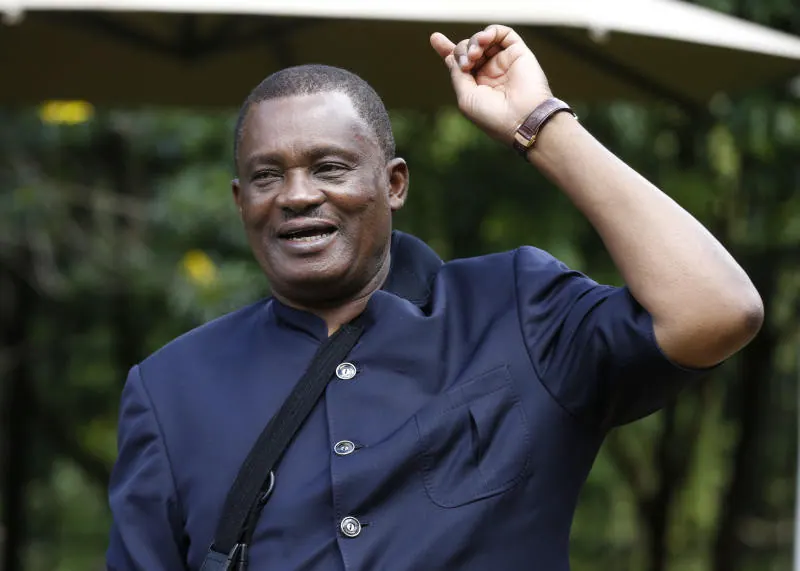
Former Attorney General Justin Muturi has urged Kenyans to be cautious of emerging political recklessness that could lead to animosity among communities and affect voting patterns. He made the remarks in response to allegations made by Health Cabinet Secretary Aden Duale, who reportedly suggested mobilising Somalis from Somalia to support President William Ruto's re-election. Muturi emphasised that Kenya has previously paid a high price for politics organised around ethnic mobilisation, grievance, and fear.
Muturi took issue with Duale's reported comments, stating that they were striking because they connected to the controversy surrounding the removal of additional vetting requirements for identification documents. Duale allegedly said that when President Ruto removed vetting, people said he was bringing people from Somalia, and he would now bring in Somalis from Somalia. Muturi argued that such language should not be casually dismissed, as it raises serious questions about citizenship and the electoral process.
Muturi clarified that there is nothing wrong with Kenyan citizens of Somali origin participating fully in politics, as they have every constitutional right to register, vote, campaign, and support their preferred candidate. However, he distinguished between mobilising Kenyan citizens and speaking about bringing people from a neighbouring country into an electoral contest in Kenya. Muturi insisted that this distinction must be taken seriously, as elections are ultimately about citizenship and the equal vote.
Muturi stated that Kenya has enough political problems without importing new ones and does not need Somali-versus-Mt Kenya politics or vice versa. He emphasised that the country needs one political principle above all others: Kenya belongs equally to all its citizens, and its elections must belong equally to all its citizens. Muturi warned that reckless political language can turn suspicion into hostility and hostility into something much harder to reverse.
Duale's language is troubling, especially given his earlier clash with communities in Mt Kenya, which triggered an investigation by the National Cohesion and Integration Commission. Although Duale denied that his remarks were demeaning to the Kikuyu community, Muturi noted that the cumulative effect of ethnic political rhetoric matters. He cautioned that Kenya cannot afford ambiguity on such matters, as careless words from powerful politicians can deepen divisions long after they have moved on.
According to Muturi, when political competition becomes a contest between communities, citizens begin to see one another primarily through ethnic identities. He warned that if leaders continue to turn communal mobilisation into a substitute for national politics, the institutions of the state become increasingly vulnerable. Muturi insisted that Somali Kenyans are Kenyan citizens and belong to this country no less than any other community, and that they should not be demonised.
Key points
- Muturi warns Kenyan leaders against using reckless ethnic rhetoric ahead of the 2027 elections.
- Duale's reported comments have raised concerns about citizenship and the electoral process.
- Muturi emphasises that Kenya needs one political principle: Kenya belongs equally to all its citizens, and its elections must belong equally to all its citizens.