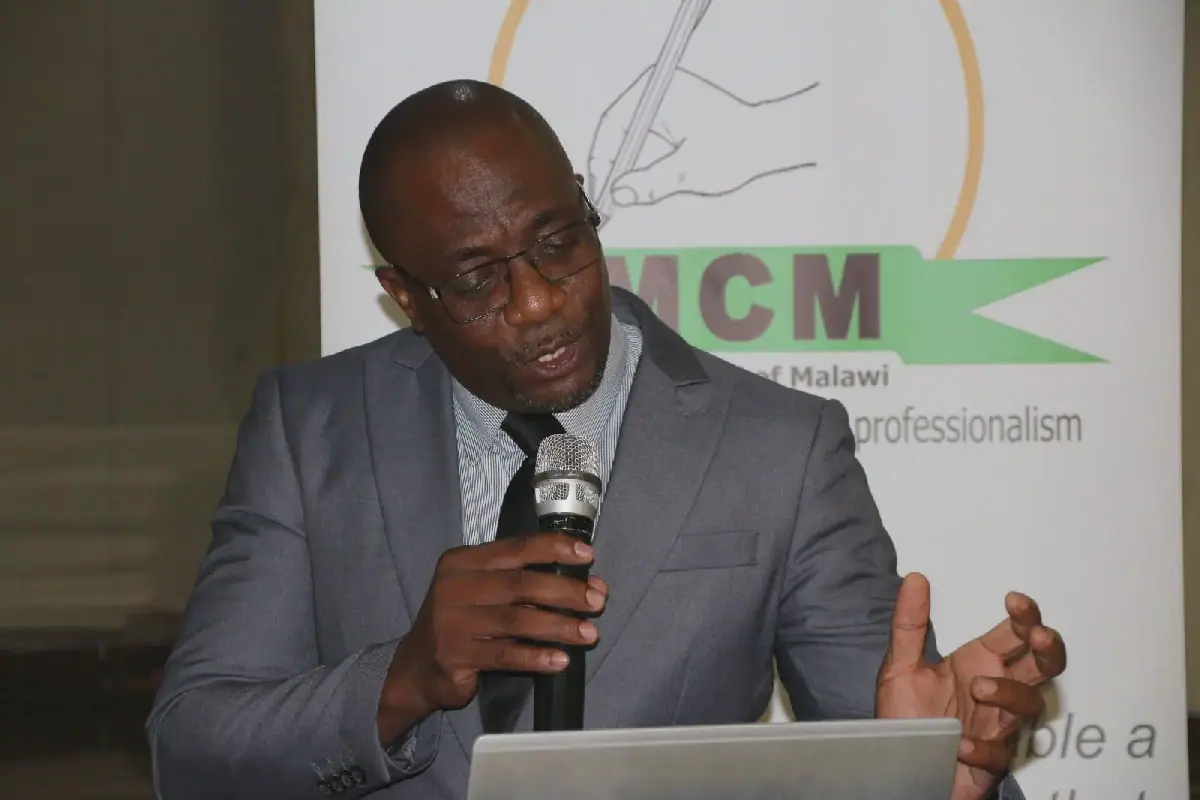
Media Council of Malawi chairperson Dr Jolly Ntaba has expressed concerns over President Peter Mutharika's media approach, saying it denies Malawians direct access to their leader and leaves journalists struggling to establish facts about his private visits. Ntaba, who heads the Journalism and Media Studies Department at the Malawi University of Business and Applied Sciences, made the remarks in an interview with The Nation. He said the President's decision to limit interviews to State House press secretary Cathy Maulidi and the State broadcaster raises questions about the government's commitment to transparency.
Ntaba said the media plays a crucial role in serving different interests in Malawi, and that the President's approach creates an impression that there is something authorities do not want the public to know. He noted that private media have played a significant role in Malawi's democratic dispensation, providing alternative views and allowing for the interpretation of information. Ntaba emphasized the importance of getting crucial information directly from the source, especially on matters of national importance.
The President's decision to limit interviews to MBC, the State broadcaster, has raised questions about his engagement with the media. Ntaba said that engaging the media means interacting with a wide range of media outlets, including private and community radio stations, not just the public broadcaster. He noted that the public broadcaster serves the government of the day, and that limiting interviews to MBC sends the wrong signal.
Chief Secretary to the Government Justin Saidi has argued that there is no need for press briefings on the President's private visits, citing the private nature of the visits. However, Ntaba disagreed, saying that the term "private visit" can be interpreted in different ways and that the public needs to be informed about the President's movements. He noted that the repeated use of the term "private visit" can acquire a negative connotation.
Ntaba said that journalists are not failing to tell the story of the President's private visits, but are rather victims of a public system's failure to provide information. He noted that journalism thrives when everybody within the system plays their role, and that journalists need evidence and sources to tell a good story. Ntaba emphasized that journalists are being put between a rock and a hard place, unable to speculate or quote unreliable sources.
The Access to Information Act, enacted during President Mutharika's first term, provides a tool for journalists to access information. However, Ntaba said that the law is not working as it should, and that people responsible for providing information are not forthcoming. He noted that journalists can invoke the law and approach the relevant authorities, but that it is difficult to get the information needed.
Ntaba emphasized that mainstream journalism is what people rely on for the truth, and that journalists want to remain credible. He noted that the current situation puts journalists in a precarious position, unable to speculate or quote unreliable sources. The Media Council of Malawi is concerned about the implications of the President's media approach on transparency and accountability in government.
Key points
- President Mutharika's decision to limit interviews to State House press secretary Cathy Maulidi and the State broadcaster has raised concerns about his engagement with the media.
- The Media Council of Malawi chairperson Dr Jolly Ntaba says the President's approach denies Malawians direct access to their leader and leaves journalists struggling to establish facts about his private visits.
- The Access to Information Act provides a tool for journalists to access information, but its implementation has been challenging.