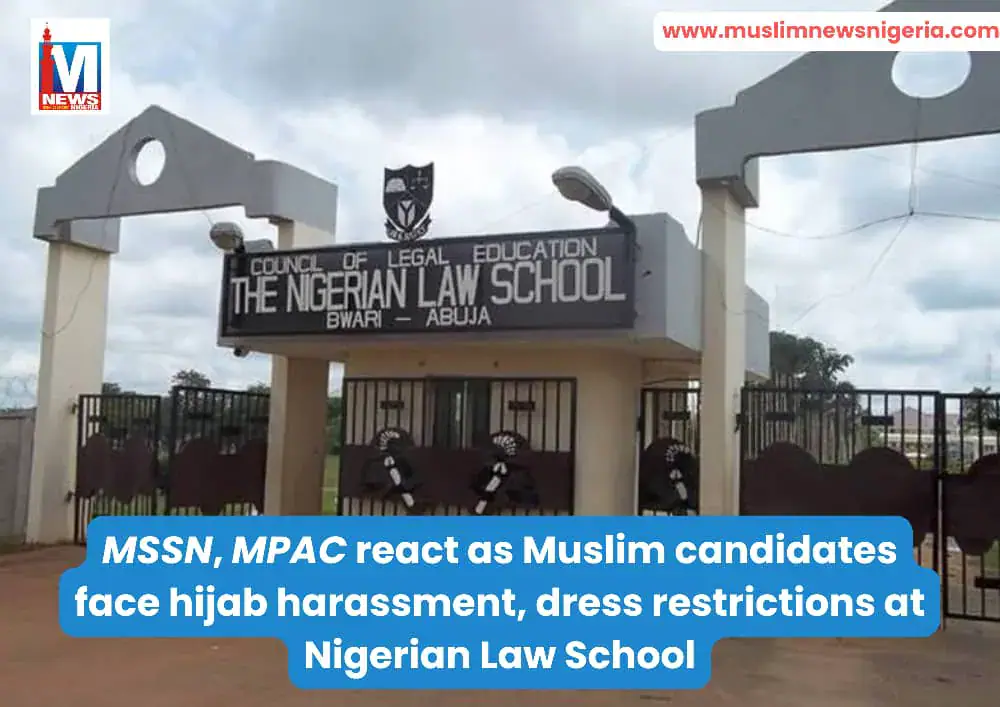
Muslim rights organisations, including the Muslim Public Affairs Centre (MPAC) Nigeria and the Muslim Students’ Society of Nigeria (MSSN), B-Zone, have condemned reports of harassment of female Muslim candidates during the 2026 Nigerian Law School Bar examinations. The controversy emerged on Saturday, October 31, as the examinations commenced across Nigerian Law School campuses, with candidates reportedly facing restrictions over their hijabs and long, modest dresses.
Despite an earlier circular said to have permitted the Islamic head covering, several female candidates experienced delays and distress, with some reportedly uncertain about whether they would be allowed to participate in subsequent examination papers because of their religious attire. Accounts from candidates indicated that the restrictions were not limited to hijab, as some Muslim women were allegedly instructed to change their long gowns or wear shorter, fitted skirts to gain access to examination halls.
The development has renewed concerns about religious freedom and discrimination at an institution responsible for training prospective lawyers, particularly in view of the widely publicised experience of Barrister Firdausa Amasa, who was prevented from participating in the 2017 Call to Bar ceremony because she wore hijab. Amasa reports inconsistent hijab implementation at Bwari, where she was eventually called to the Nigerian Bar in 2018 following the controversy.
In an incident report following her visit to the Bwari Campus on Saturday, October 31, 2026, Amasa said hijab-wearing candidates were admitted without hindrance in four of the five examination halls she visited. However, candidates assigned to the Main Multipurpose Hall were reportedly compelled to remove their hijab and rewrap it like a turban before being allowed entry. “I personally witnessed two female candidates crying at the entrance as a result of this harassment,” Amasa stated.
MPAC condemned the reported treatment of female Muslim candidates, saying it had received complaints from Bwari and Lagos about restrictions on hijab and modest clothing. In a press release issued on Saturday, October 31, MPAC Executive Chairman Disu Kamor said candidates wearing ankle-length dresses were allegedly stopped and told their outfits were too long. Some were reportedly instructed to wear shorter skirts, while others were seen pleading with officials at examination hall entrances.
MSSN also condemned the reported restrictions in an open letter dated Saturday, October 31, 2026, describing the treatment of Muslim female candidates as discriminatory and calling for an immediate review of the screening arrangements. The letter stressed that Muslim candidates should be allowed to participate in the examinations without being compelled to compromise their religious convictions.
Both MPAC and MSSN have called for urgent intervention to protect the religious and constitutional rights of the Muslim candidates, with MPAC demanding clear instructions to invigilators to admit hijab-wearing candidates and ensure that no student was harassed for wearing a long, modest dress.
Key points
- Muslim rights groups condemn harassment of female Muslim candidates during Nigerian Law School Bar exams.
- The controversy has renewed concerns about religious freedom and discrimination at the Nigerian Law School.
- Organizations are calling for urgent intervention to protect the rights of Muslim candidates.