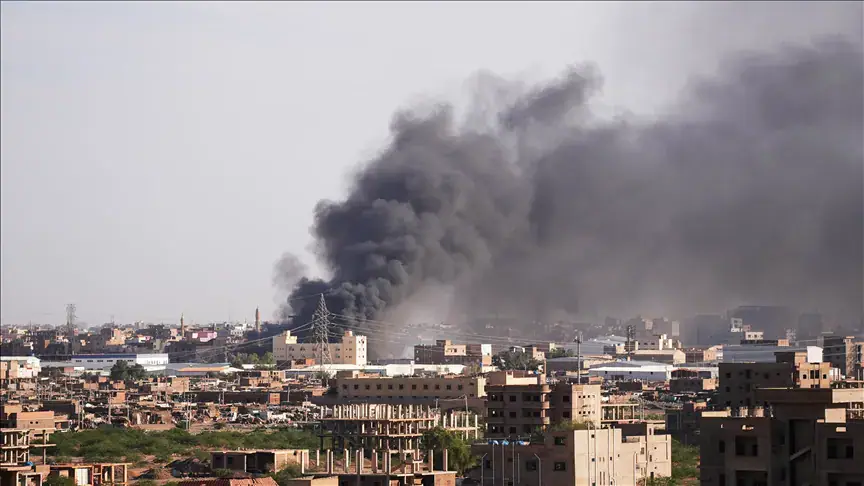
The Muslim Brotherhood has emerged as a significant force in Sudan's conflict, which began in mid-April 2023, between the army and the Rapid Support Forces (RSF). The organization has been accused of fueling the war and obstructing peace initiatives. According to a report by the UN Independent International Fact-Finding Mission on Sudan, external support networks, including the Muslim Brotherhood, have contributed to the conflict. The report called on the international community to take action against individuals, entities, and networks that enable the war.
The conflict in Sudan has resulted in tens of thousands of deaths and displaced 14 million people. The Muslim Brotherhood's influence on the Sudanese army, led by Abdel Fattah al-Burhan, has been a significant factor in the conflict. Massad Boulos, a senior adviser to the US President on Arab and African affairs, warned about the role of extremist networks and groups linked to the Muslim Brotherhood in fueling the war. He emphasized the need to hold those responsible for the violence accountable.
Ahmed Haroun, a key figure in the former ruling party, the National Congress, was arrested on November 18, 2026. Haroun was wanted by the International Criminal Court (ICC) for war crimes and crimes against humanity committed in Darfur between 2003 and 2004. The ICC issued a warrant for his arrest in 2007, with 42 charges, including over 20 war crimes and 20 crimes against humanity. Human Rights Watch's Liz Evenson stated that Haroun's arrest could send a strong signal to those committing crimes that they could also face justice.
The arrest of Ahmed Haroun was met with skepticism by many Sudanese, who viewed it as a publicity stunt to mask the influence of the Muslim Brotherhood. Awatif al-Jaali, a member of Haroun's defense team, stated that his client's arrest was not related to his potential transfer to the ICC. Al-Jaali added that the defense team had no information on Haroun's detention location or the circumstances of his arrest.
Meanwhile, Naji Abdallah, a leader of the Sudanese Islamic Movement, appeared in the Blue Nile state, reviewing Islamist battalions engaged in combat. The battalions, including the Al-Baraa ibn Malik, have been classified as terrorist organizations by the US and sanctioned by several European countries. Naji threatened to target neighboring Ethiopia and presented the conflict in Sudan as a confrontation against the US, Israel, and Jews.
The Sudanese army distanced itself from Naji Abdallah and the group that appeared with him in a video, stating that they did not represent the military. The army's statement came after the group was seen on social media, wearing military uniforms and chanting slogans in support of war in the Gulf.
The Muslim Brotherhood's influence in Sudan has raised concerns among experts and international organizations. The organization's role in fueling the conflict and hindering peace initiatives has been widely criticized. The international community has been called upon to take action against the Muslim Brotherhood and other networks that enable the war in Sudan.
Key points
- The Muslim Brotherhood has been accused of fueling the conflict in Sudan and hindering peace initiatives.
- Ahmed Haroun, a key figure in the former ruling party, was arrested on November 18, 2026, on charges of war crimes and crimes against humanity.
- The Sudanese Islamic Movement, led by Naji Abdallah, has been classified as a terrorist organization by the US and sanctioned by several European countries.