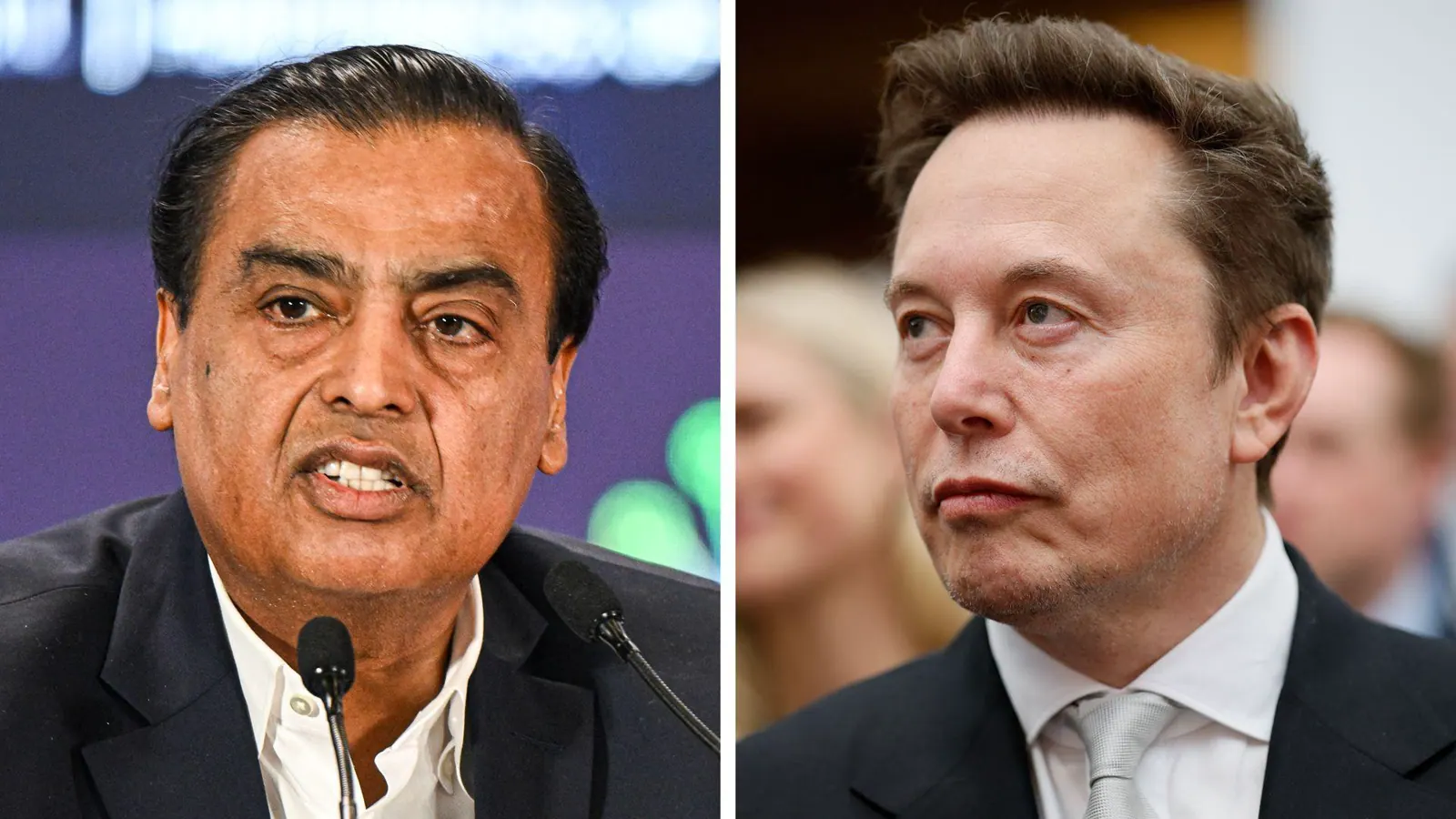
Billionaire entrepreneur Elon Musk has publicly accused Mukesh Ambani, India's richest man, of obstructing the launch of his satellite internet service, Starlink, in the country. This development has sparked a controversy in the Indian telecommunications market, where Starlink aims to provide high-speed internet services, particularly in rural and remote areas. Musk's allegations have been denied by the Indian government, which asserts that its regulatory framework for satellite communications is fair and non-discriminatory.
The dispute began when Musk expressed concerns about the delay in obtaining the necessary approvals for Starlink to operate in India. He suggested that some influential industrialists, without naming them, were trying to block the service. Musk specifically mentioned Ambani, whose Reliance Industries owns Jio, India's largest mobile network operator. Reliance Jio and Bharti Airtel, another major telecom company, have partnered with Starlink's parent company, SpaceX, to distribute its equipment and services in India.
The Indian government has responded to Musk's allegations, stating that the regulatory framework for satellite communications is fair and that all applications, including those from Starlink, are being processed equally. The government added that the companies, including Starlink, are waiting for security clearances and spectrum allocation before they can launch their commercial services. Musk has questioned the delay, pointing out that Starlink has already obtained licenses to operate in over 165 countries.
Starlink uses a constellation of low-earth orbit satellites to provide internet services, particularly in areas where traditional internet connectivity is limited or expensive. The service has already been activated in several countries, including Yemen. In India, the company has been trying to enter the market since 2021 and has obtained some key licenses, but it still needs to obtain final security clearances and spectrum allocation.
The Indian telecommunications market is highly competitive, with Reliance Jio, Bharti Airtel, and Vodafone Idea being the major players. The market is expected to grow further with the introduction of satellite internet services. Starlink's entry into the market is seen as a significant development, as it could provide high-speed internet services to remote and rural areas.
Mukesh Ambani, the chairman of Reliance Industries, is India's richest man and a prominent figure in the country's business landscape. His company, Reliance Jio, has been a major disruptor in the Indian telecom market, offering low-cost data and voice services. Ambani's son, Akash, is the president of Reliance Jio and has been involved in the development of the company's satellite internet plans.
The controversy highlights the challenges faced by global tech companies in navigating India's complex regulatory environment. The Indian government has been trying to balance the need to promote innovation and investment in the tech sector with concerns about national security and data protection. The outcome of the dispute will be closely watched, as it could have implications for the future of satellite internet services in India.
Key points
- Elon Musk accuses Mukesh Ambani of blocking Starlink's launch in India
- Indian government denies allegations, saying regulatory framework is fair
- Starlink aims to provide high-speed internet services in rural and remote areas of India