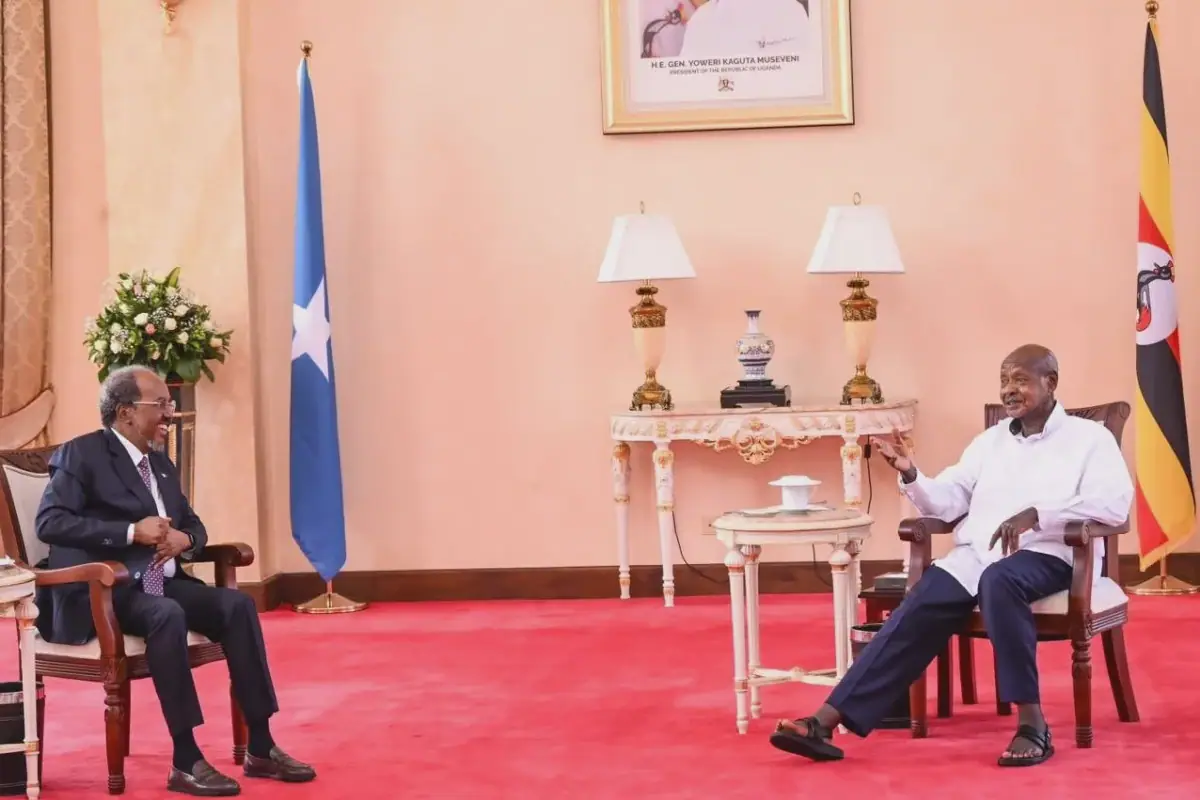
On November 23, 2026, Ugandan President Yoweri Museveni hosted Somali President Hassan Sheikh Mohamud at State House Entebbe. The meeting focused on Somalia's efforts to restore peace, strengthen state institutions, and achieve lasting stability. Museveni shared Uganda's experience in building stable institutions through national unity, dialogue, and democratic processes. He emphasized the importance of these elements in overcoming decades of conflict and political divisions. The two leaders discussed ways to support Somalia's ongoing efforts to overcome its challenges.
Museveni's call for national unity and dialogue comes as Somalia continues to face significant challenges. The country is grappling with political disagreements and persistent security threats posed by the al-Shabaab militant group. President Mohamud's administration has been pursuing efforts to strengthen federal institutions and advance political reforms. However, disagreements with opposition figures and regional leaders have complicated the process. Uganda's experience in building stable institutions through national unity and dialogue may offer valuable lessons for Somalia.
The meeting between Museveni and Mohamud coincides with Uganda's planned withdrawal of its troops from Somalia. On November 2, 2026, the Uganda People's Defence Forces (UPDF) announced the withdrawal of troops deployed under a bilateral agreement with the Somali government. The first group of soldiers has already returned home. The army also plans to withdraw Ugandan forces serving under the African Union Support and Stabilisation Mission in Somalia (AUSSOM) by the end of 2027. This withdrawal has raised questions about Somalia's capacity to sustain security operations.
Uganda has played a significant role in international efforts to stabilize Somalia since 2007. Ugandan troops have been key contributors to the African Union Mission in Somalia (AMISOM), securing strategic installations, protecting government institutions, and supporting military operations against al-Shabaab. The African Union mission has continued supporting Somali security forces as part of the broader transition towards greater national ownership of security responsibilities. The transition aims to enhance Somalia's ability to protect itself.
The meeting between Museveni and Mohamud is part of continued diplomatic engagement between Uganda and Somalia. During an earlier meeting at State House Entebbe on October 26, 2026, Museveni called for unity in the fight against al-Shabaab and stronger economic cooperation between Uganda and Somalia. The latest discussions highlight the importance of political reconciliation, institutional development, and security cooperation in Somalia's efforts to achieve lasting stability. Diplomatic engagement between the two countries will likely continue to play a crucial role in Somalia's development.
Somalia faces significant challenges in establishing a political system capable of resolving disputes peacefully while strengthening national institutions and maintaining the fight against armed groups. The country's progress in these areas will be critical to its long-term stability. International support, including from Uganda, will likely remain important in Somalia's efforts to overcome its challenges. The African Union and other international partners will continue to play a role in supporting Somalia's development.
The discussions between Museveni and Mohamud demonstrate the ongoing commitment of Uganda and Somalia to cooperation and collaboration. Key areas of focus include national unity, dialogue, and security cooperation. The two countries will likely continue to engage in diplomatic efforts to support Somalia's development and stability.
Key points
- Museveni urges Somalia to prioritize national unity, political dialogue, and peaceful competition to overcome decades of conflict and political divisions.
- Uganda plans to withdraw its troops from Somalia by the end of 2027, raising questions about Somalia's capacity to sustain security operations.
- The African Union mission has continued supporting Somali security forces as part of the broader transition towards greater national ownership of security responsibilities.