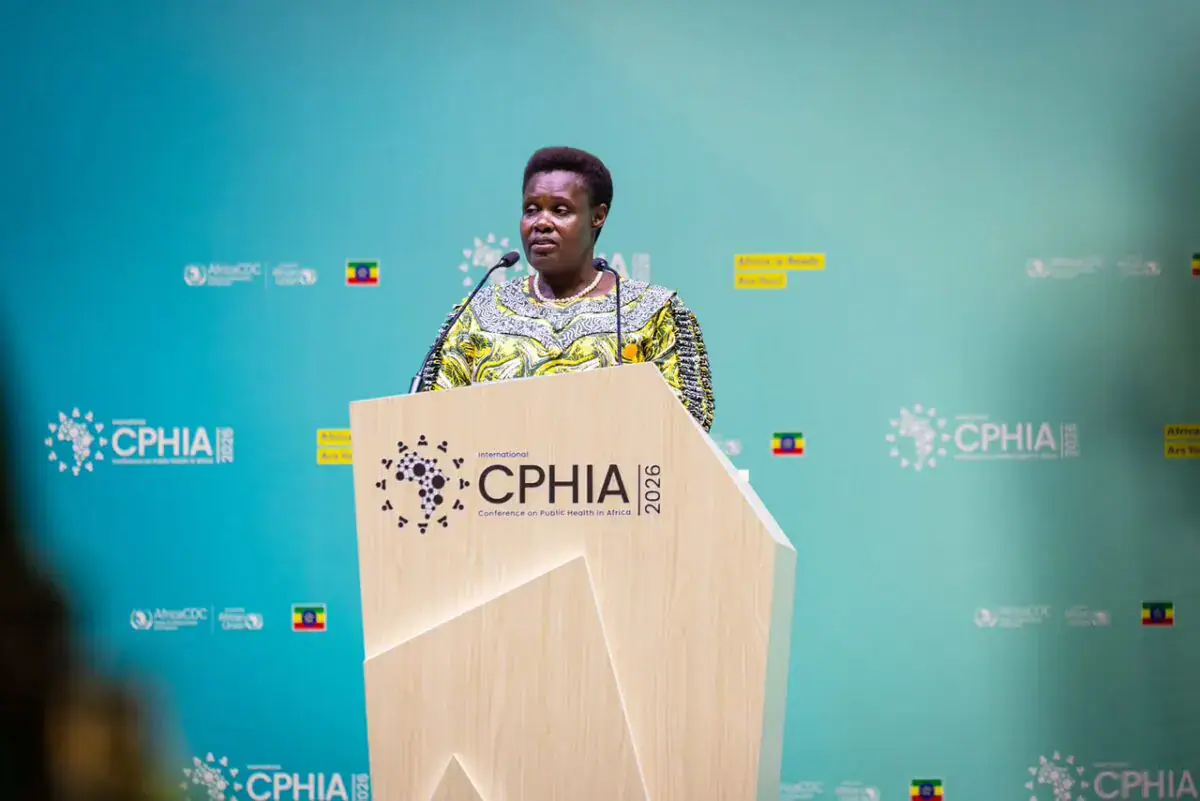
President Yoweri Museveni of Uganda has emphasized the need for stronger cooperation among African countries to prevent and respond to epidemic outbreaks. He warned that conflict, insecurity, and population displacement are undermining disease surveillance, exposing communities to greater health risks. Museveni's remarks were delivered by Vice President Jessica Alupo at the Fifth International Conference on Public Health in Africa (CPHIA 2026) in Addis Ababa, Ethiopia.
Museveni highlighted Uganda's experience with successive epidemics, including Ebola, Marburg, COVID-19, and Mpox. He noted that disease outbreaks cannot be addressed in isolation from the security and humanitarian conditions in which they occur. The Ugandan president cautioned that insecurity can prevent health workers from accessing affected communities, delaying the detection and containment of outbreaks.
The president also pointed out that displacement and population movements can leave vulnerable populations beyond the reach of routine health services and disease surveillance systems. His remarks come as the Democratic Republic of Congo (DRC) continues to grapple with a major outbreak of Bundibugyo Ebola, a strain that has also affected Uganda, Kenya, and Nigeria this year.
According to the World Health Organisation (WHO), the DRC had recorded 11,613 confirmed cases and 5,678 deaths as of November 17, 2026. The outbreak highlights the need for African countries to strengthen cross-border collaboration, improve disease surveillance, and ensure that public health responses take into account the security and humanitarian challenges facing affected communities.
Museveni's message underscores the importance of collective action against epidemics. African countries must look beyond national borders and strengthen their collective capacity to respond to public health emergencies. This can be achieved through enhanced cooperation, improved surveillance, and coordinated responses to health crises.
The Fifth International Conference on Public Health in Africa (CPHIA 2026) provides a platform for African countries to discuss public health challenges and share experiences. The conference aims to promote collaboration and coordination among African countries to address public health emergencies. Museveni's remarks are expected to inform discussions on strengthening public health systems and improving disease surveillance.
The Ugandan government's efforts to strengthen public health systems and improve disease surveillance are ongoing. The government has implemented various measures to enhance disease surveillance, including strengthening health systems and improving coordination among stakeholders. Museveni's call for stronger cooperation among African countries is expected to reinforce these efforts and promote a more coordinated response to public health emergencies.
Key points
- African countries must strengthen cross-border collaboration to tackle epidemics.
- Insecurity and population displacement can undermine disease surveillance and expose communities to greater health risks.
- The DRC's Bundibugyo Ebola outbreak highlights the need for coordinated public health responses.