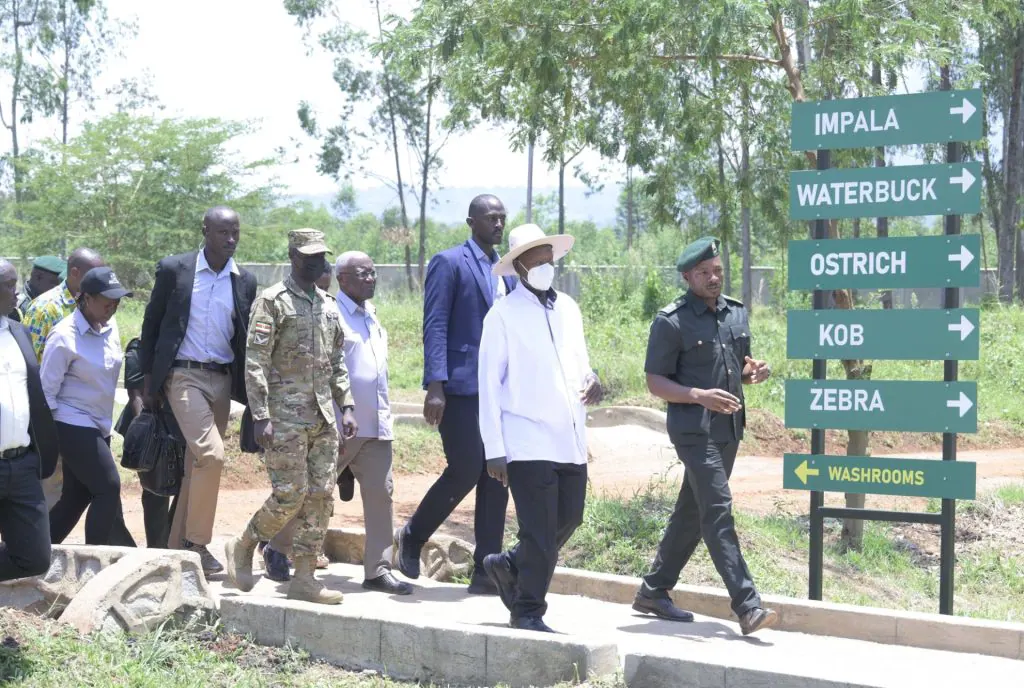
President Yoweri Museveni has emphasized the need for Uganda to protect its natural attractions while embracing digital technologies and Artificial Intelligence to make tourism services more accessible and competitive. He made the remarks during the national celebrations to mark World Tourism Day 2026 at Mbale Secondary School Grounds in Mbale City. The event was held under the theme, “Digital Agenda and Artificial Intelligence to Redesign Tourism.” Museveni highlighted that tourism is one of the service industries capable of generating significant income for households and communities.
Museveni encouraged Ugandans, particularly those with limited land for commercial farming, to explore tourism-related businesses as an alternative source of income. He noted that tourism has a wide economic multiplier effect because visitors require a variety of goods and services, including accommodation, transport, food, entertainment, guiding, and cultural experiences. The President also commissioned the Mbale Wildlife Conservation Education Centre, popularly known as Mbale Zoo, established by the Uganda Wildlife Authority to promote wildlife conservation education and tourism in the Elgon Sub-region.
The Mbale Wildlife Conservation Education Centre is expected to provide residents with greater access to wildlife conservation information while adding another attraction to the region’s tourism portfolio. Museveni also unveiled a Tourism Conservation Strategy for the Elgon Sub-region, which emphasizes protecting forests and wetlands. He warned that continued destruction of forests and wetlands could have a direct impact on tourism by degrading wildlife habitats and other natural attractions.
Museveni described people involved in deforestation and wetland encroachment as a threat to tourism development and called for stronger conservation measures. He emphasized the need to protect the environment, citing changes in weather patterns and temperatures. The President also called for greater use of Uganda’s geographical advantages, including its altitude and location, while ensuring that the natural systems supporting these advantages are not destroyed.
Tourism Minister Col. (Rtd) Tom Butime stated that the government is increasingly turning to Artificial Intelligence and other digital technologies to promote Uganda as a tourism destination. He cited digital booking platforms, smart park gates, and AI-supported safari planning as some of the technologies that could improve efficiency and access to tourism services. Butime also highlighted Mbale and the wider Elgon Sub-region as having a wide range of tourism products, including the Mount Elgon landscape, scenery, cuisine, cultural heritage, and hospitality.
Butime identified limited investment and access to capital for tourism facilities and visa-related challenges affecting some international visitors as factors constraining the sector. He emphasized that addressing these challenges, alongside infrastructure development, would be important in unlocking the region’s tourism potential. The Netherlands Ambassador to Uganda, Angèle Samura, also highlighted opportunities for increased cooperation between Uganda and European partners in tourism.
Samura identified hospitality, human-capital development, sustainable tourism, and Artificial Intelligence as areas where further cooperation could be developed. She noted that tourist arrivals from Europe increased from about 38,000 in 2024 to approximately 150,000 in 2025. Samura emphasized that Uganda’s natural environment, wildlife, wellness experiences, food, culinary culture, and diverse cultural attractions provide opportunities for attracting more international visitors.
Key points
- President Museveni calls for increased investment in technology, infrastructure, and environmental conservation to expand Uganda's tourism industry.
- The government is turning to Artificial Intelligence and digital technologies to promote Uganda as a tourism destination.
- Uganda's tourism sector faces challenges, including limited investment, access to capital, and visa-related issues.