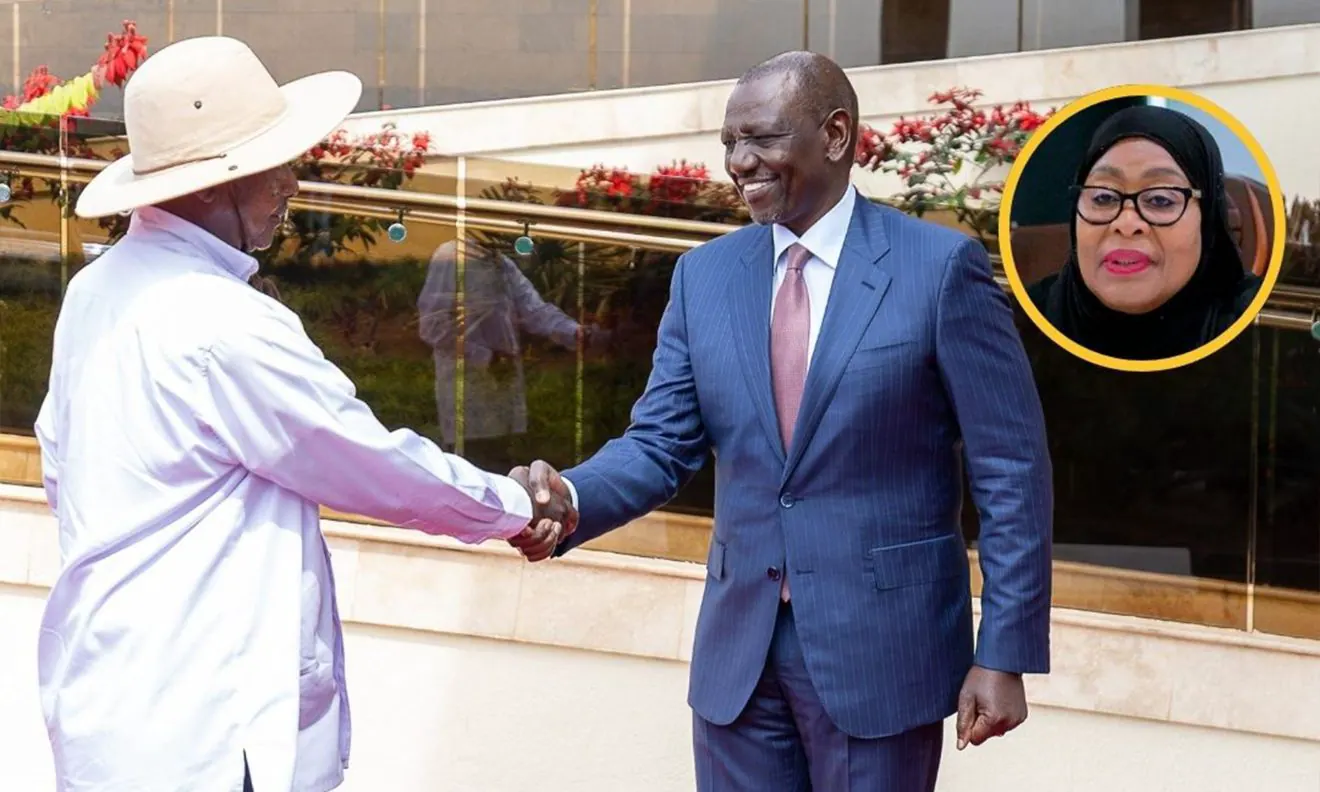
Uganda's President Yoweri Museveni has expressed shock over the oil deal between Kenya and Uganda, revealing that his country stopped buying oil through Kenya after discovering what he termed as "tricks" that cost Uganda billions of shillings. Speaking in Uganda, Museveni said the arrangement used was not a government-to-government (G2G) deal as presented but rather a "government to brokers" deal where Uganda bought petroleum products through agents who benefited at the expense of taxpayers.
Museveni disclosed that Uganda, which has no seaport, has long relied on Kenya's Mombasa Port and oil pipeline network to import its oil. He revealed that he was informed of the "tricks" by a Kenyan senator, prompting him to instruct his energy officials to investigate the matter. However, swift action was not taken until further investigations were conducted, leading to Uganda changing its oil procurement system.
Under the new arrangement, Uganda imports oil through a partnership between the Uganda National Oil Company (UNOC) and Vitol, following a policy change made in 2023. Museveni stated that this move has significantly reduced oil costs for Uganda. According to data provided by Uganda's Energy Ministry Secretary, Irene Batebe, Uganda was paying an average of 15,340 shillings per ton of diesel under the old system, compared to 10,790 shillings under the current system.
The cost of petrol decreased from 12,675 shillings per ton to 7,995 shillings, while the cost of jet fuel dropped from 14,853 shillings to 10,303 shillings per ton. Kenya's government, under President William Ruto, introduced the G2G deal in 2023 to alleviate foreign exchange pressure and ensure oil availability. The government claimed that the oil sector required approximately 64.7 billion shillings monthly in foreign exchange for oil imports, threatening foreign exchange reserves and energy security.
Museveni's comments have sparked a heated debate in Kenya, particularly regarding the presentation of the G2G deal as a solution to ease foreign exchange pressure and guarantee oil supply. Kenya's government spokesperson, Charles Owino, diplomatically responded, stating that relations between Kenya and Uganda remain cordial. Owino emphasized that the two countries continue to collaborate on various oil infrastructure projects.
Kenya's Deputy President, Rigathi Gachagua, supported Museveni's claims, asserting that the deal benefited individuals rather than the Kenyan government. Gachagua alleged that the oil trade, worth billions, favored those within Kenya's administration. Conversely, President Ruto's economic advisor, David Ndii, disputed these claims, stating that companies selling oil to Kenya are owned by respective governments, while the company selling to Uganda is private.
The debate has raised questions about transparency in oil trade and whether the G2G system primarily benefited citizens or agents. Despite the political tension, Kenya and Uganda continue to rely on each other economically, particularly in trade, transportation, and energy sectors. Observers await further investigations into Museveni's claims and their potential impact on the East African region.
Key points
- Uganda changed its oil procurement system in 2023, shifting from a government-to-broker arrangement to a partnership between the Uganda National Oil Company (UNOC) and Vitol.
- The new arrangement has significantly reduced oil costs for Uganda, with diesel prices decreasing from 15,340 shillings to 10,790 shillings per ton.
- The controversy has sparked a debate about transparency in oil trade between Kenya and Uganda, with both countries maintaining a cordial relationship despite the allegations.