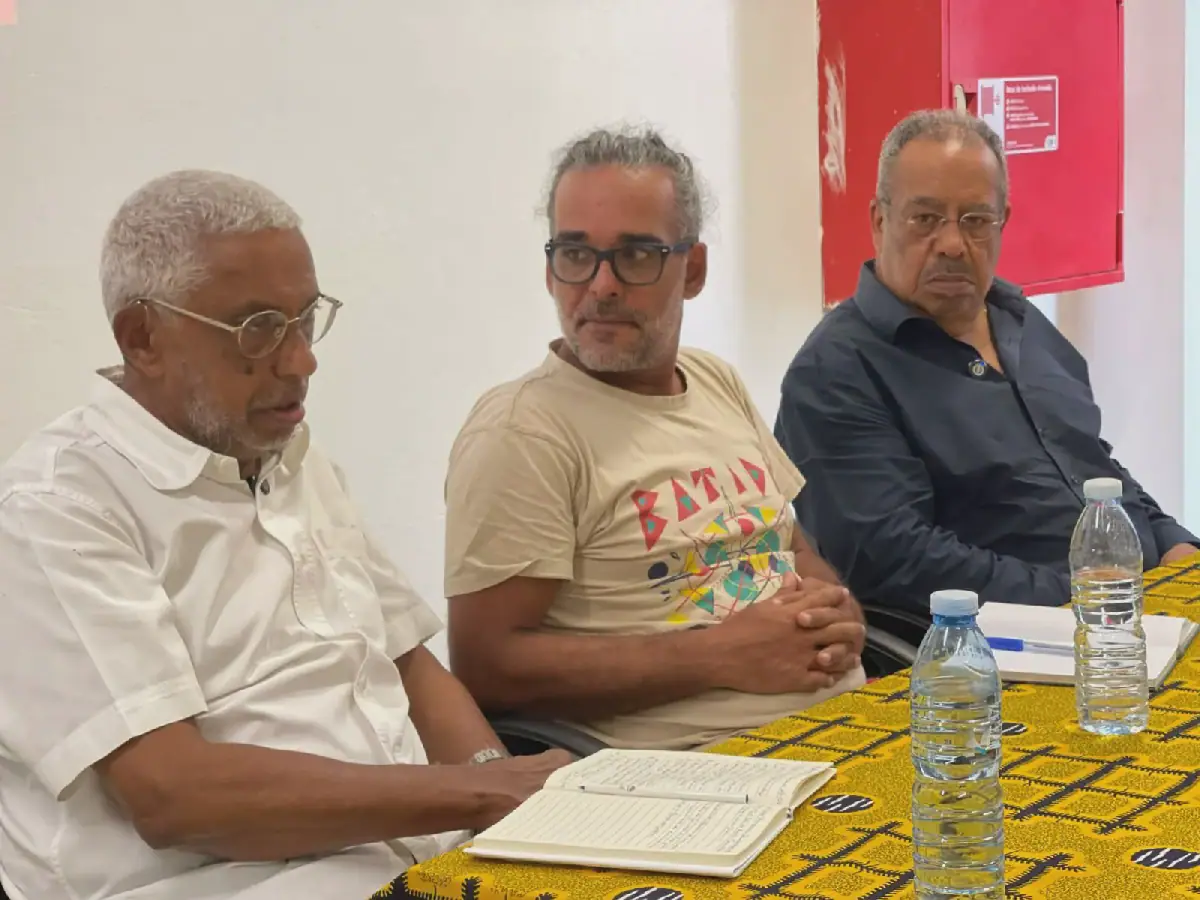
The MUDEI civic movement presented a report on the monitoring of Angolan media on November 18 in Luanda. The report highlights imbalances in the informative coverage of the analyzed media outlets, particularly in the time dedicated to the Executive and political parties. The monitoring exercise covered six months of informative activity from January to June 2026. MUDEI's report was presented by Fernando Pacheco and Carlos Rosado de Carvalho.
According to the data presented, 60-70% of the analyzed news programs' time was dedicated to the Executive, with around 25% covering the President of the Republic's activities. The MUDEI also reported that approximately 90% of the time allocated to political parties was given to the MPLA, while other parties received considerably less coverage. The monitoring included the main news programs of the Public Television of Angola (TPA), TV Zimbo, and the National Radio of Angola (RNA).
The MUDEI's report also analyzed the front and back pages of the Jornal de Angola. Luaty Beirão from the MUDEI criticized the distribution of airtime in the monitored media outlets and questioned the performance of the Angolan Social Communication Regulatory Entity (ERCA). The activist explained that the movement has been conducting monitoring exercises since 2022 to evaluate the informative treatment given to the Executive, political parties, and civil society.
Luaty Beirão lamented the lack of institutional responses to the concerns presented by the movement and defended the continuation of monitoring journalistic coverage, especially with the approach of the 2027 general elections. The MUDEI's monitoring aims to assess the media's performance in providing balanced coverage of different stakeholders in Angola. The movement's efforts focus on promoting a more inclusive and diverse media landscape.
Journalist and economist Carlos Rosado de Carvalho stated that the lack of independence in the media hinders the country's development and limits the government's ability to identify societal problems. He suggested conducting weekly evaluations of informative coverage, particularly of the Public Television of Angola (TPA), to allow for regular comparisons of the treatment given to the Executive and different political parties.
Carlos Rosado de Carvalho also expressed concern about institutional advertising in the media, advocating for an analysis of its legal limits and use in disseminating government achievements. Fernando Pacheco noted that the way information is presented in public media outlets contributes to social conformism and hinders the identification of problems affecting Angola's development.
Fernando Pacheco highlighted the importance of community radios in disseminating public interest information, particularly in rural areas, and expressed concern about the legal and financial restrictions that hinder their implementation. The MUDEI's report and recommendations aim to promote a more balanced and inclusive media environment in Angola, allowing for a more informed public discourse and better representation of diverse perspectives.
Key points
- The MUDEI movement's report reveals significant imbalances in media coverage in Angola, with 60-70% of public media coverage dedicated to the Executive.
- The monitoring exercise covered six months of informative activity from January to June 2026 and included main news programs of TPA, TV Zimbo, and RNA.
- The MUDEI's report and recommendations aim to promote a more balanced and inclusive media environment in Angola.