The Johannesburg Stock Exchange is one of the continent's most sophisticated capital markets, playing a crucial role in converting savings into productive investment. It provides a platform for companies to raise funds, build, and scale. The JSE's quality and resilience are essential factors in global investors' decisions to trust South Africa with their capital. Its role is foundational, and without it, many celebrated companies would struggle to access funding.
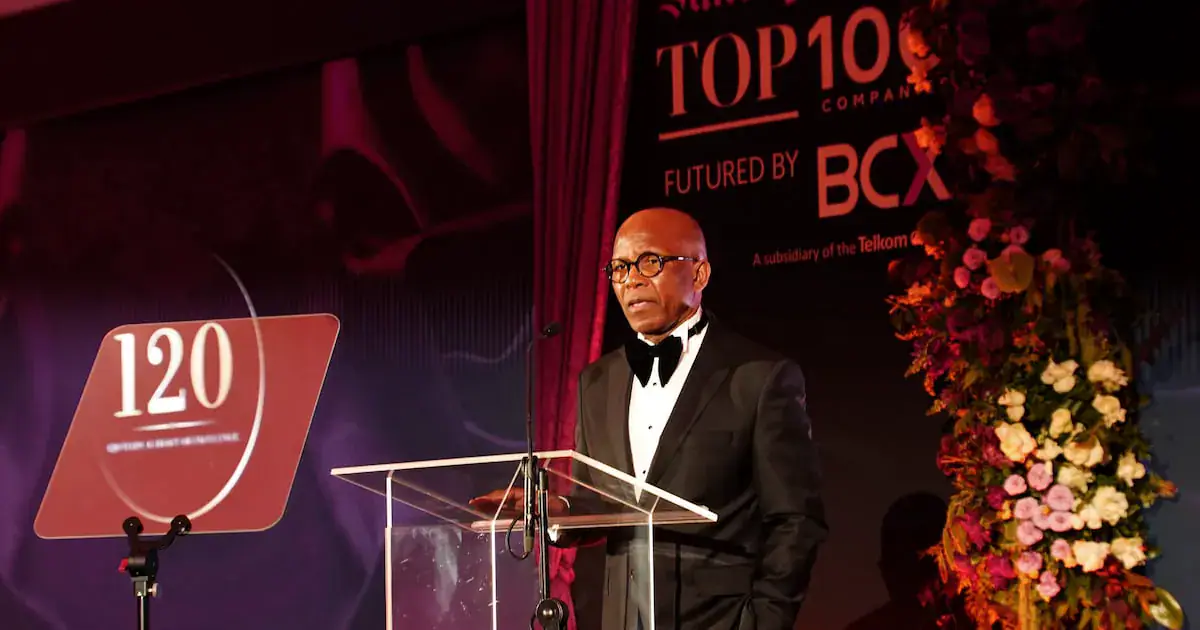
According to Mteto Nyati, what separates companies that appear on the Top 100 list each year is not a secret formula, but rather leadership, consistency, and the relentless creation of value. South Africa has an abundance of capable people, but often lacks an environment that makes their work easy. Energy, logistics, regulation, crime, and administrative burden still pose significant challenges. However, some businesses thrive despite these obstacles, and they share common habits, including being purpose-led with a clear and compelling vision.
Nyati highlights that successful companies practise capable and ethical leadership daily, are values-based even when it's inconvenient, and execute with discipline while remaining obsessed with customers and employees. These principles are not rare in theory but become rare when sustained under pressure. The era of load-shedding in South Africa has ended, not due to a miracle, but as a result of thousands of conscious decisions by people who decided to work together to address the issue.
When Nyati and his team arrived at Eskom in October 2022, the organisation was facing significant challenges. They applied the same principles that successful companies use: a clear purpose, a shared understanding of what had to change, equal insistence on capability and ethics, and disciplined execution. The result was the end of load-shedding, and now the focus has shifted to energy affordability. The task is to supply electricity at a price that allows Southern Africa to grow rather than merely survive.
Nyati believes that the same formula applies beyond energy to other state-owned enterprises, municipalities, hospitals, and public schools. These institutions are not doomed but are under-led relative to the complexity they face. The private sector contains people who have already demonstrated exceptional results over time, and they should be invited into the public domain to raise the standard of execution.
The recent local government elections served as a reminder of what happens when discipline is absent. Voters looked at the poor service delivery and decided that loyalty without delivery has an expiry date. Citizens stay when the system works for them, but when it stops working, they leave. Nyati emphasizes that diversity is an asset when paired with experience and competence, and the definition of "our people" must be wide enough that every South African can see a place for themselves.
Nyati concludes that the country cannot treat excellence as optional or competence as suspicious. There are concrete opportunities for growth, such as processing more critical minerals inside the country and positioning South Africa as a regional manufacturing hub for renewable energy components. The event recognising leaders who have shown what is possible should be treated as more than just applause; it should be a chance to study how they operate and learn from their habits.
Key points
- Leadership, consistency, and value creation are essential for national success.
- The private sector can play a crucial role in raising the standard of execution in the public domain.
- A country that wishes to grow old in dignity cannot treat excellence as optional or competence as suspicious.
Reporting sources
- MTETO NYATI | The simple ‘secrets’ to national success · The Sunday Times