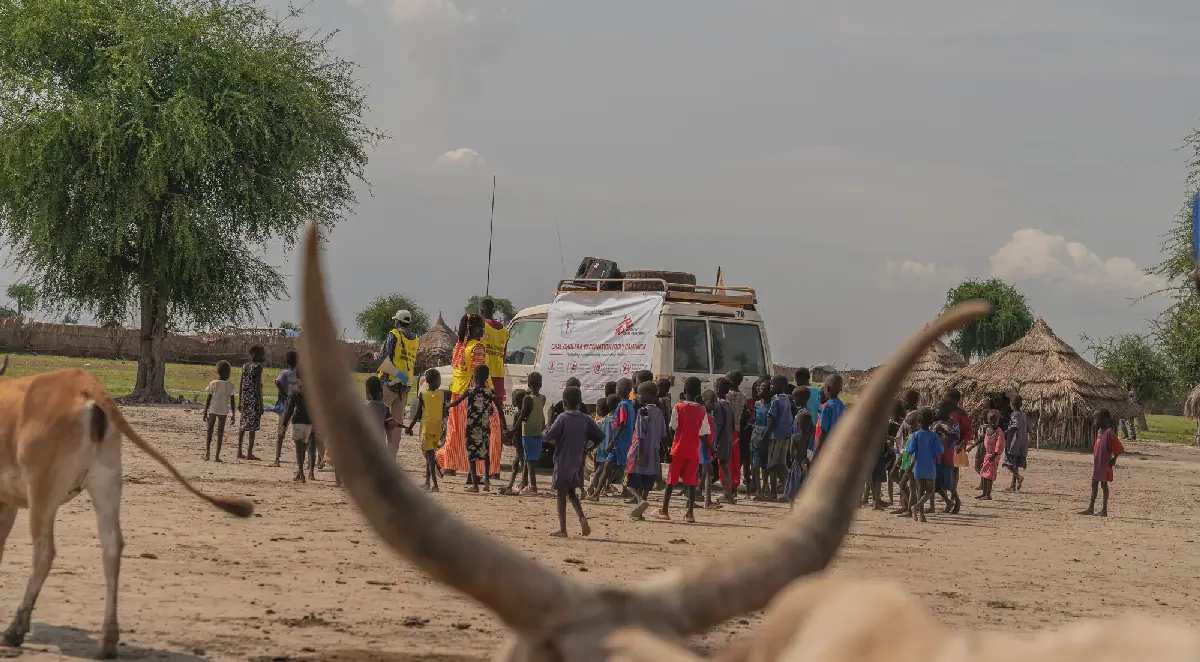
The humanitarian situation in Bentiu and Malakal camps, South Sudan, has taken a turn for the worse as funding cuts and aid organization withdrawals have left around 150,000 displaced people without basic water, sanitation, and general health services. This has increased the risk of cholera and other waterborne diseases, according to Médecins Sans Frontières (MSF). The organization is calling on donors and humanitarian organizations to act immediately to reverse funding shortfalls and maintain critical services.
Displaced communities in Upper Nile and Unity states depend heavily on external aid, but as resources dwindle, the few organizations still operating there are scaling back services, putting water supply, waste collection, latrine maintenance, and basic healthcare at risk of total collapse. Bentiu and Malakal camps were established in 2013 as Protection of Civilians sites, but were redesignated as conventional internal displacement camps in 2021 and 2026, respectively. Despite these changes, both sites continue to host large communities living in protracted displacement.
Many residents in the camps remain unwilling to return or are unable to return safely. A survey conducted in February 2026 by the International Organization for Migration (IOM) found that 55 percent of households in Bentiu said their intended destination was currently unsafe. Bentiu camp, home to about 111,000 people, is located in a flood-prone area, where an MSF assessment found that around 60 people share one functioning latrine, and only 109 handwashing stations serve the entire camp.
The risk of cholera and other waterborne diseases is high in the camps, with South Sudan recording nearly 110,000 cholera cases and 1,970 cholera-related deaths nationwide since 2024. Rubkona County in Unity State, where Bentiu is located, accounted for roughly a quarter of the cholera cases reported nationally during the 2024-2025 outbreak. Although cholera cases in MSF-supported areas have remained low since mid-2025, the conditions that contributed to the outbreak persist.
MSF and other organizations are working to mitigate the risk of disease in the camps. In Bentiu, MSF vaccinated 102,251 people during the second round of oral cholera vaccination in September 2026, reaching nearly 75 percent of people targeted. However, MSF notes that vaccination is only one part of the solution, and sustained access to safe drinking water, functioning latrines, and adequate sanitation is crucial to preventing future outbreaks.
The situation in Malakal is equally concerning, with the IOM currently providing basic healthcare and water, sanitation, and hygiene services, but facing critical funding gaps. Without new funding, the water supply to 40,000 people and the desludging of around 900 latrines could stop. Health services are also contracting in Malakal, with the International Medical Corps ending its services, including outpatient consultations and laboratory services.
MSF is urging donors to provide immediate funding to protect people's dignity, avert a public health emergency, and prevent loss of life. The organization emphasizes that support must sustain safe water supplies, functioning latrines and desludging, adequate handwashing facilities, and primary healthcare.
Key points
- MSF warns of disease risk for 150,000 displaced people in Bentiu and Malakal camps due to funding cuts and aid organization withdrawals.
- The situation in the camps is dire, with 60 people sharing one functioning latrine and only 109 handwashing stations serving the entire Bentiu camp.
- MSF is calling on donors and humanitarian organizations to act immediately to reverse funding shortfalls and maintain critical water, sanitation, hygiene, and health services.