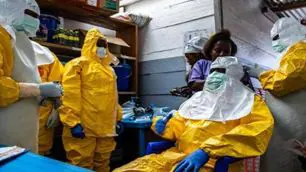
The international humanitarian organization Médecins Sans Frontières (MSF) has raised concerns about the insufficient capacity of Ebola treatment centers in North Kivu, a province in eastern Democratic Republic of Congo. According to MSF, the province now accounts for nearly 40% of new confirmed Ebola cases in the country, up from 24% at the end of August. This surge in cases is putting pressure on local healthcare facilities.
MSF's Ebola treatment center in Butembo is facing overcrowding, with patients often being redirected to other facilities due to a lack of available beds. "We've been facing this situation for several weeks, and it's getting worse," said Stéphanie Hoffman, MSF's head of the Ebola treatment center in Butembo. "We're like firefighters dealing with a massive fire, with multiple simultaneous outbreaks of varying intensity and distance from each other."
The situation in North Kivu is further complicated by the fact that many patients are not being hospitalized in specialized Ebola treatment centers. As of September 28, 34% of positive cases were being treated in general healthcare facilities not equipped to handle Ebola patients. This is largely due to the saturation of specialized centers and delays in diagnosis.
MSF is working to support the Congolese Ministry of Health in North Kivu, with a focus on Butembo. The organization is supporting three facilities, including the Kitatumba Ebola treatment center, which has 29 beds for suspected and confirmed cases. MSF is also operating two transit centers, one at the Université catholique du Graben with 16 beds and another in Musienene with five emergency beds.
Despite the availability of medical infrastructure, MSF notes that more than 60% of Ebola-related deaths occur in communities, outside of healthcare facilities. The organization is calling for increased efforts to build trust between communities and response actors, with the goal of encouraging early testing, isolation of patients, and rapid access to care.
To achieve this goal, MSF is working with community leaders, local healthcare professionals, and youth associations. The organization is also urging a rapid increase in human and logistical resources in North Kivu. MSF currently has over 2,800 healthcare workers deployed across eight treatment centers and isolation units in the DRC.
MSF has treated over 3,500 patients and is involved in epidemiological surveillance and community mobilization efforts to help interrupt the transmission of the virus. The organization is working to support the Congolese government's response to the outbreak, with a focus on North Kivu, where the situation remains fluid and dynamic.
Key points
- MSF warns of overcrowding in Ebola treatment centers in North Kivu
- Province accounts for 40% of new confirmed Ebola cases in DRC
- MSF calls for increased resources and community engagement to combat outbreak