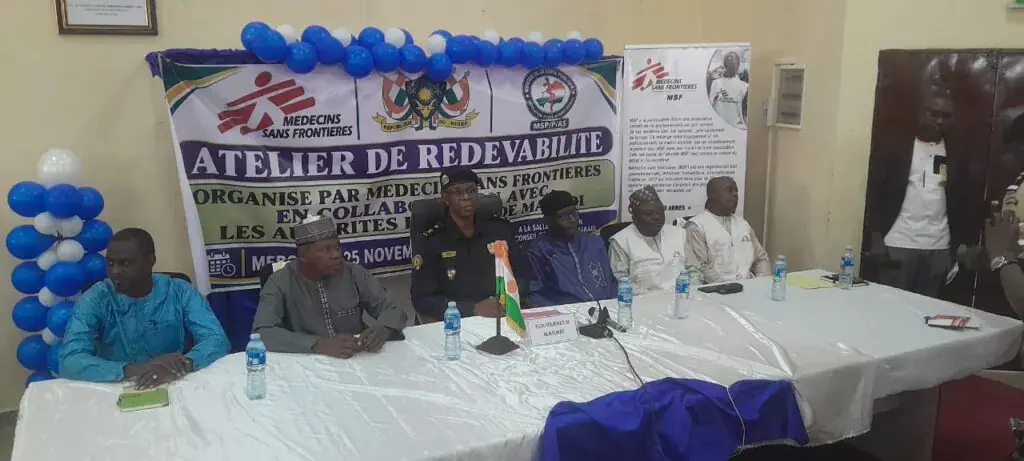
Médecins Sans Frontières (MSF) recently organized an accountability workshop in Maradi, Niger, in collaboration with regional authorities. The workshop aimed to present MSF's activities, gather perceptions, complaints, and suggestions from communities, and evaluate the organization's performance. The event was opened by Maradi's regional governor, Inspector General of Police Mamane Issoufou, who welcomed the initiative, saying it aligns with the principle of good governance and accountability to the communities served.
Governor Mamane Issoufou emphasized that MSF's approach demonstrates respect for the populations and considers them as partners, not just beneficiaries. He acknowledged MSF's efforts in supporting health structures, serving women, children, and families in the region, but noted that significant needs remain. The governor encouraged MSF to strengthen its support, reach those furthest from health services, and work closely with structures to ensure sustainable improvements in healthcare.
The governor stressed that listening to communities is not a formality, but essential for understanding their realities and integrating their needs into project design and implementation. He urged community representatives to express themselves freely, assuring them that their feedback contributes to better service delivery. The governor also expressed his availability to respond to solicitations during the implementation of activities.
MSF's representative in Maradi, Joachim Biakenga Meluzolanga, welcomed the presence of health teams, authorities, and community members, emphasizing that the workshop is a collective responsibility. He explained that MSF has worked alongside authorities and populations in Maradi for several years and believes that effective collaboration and care require listening to communities. The representative outlined MSF's plans to share its 2025 and 2026 activities and 2027 projections transparently.
Biakenga Meluzolanga emphasized that the workshop's value lies in its impact, committing to seriously studying recommendations and returning to communities with updates on implemented actions. He stressed that every voice counts, whether it belongs to a mother, community relay, village chief, health agent, or administrative official. The representative encouraged open discussion, ensuring that all contributions are considered.
The workshop provided a platform for MSF to engage with communities, authorities, and health teams, fostering a collaborative environment. Participants discussed MSF's activities, challenges, and future plans, working together to identify areas for improvement. By doing so, MSF aims to enhance its services, ensuring they meet the needs and expectations of the communities it serves.
The accountability workshop in Maradi reflects MSF's commitment to transparency, community engagement, and continuous improvement. By listening to communities and integrating their feedback, MSF can adapt its strategies to better address health needs and provide more effective support. The organization looks forward to implementing changes and continuing its collaboration with authorities and communities in the region.
Key points
- MSF holds an accountability workshop in Maradi to gather community feedback and improve its services.