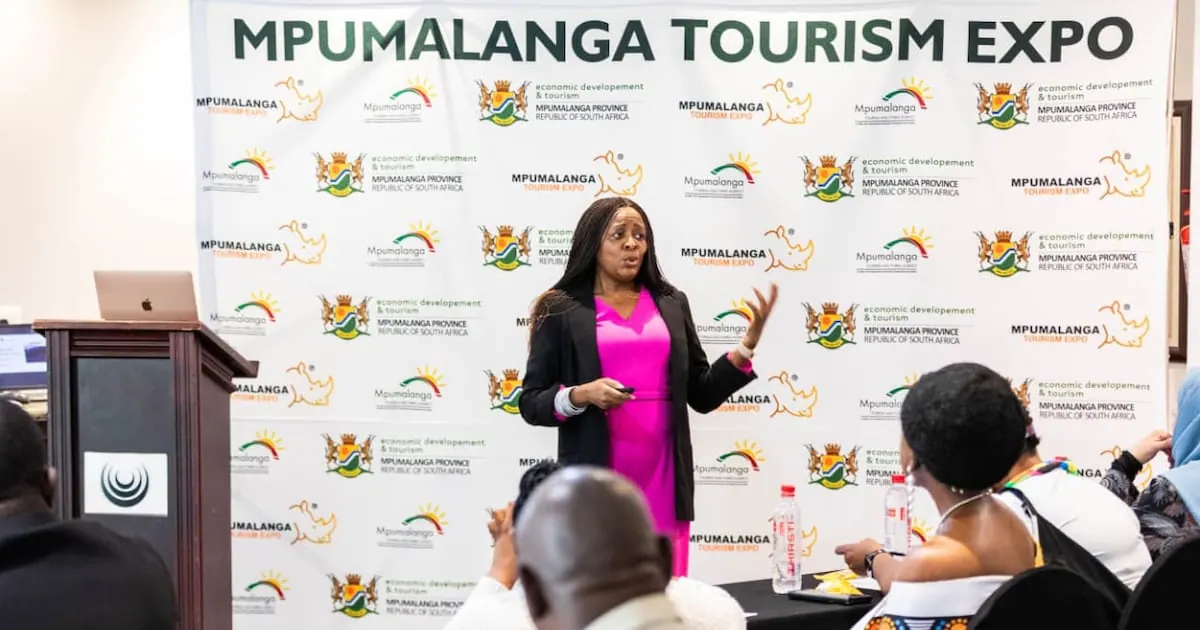
Mpumalanga, one of South Africa's most visited provinces, is facing challenges in converting its tourism potential into economic growth. According to the World Travel and Tourism Council, tourism accounts for nearly a tenth of the national GDP and supports job creation. However, industry voices argue that weak implementation, poor coordination between government departments, and a lack of leadership are preventing the province from maximizing its tourism benefits.
International arrivals in Mpumalanga reached 2.74 million in 2025, a 28% increase from the previous year, and a 59.7% growth since 2019. Despite this, the province captured only R8.5 billion, or 8%, of international tourist direct spend. Beacon Africa Tourism Consultancy CEO Nomasonto Ndlovu attributes this to a conversion problem, where visitors are not staying in commercial accommodation or spending widely in the province.
The accommodation sector highlights this issue, with friends and relatives accounting for 90.8% of international visitor bed nights in 2025. In contrast, game lodges accounted for 4.5%, hotels for 1.5%, and guest houses for 0.8%. Mozambique and eSwatini accounted for 82.8% of international arrivals, while 65.4% of travelers visited friends and relatives. Ndlovu believes the province needs to find ways to convert these visits into commercial stays through shopping packages, events, and other experiences.
Tourism is a significant contributor to Mpumalanga's economy, directly employing 55,800 to 58,300 people, or about 4.7% of the province's total employment. However, the province has experienced sluggish economic growth in recent years. According to Oupa Pilane, owner of Graskop Gorge and former South African Tourism Board member, the problem lies in governance and the lack of coordination between government departments.
Pilane and Ndlovu emphasize the need for effective leadership and coordination to address issues affecting tourism, such as road safety, public transport, and municipal services. A proposed provincial tourism "war room" involving key MECs and stakeholders aims to address these challenges. Additionally, Pilane suggests that government-owned attractions require better management and private-sector participation to bring investment and activities to underutilized sites.
Industry experts believe that Mpumalanga needs to develop its attractions and towns, rather than treating it as a route to Kruger National Park. By persuading just 10% of international arrivals to stay an extra night in commercial accommodation, the province could generate significant economic benefits. Both Pilane and Ndlovu stress that effective leadership and a willingness to implement change are crucial to unlocking Mpumalanga's tourism potential.
Key points
- Mpumalanga's tourism industry is hindered by poor leadership and coordination between government departments.
- The province needs to develop its attractions and towns to encourage visitors to stay longer and spend more.
- Effective governance and private-sector participation are essential to unlocking Mpumalanga's tourism potential.