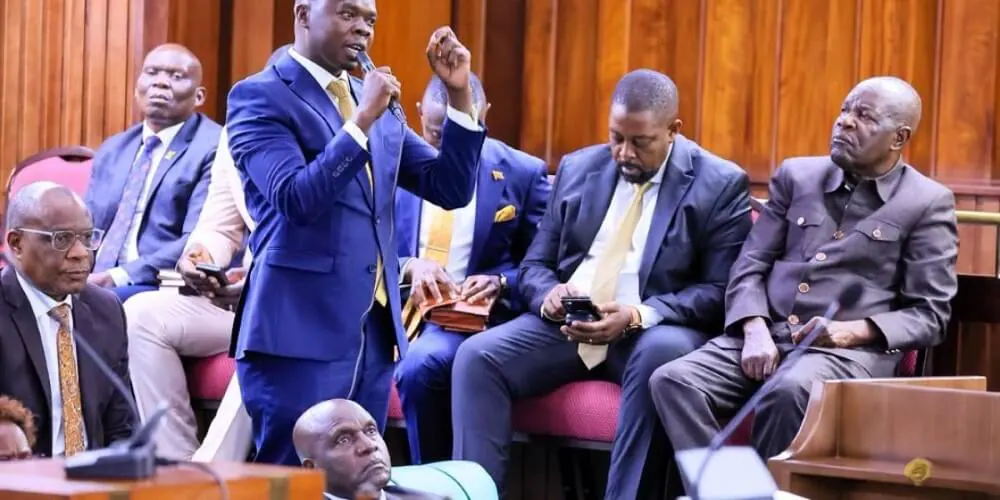
Members of Uganda's Parliament have warned that enforcing a ban on compulsory parent contributions in public schools without providing alternative funding could disrupt school operations and deepen the crisis in already under-resourced institutions. The warning followed a debate in Parliament on Tuesday, September 29, over Local Government Minister Balaam Barugahara's school inspections and directive against schools compelling parents to make payments. This debate highlighted the tension between the government's policy of free education under Universal Primary Education (UPE) and Universal Post-Primary Education and Training (UPPET) and the financial pressures facing schools.
Under the Education (Pre-Primary, Primary and Post-Primary) Act, 2008, schools implementing UPE and UPPET are prohibited from levying or ordering charges for education. The law also prohibits schools from sending learners away or denying them access to education because of failure to pay. A person who contravenes the provision can face a fine of up to 50 currency points, imprisonment for up to one year, or both. However, the Act allows school management to receive voluntary contributions from parents and well-wishers in response to emergencies or urgent school needs.
MPs argued that the distinction between compulsory charges and voluntary contributions needs to be maintained, particularly because many schools have historically relied on parental and community support to meet operational gaps. Kilak South MP Dr Gilbert Olanya criticised the directive against parent contributions, arguing that enforcing the ban without an alternative funding mechanism could disrupt school operations and affect the quality of education, particularly in rural and underserved communities.
Kazo County MP Dan Kimosho cited the pressure facing teachers in overcrowded classrooms, including Primary Seven classes that can have more than 150 pupils. He said removing parent-funded support without increasing government staffing and operational funding could leave teachers with even heavier workloads. The debate also raised concerns about the level of government funding reaching schools. Recent reports from Apac indicate that a primary school with about 1,000 pupils can receive approximately Shs20 million annually in UPE capitation, translating to about Shs20,000 per learner per year.
School managers say the money has to cover a range of needs, including administration, scholastic materials, co-curricular activities, sanitation and security. Some schools have also historically relied on Parent-Teacher Association contributions to hire additional teachers, guards and cooks, construct latrines and purchase desks. At Alerwang Primary School in Apac, the head teacher reportedly said government payroll covered only nine of the school's 14 teachers, leaving five locally recruited teachers dependent on PTA funding.
The situation has raised concerns that an immediate end to parent-funded support could result in schools losing locally recruited staff and essential services. Schools in several districts have reportedly started sending home locally recruited teachers, cleaners, guards, cooks and laboratory attendants after parents stopped contributing. At Bufunjo Seed Secondary School in Kyenjojo, 10 teachers and seven non-teaching staff employed through PTA arrangements were reportedly told to stay away pending negotiations.
Speaker Markson Jacob Oboth-Oboth called for a coordinated approach among ministries and government agencies in addressing the challenges facing schools. He stressed the need to protect the dignity of teachers and establish an agreed approach to school inspections. The government has also previously committed additional resources to the education sector, including a 2023 Cabinet commitment that reportedly provided for Shs1.48 trillion in education funding between 2024 and 2028.
Key points
- The ban on compulsory parent contributions could disrupt school operations in Uganda.
- Schools rely heavily on parent contributions to meet operational gaps.
- The government has committed additional resources to the education sector.