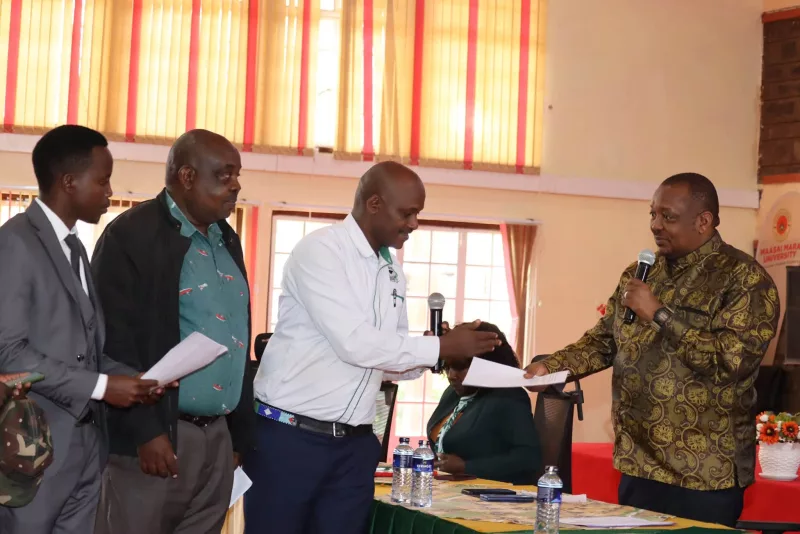
The National Assembly Departmental Committee on Education in Kenya has extended public participation on six proposed education reform Bills to October 2. This decision comes after the Kenya Union of Post-Primary Education Teachers (Kuppet) raised concerns about the initial two-week period being too short for meaningful public engagement. The exercise, which began on September 14, will now cover all 47 counties, with 16 additional counties being included in the extended period.
The extended public participation exercise will run from September 28 to October 2, covering counties such as West Pokot, Marsabit, Mandera, Nandi, Bungoma, Garissa, Busia, Lamu, Vihiga, Kitui, Siaya, Migori, Tharaka-Nithi, Nyamira, Bomet, and Samburu. The committee has invited members of the public and stakeholders in these counties to attend public hearings, make oral submissions, or submit written memoranda on the Bills.
The six proposed education reform Bills aim to introduce changes across different areas of education, including basic education, assessment, teacher training, qualifications, and tertiary education financing. One of the Bills, the Tertiary Education, Placement and Funding Bill, 2026, proposes a new framework for admission, placement, and financing of students in tertiary institutions. This Bill seeks to establish the Tertiary Education Funding Authority (TEFA), which would bring together the functions of the Higher Education Loans Board, the Universities Fund, and the TVET Funding Board.
The Basic Education Bill, 2026, seeks to provide a comprehensive legal framework for the management and delivery of basic education, including giving legal backing to the comprehensive school model. This model would have Early Childhood Development, primary, and Junior schools operate under one management structure. Other Bills, such as the Kenya National Educational Assessments Council Bill and the Pre-Service Education and In-Service Training Bill, aim to establish a framework for educational assessment and teacher training.
Kuppet had called for the exercise to be suspended, citing concerns over the pace and reach of the public participation exercise. The union argued that the initial two-week period was too short and that some of the venues selected for the hearings were far from communities whose views were being sought. Kuppet also questioned whether the proposed laws were sufficiently anchored in clear policy frameworks.
The proposed reforms have generated debate among education stakeholders over issues such as tertiary financing, the management of Junior schools, and corporal punishment. Kiambu Senator Karungo Thang'wa raised concerns over the treatment of scholarships and loans in the proposed tertiary financing framework, arguing that it does not adequately protect vulnerable learners. The committee will hold public engagement forums in various counties, including Turkana, Wajir, West Pokot, Marsabit, Mandera, and Nandi.
With the extension, stakeholders in the additional counties will now have an opportunity to make oral submissions or submit written memoranda on the proposed reforms. The committee's decision to extend the public participation exercise aims to ensure that all counties are covered and that all stakeholders have a chance to contribute to the education reform process.
Key points
- The National Assembly Departmental Committee on Education extends public participation on six proposed education reform Bills to October 2.
- The extended exercise will cover 16 additional counties, bringing the total to all 47 counties.
- The proposed reforms aim to introduce changes across different areas of education, including basic education, assessment, teacher training, qualifications, and tertiary education financing.