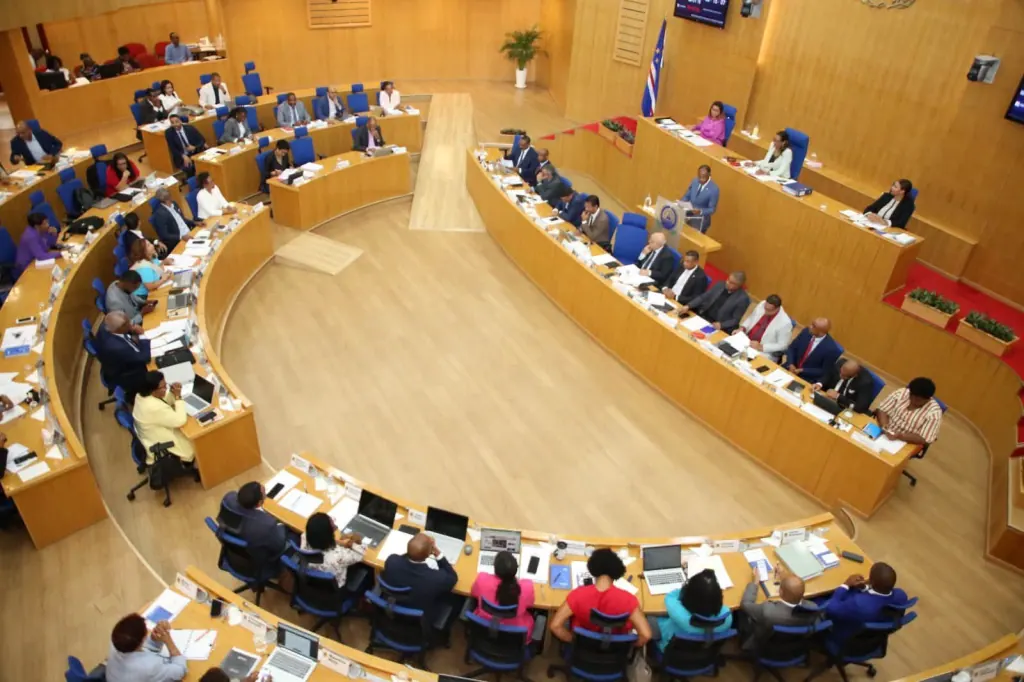
The Movement for Democracy (MpD) party in Cabo Verde has expressed concerns that the government's plan to offer free higher education in public universities may have unintended consequences for private institutions. According to MpD deputy Sandra Galina, the difference in costs between public and private universities could lead to a shift in demand, potentially weakening the capacity of private universities. This could have a ripple effect on the entire education system, Galina warned.
The MpD's concerns were raised during a debate with the Minister of Education, Arnaldo Brito, in which Galina emphasized that the promise of free higher education only applies to public universities, leaving around 52% of university students who attend private institutions without access to this benefit. Many of these students come from disadvantaged backgrounds or are enrolled in courses not offered in public universities. Galina argued that the government should consider the economic and territorial conditions of students when providing financial support.
In response to the MpD's concerns, the PAICV party, which currently holds power, has assured that it will reinforce the system of scholarships to support students attending private universities. Deputy Carla Carvalho stated that the PAICV aims to create a more inclusive and modern education system, with a focus on providing opportunities for all students, regardless of their financial background. The party plans to achieve this goal by 2031.
Carvalho also acknowledged that the expansion of university poles and fragmentation of structures have not always been accompanied by the necessary conditions for quality and availability. She emphasized that science and research should be prioritized in the national agenda and that the PAICV government has initiated the implementation of free access to public universities.
The UCID party has also weighed in on the debate, with deputy Zilda de Oliveira noting that free higher education only accounts for 30% of student expenses. Oliveira questioned whether the government will introduce additional measures to support vulnerable students and ensure their success. She emphasized that education should be a priority for the country, with a long-term vision that goes beyond government policies.
Oliveira also highlighted the need for a clear definition of the type of citizen that Cabo Verde wants to cultivate through its education system. She argued that access to education is not synonymous with quality and that the country needs to prioritize education with a vision that spans 30 to 50 years.
The debate on the government's plan for free higher education highlights the complexities of education policy in Cabo Verde. While the PAICV aims to increase access to education, the MpD and UCID have raised important concerns about the potential risks and consequences of this policy. As the country moves forward, it will be crucial to balance the need for increased access with the need for quality and sustainability in the education system.
Key points
- The MpD party warns that free higher education in public universities may undermine private institutions.
- The PAICV party plans to reinforce the system of scholarships to support students attending private universities.
- The UCID party questions whether the government will introduce additional measures to support vulnerable students.