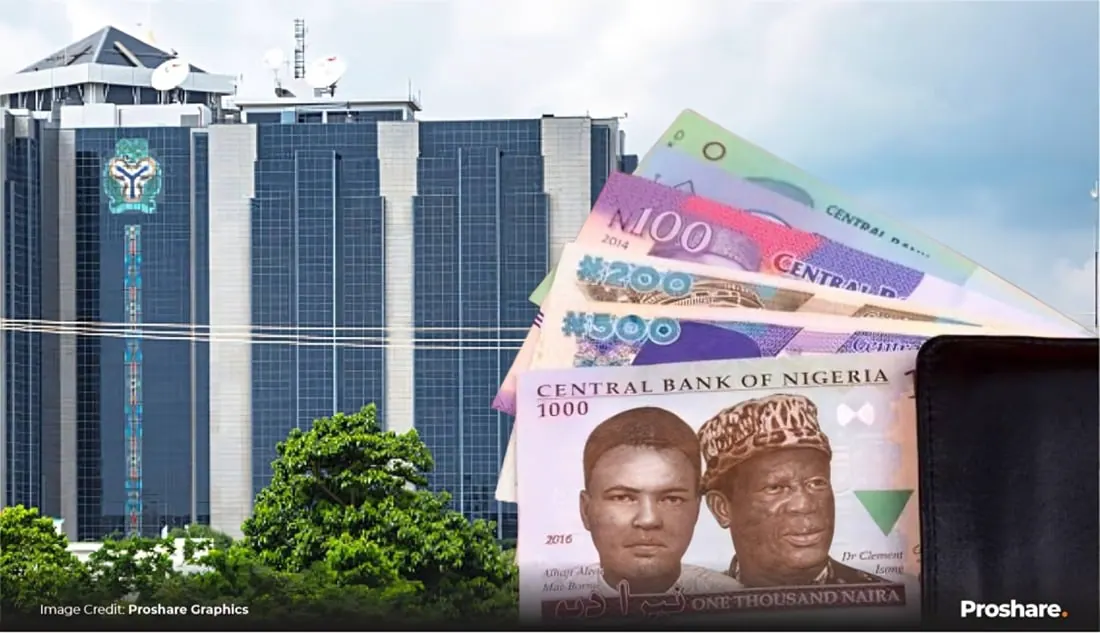
The Central Bank of Nigeria's Monetary Policy Committee is set to meet on September 21 and 22 to decide on interest rates. The committee faces a difficult choice as falling inflation has strengthened the case for a cut in interest rates, while rising global oil prices and tighter monetary policy in the United States could limit the room for easing. The current Monetary Policy Rate stands at 26.50 percent.
Inflation in Nigeria has continued to fall, with headline inflation declining from 15.91 percent in June to 15.43 percent in July and 15.39 percent in August. Core inflation also fell to 13.29 percent in August, while food inflation declined to 19.57 percent from 20.31 percent in July. These figures give the MPC more room to consider a reduction in the Monetary Policy Rate.
However, the improvement in inflation is facing a fresh test from rising oil prices. Crude oil prices have moved above $100 per barrel amid the worsening Middle East situation. Higher oil prices could increase fuel, transport and other costs in Nigeria and slow the fall in inflation. This was one of the major risks identified by the MPC at its July meeting.
The external environment has also become less supportive of a rate cut. The US Federal Reserve raised its benchmark interest rate by 25 basis points to 3.75–4.00 percent on September 16, while Brazil cut its policy rate by 25 basis points to 13.75 percent. The different policy directions of major central banks could affect the flow of foreign funds into emerging markets such as Nigeria.
Despite these challenges, Nigeria's external buffers have strengthened. Gross external reserves rose to $54.13 billion as of September 4, from $52.52 billion on July 17. The naira also strengthened to N1,320.56/$ on September 7 from N1,375.31/$ on July 21. The stronger reserves and more stable naira give the CBN some protection against external shocks.
The MPC's decision will also be closely watched in the fixed-income market. J.P. Morgan has included Nigerian Federal Government bonds in its new GBI-EM Edge index, giving Nigeria a 7.40 percent weight. The inclusion could attract more foreign investors into Nigerian government securities, making the direction of interest rates even more important for bond prices and foreign portfolio flows.
The outcome of the MPC meeting will provide an early signal of what to expect from the MPC's next meeting scheduled for November 23–24. Markets will watch the September inflation figures, movements in the naira, foreign participation in government bonds and Treasury bills, and the Committee's comments on oil prices and inflation.
Key points
- The MPC faces a dilemma between cutting interest rates due to falling inflation and rising global risks.
- Nigeria's external buffers have strengthened, giving the CBN some protection against external shocks.
- The MPC's decision will be closely watched in the fixed-income market and could impact bond prices and foreign portfolio flows.