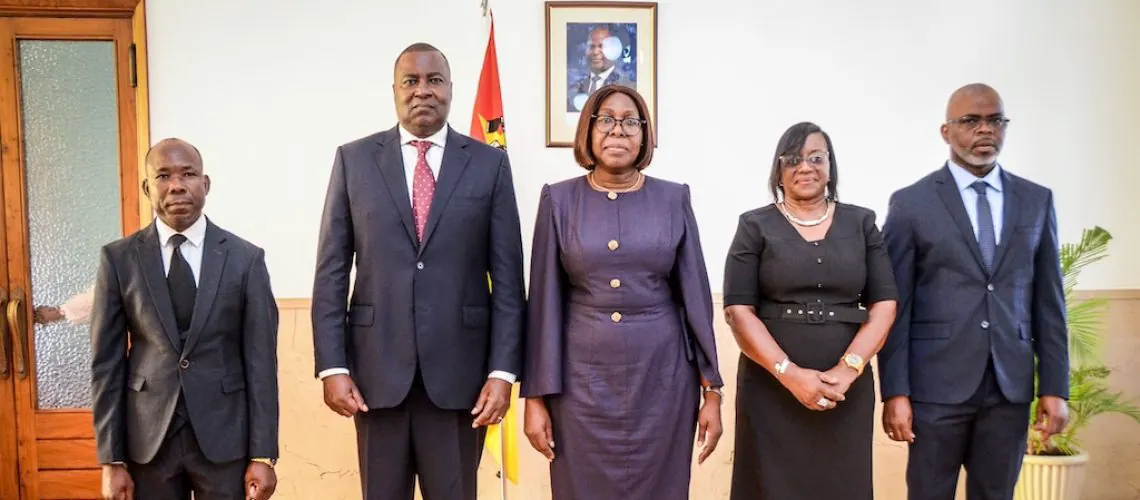
On September 24, Mozambique's government, led by Daniel Chapo, saw the swearing-in of new officials, including the president of the Empresa Nacional de Aquisição de Produtos Petrolíferos and the Agência de Desenvolvimento Integrado do Sul. This move further expands Chapo's administration, which he had previously promised would be "smaller." The new institutions will receive public funds without being required to account for their spending.
The latest additions to the government include Victor Luís Timóteo, who has been appointed to lead the Empresa Nacional de Aquisição de Produtos Petrolíferos. Other appointees include Adérito Salvador Mavie and Ana da Graça Simione, who will oversee the Agência de Desenvolvimento Integrado do Sul. The appointments have raised concerns about the lack of accountability in the management of public funds.
According to reports, the new institutions will have significant financial resources at their disposal, but they will not be required to disclose their spending or provide regular audits. This lack of transparency has sparked concerns among citizens and opposition groups, who argue that it could lead to corruption and mismanagement of public funds.
Daniel Chapo's government has been criticized for its lack of transparency and accountability since taking office. The expansion of the government with new institutions that don't require accountability has only added to these concerns. Critics argue that the government's actions are undermining efforts to promote good governance and transparency in Mozambique.
The @Verdade newspaper, which first reported the story, has highlighted the need for greater transparency and accountability in the management of public funds. The newspaper has also pointed out that the lack of accountability in the new institutions could have serious consequences for the country's development and economic growth.
The issue has sparked a renewed debate about the need for reforms to promote good governance and transparency in Mozambique. Some have called for the government to establish clear guidelines and regulations for the management of public funds, while others have argued that greater oversight and accountability mechanisms are needed to prevent corruption and mismanagement.
As the government continues to expand, concerns about accountability and transparency are likely to grow. The international community and civil society groups are watching closely to see how the government addresses these concerns and promotes good governance in Mozambique.
Key points
- The new institutions will receive public funds without being required to account for their spending.
- The appointments have raised concerns about the lack of accountability in the management of public funds.
- The issue has sparked a renewed debate about the need for reforms to promote good governance and transparency in Mozambique.