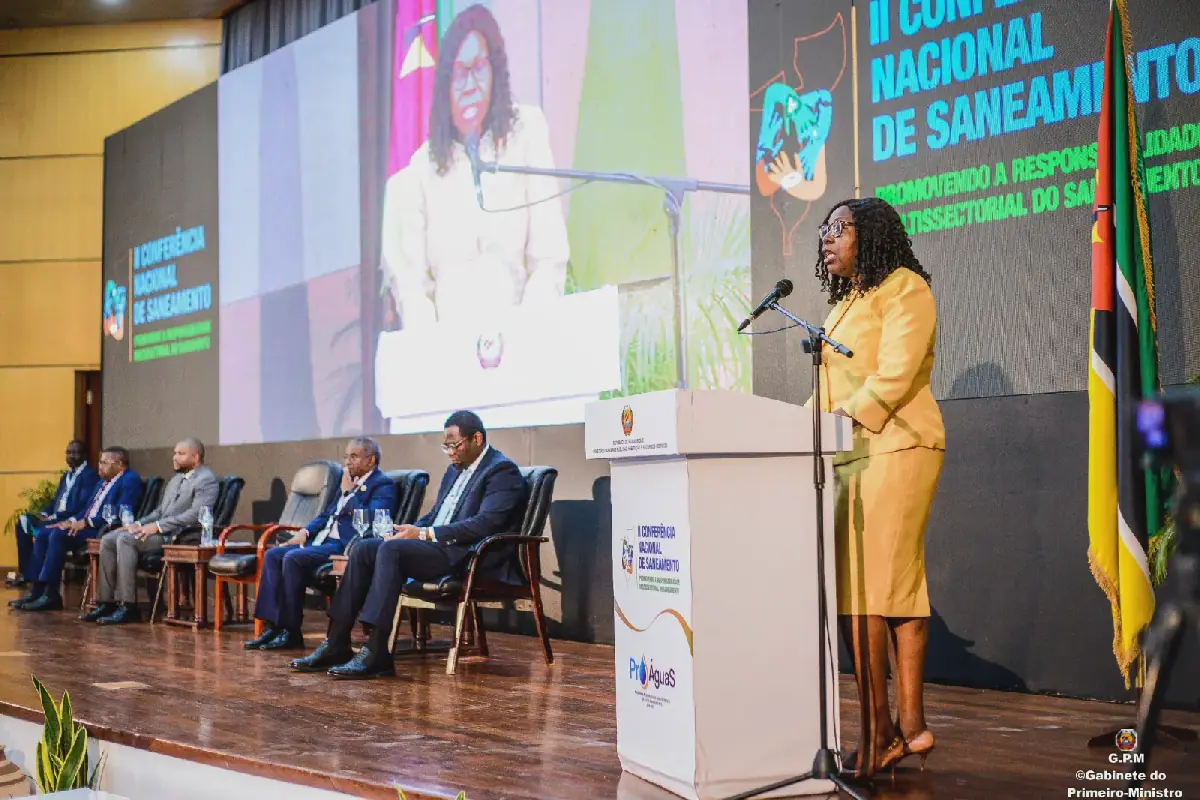
Prime Minister Benvinda Levi has highlighted the progress made in improving access to water and sanitation in Mozambique. Speaking at the opening of the II National Sanitation Conference in Maputo, Levi emphasized that enhancing water and sanitation conditions is crucial for the country's development. She noted that this is a shared responsibility that must be fulfilled for the benefit of all Mozambicans, ensuring better health and living conditions.
According to Levi, significant achievements have been made in the water sector. The government has constructed and rehabilitated approximately 800 systems of water supply in cities, towns, and rural areas. Additionally, over 14,000 new sources of water have been opened, and more than 390,000 new household connections have been established. These efforts aim to increase access to clean water and improve sanitation across the country.
In the sanitation sector, Levi pointed out several notable projects. These include the rehabilitation of about 12 kilometers of drainage channels, the construction of a retention basin in the city of Beira, and the rehabilitation of the Infulene Wastewater Treatment Plant in Maputo. Furthermore, 29 kilometers of the sewage network in Quelimane have been upgraded. These initiatives have contributed to an increase in access to basic sanitation services.
Between 2014 and 2024, the access to basic sanitation services rose from 25.9% to 38.6%. This progress indicates that the efforts to improve sanitation are yielding positive results. The government's commitment to enhancing sanitation facilities is part of a broader strategy to promote public health and improve living standards.
The II National Sanitation Conference, themed “Promoting Multi-Sectoral Responsibility for Sanitation,” brings together various stakeholders to discuss and address sanitation challenges. The conference aims to foster collaboration among different sectors and levels of government to tackle the complex issues surrounding sanitation in Mozambique.
Levi stressed that the responsibility for improving water and sanitation conditions is shared among all stakeholders. She called for continued collaboration and commitment to ensure that all Mozambicans have access to these essential services. The government’s efforts in this area are critical for achieving sustainable development and improving the quality of life for the population.
The progress made in water and sanitation is part of broader efforts to address development challenges in Mozambique. The government continues to prioritize these areas, recognizing their impact on health, education, and economic growth. As the country moves forward, the focus on water and sanitation will remain a key component of its development strategy.
Key points
- The Mozambican government has made significant progress in improving access to water and sanitation, with 800 new water supply systems and 14,000 new water sources established.