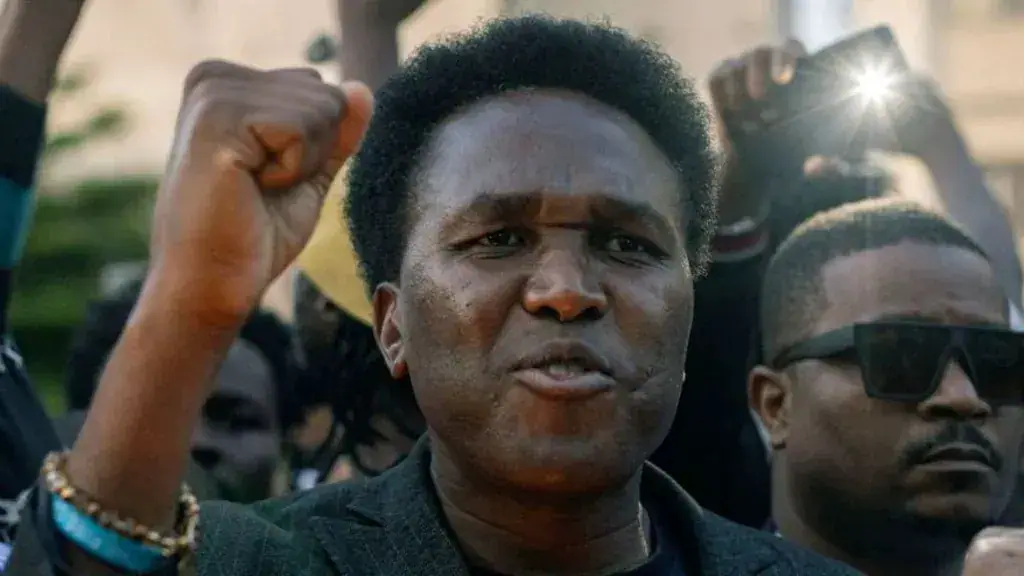
Venâncio Mondlane, the opposition leader who contested President Daniel Chapo in Mozambique's 2024 presidential election, has begun his trial at the Supreme Court. He faces charges including inciting violence and participating in protests that resulted in over 300 deaths following the election. Mondlane's trial started on October 17, 2026, with his lawyers requesting a speedy trial to ensure transparency. However, the court delayed the proceedings, citing concerns over safety and potential witness intimidation.
Mondlane's lawyers argue that the trial's postponement will hinder the public's ability to follow the case. The prosecution accuses Mondlane of inciting citizens to rebel against the government, committing crimes, and making threats. Mondlane denies all charges, stating that his message aimed to demand truth about the election results, not to incite violence. He claims that the government is trying to silence him and frame him with laws.
After losing the election to Daniel Chapo, Mondlane refused to concede, alleging electoral fraud. He called on citizens to protest and boycott work, leading to months of nationwide demonstrations. The protests resulted in over 300 deaths, prompting Amnesty International to express concern. The organization condemned the violence, emphasizing the need for human rights protection.
Mondlane's charges carry severe penalties, including a potential 24-year prison sentence if convicted. His trial has garnered significant attention, both domestically and internationally. The case raises concerns about Mozambique's democratic processes and the government's response to opposition.
The Supreme Court's decision to delay the trial has sparked debate about the judiciary's independence and impartiality. Mondlane's supporters argue that the government is trying to suppress dissent and maintain control. The opposition leader's fate will have implications for Mozambique's political landscape and its ability to address pressing issues like poverty and corruption.
As the trial continues, human rights organizations and international observers are closely monitoring the proceedings. They emphasize the importance of a fair trial and the protection of Mondlane's rights. The case highlights the challenges faced by opposition leaders in Mozambique and the need for robust democratic institutions.
The outcome of Mondlane's trial will have significant repercussions for Mozambique's future. If convicted, it may further erode trust in the country's democratic processes. Conversely, a fair trial could demonstrate the judiciary's commitment to upholding the rule of law and protecting human rights.
Key points
- Mondlane faces up to 24 years in prison if convicted of charges related to the 2024 protests.