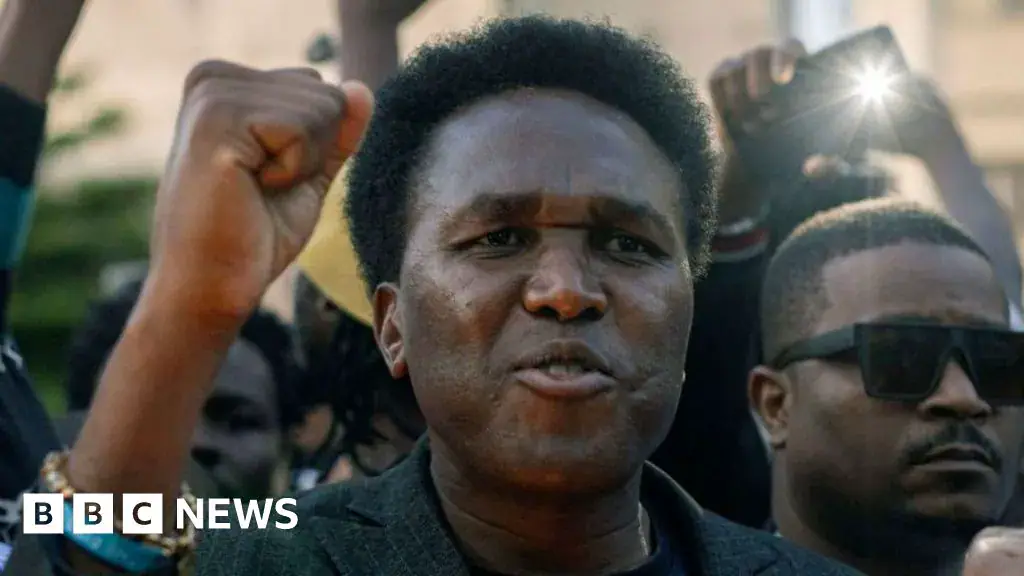
Tensions are running high in Mozambique's capital, Maputo, with a heavy police deployment as a prominent opposition leader goes on trial over deadly protests that followed the country's disputed 2024 elections. Venâncio Mondlane faces several charges, including incitement to terrorism and civil disobedience, over protests that left hundreds of people dead. He denies any wrongdoing. The trial is widely seen as a major test of Mozambique's political stability.
Mondlane, who challenged the presidential election results that declared Daniel Chapo of the ruling Frelimo party the winner, accused the authorities of widespread electoral fraud and called for nationwide protests and work stoppages. The demonstrations continued for months, with rights groups accusing security forces of using excessive force against protesters. Amnesty International, citing local civil society organisations, said more than 300 people were killed during the unrest.
Prosecutors accuse Mondlane of encouraging demonstrations that disrupted public services, damaged property and threatened public security. The charges include publicly glorifying criminal acts, incitement to collective disobedience, public instigation to commit crimes and offences linked to terrorism. He could face up to 24 years in prison if convicted of the most serious charge. Mondlane has rejected the accusations, insisting that his calls for demonstrations were aimed at demanding electoral transparency.
The Supreme Court has denied allegations of political interference in the proceedings. A heavy deployment of police has been seen patrolling around the Supreme Court and major streets in Maputo ahead of the trial. In a statement issued on Monday, Mozambique's police appealed to citizens to "preserve tolerance and peaceful coexistence," adding that the right to demonstrate must be exercised strictly within the limits of the law.
The court has only granted access to selected media organisations, sparking criticism from journalists and press freedom campaigners. Court officials say the restrictions are necessary because of limited seating capacity in the courtroom, but critics argue they undermine transparency in a case of significant public interest. The proceedings are expected to be heard by five judges, with witnesses called by both the prosecution and defence.
Political observers warn that the trial could reignite tensions in a country still struggling to recover from the violence and deep political divisions that followed the 2024 elections. Luis Nhachote, a political analyst, said "The trial is a real test for Mozambique. It is an important opportunity to demonstrate that the rule of law applies equally to everyone." The European Union election observers also reported irregularities in the October 2024 vote.
The National Alliance for a Free and Autonomous Mozambique (Anamola), Mondlane's party, has described the prosecution as politically motivated. The outcome of the trial may have significant implications for Mozambique's future stability and its ability to navigate complex political divisions.
Key points
- Mondlane faces up to 24 years in prison if convicted of the most serious charge.
- More than 300 people were killed during the unrest following the 2024 elections.
- The trial is seen as a test of Mozambique's political stability and the rule of law.