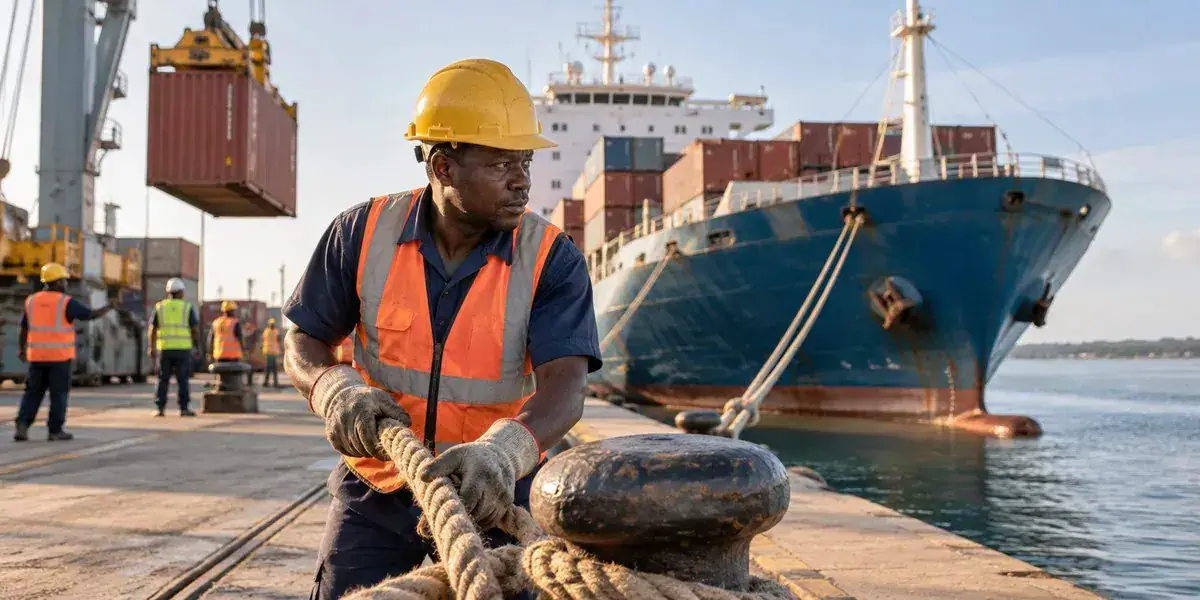
Mozambique's cabotage regulation, which took effect on 15 October, is set to have a significant impact on the country's domestic port pricing and shipping industry. The new regulation, which replaced the 2007 rules, creates two distinct categories of cabotage: small cabotage and regional cabotage. Each category has its own route access terms, including priority berthing for national operators at Mozambican ports and Mozambican-flagged vessels. This move is expected to boost the country's shipping industry and promote economic growth.
The new regulation also introduces a concession system for cabotage wharves, which is expected to be implemented by June 2027. The system will be run in conjunction with Ports and Railways of Mozambique and Maputo Port Development Company. Additionally, the government has announced plans to upgrade ports, including the Maputo Port dredging programme. These upgrades aim to improve the efficiency and capacity of the country's ports, making them more competitive with road transport.
Mozambique already has an operational containerised cabotage network, operated by CPG Shipping, which connects Maputo, Beira, Nacala, Pemba, and Afungi. As of 2 October 2026, the network comprised six vessels serving five ports, supported by more than 2,000 containers positioned in Mozambique. It is estimated that around 100,000 tonnes of cargo have been moved by sea since April 2025. This network is the only scheduled service of its kind in the country.
The pricing of domestic containers is a key issue in the development of Mozambique's cabotage industry. Domestic shippers cannot pass on port handling charges as add-ons, unlike international lines. This means that handling charges in Beira and Maputo weigh more heavily on cabotage than on export/import cargo. As a result, competitive port prices are a key barrier to the adoption of cabotage.
The length of the N1 road from Maputo to Pemba is 2,700 km, according to reports from 2022. The estimated full rehabilitation cost of the road is US$3.5 billion, with only a first phase of 527 km funded so far. In contrast, the sea lane already runs the full length of the coast, providing a potentially more efficient and cost-effective option for transporting goods.
Asian countries, such as India, Indonesia, and the Philippines, offer a lesson for Mozambique's new cabotage regulation. In these markets, domestic cabotage receives significantly differentiated treatment on port charges. This has led to the growth of domestic shipping industries in these countries. Mozambique's new regulation aims to achieve similar results.
The success of Mozambique's cabotage industry will depend on its ability to offer competitive prices and efficient services. The economy will only benefit from cabotage when the full price is significantly lower than road transport. With the right implementation and regulation, Mozambique's cabotage industry has the potential to make a significant contribution to the country's economic growth and food security.
Key points
- The new cabotage regulation aims to promote domestic shipping and economic growth in Mozambique.
- The pricing of domestic containers is a key issue in the development of Mozambique's cabotage industry.
- Asian countries offer a lesson for Mozambique's new cabotage regulation, with India, Indonesia, and the Philippines providing examples of successful domestic cabotage industries.