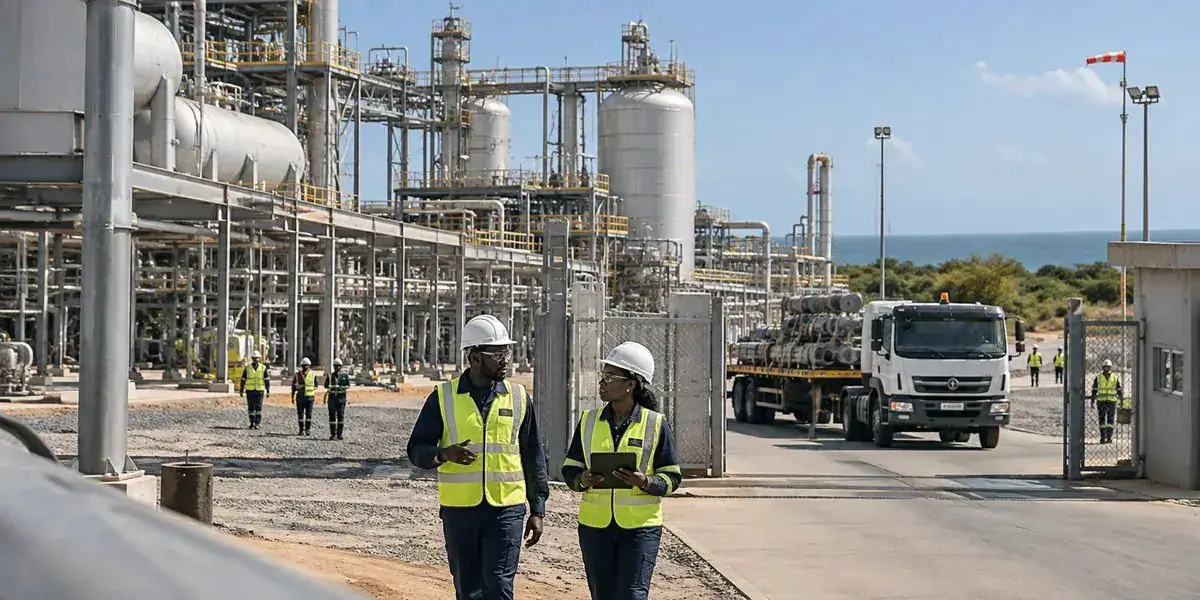
Mozambique has taken a significant step towards increasing local participation in its oil and gas sector with the enactment of Law 9/2026 on June 3, 2026. This new legislation establishes a binding framework for national participation, marking a decisive move from declaration to accountability. The law sets mandatory participation targets for domestic firms and workers across the sector.
The Mozambique local content law creates structured obligations covering procurement, workforce planning, and compliance reporting. At the centre of the new system is the Local Content Authority, which will approve plans for the purchase of goods and services and for the hiring of national labour. The Authority will also monitor the participation of Mozambican companies and sanction violations.
The Local Content Authority will certify goods and services with a national component, verifying the percentage of local content achieved. Companies that fall short of minimum targets must submit a remedial plan within 30 days of the end of the reporting period. Operators must plan, trace, and account for their performance against each target, ensuring concrete obligations are met.
A clear, predictable, and consistently applied framework strengthens investor confidence, particularly for foreign companies operating in Mozambique. A stable set of rules reduces uncertainty, rewarding those who invest in genuine local partnerships rather than seeking shortcuts. This is especially important for long-cycle projects where relationships and supply chains are built over years.
Despite the new law, three structural challenges remain that the legislation alone cannot solve. The first is capacity, as Mozambican firms must meet technical, quality, and safety standards required by large energy projects. This requires training, certifications, and sustained investment in equipment and people. Joint ventures and skills-transfer arrangements between foreign and local companies are crucial to closing this gap.
The second challenge is access to finance, as Mozambican firms need credit to invest in machinery, staff, or certifications demanded by procurement contracts. Mozambique’s development bank, established by a law signed by President Daniel Chapo on June 15, 2026, aims to address the chronic shortage of credit for small and medium enterprises, directly shaping the law's impact on employment and investment.
The third challenge is ensuring substance over appearance, preventing shell arrangements where local firms have a listed role but no real operational involvement. The certification and monitoring mechanism is designed to prevent this, and its effectiveness will depend on rigorous application without unnecessary bureaucratic friction.
Key points
- The new law establishes mandatory participation targets for domestic firms and workers in the oil and gas sector.
- The Local Content Authority will monitor and sanction violations of the new law.
- Three structural challenges remain, including capacity, access to finance, and ensuring substance over appearance.
Reporting sources
- Mozambique local content law moves from paper to enforcement · FurtherAfrica