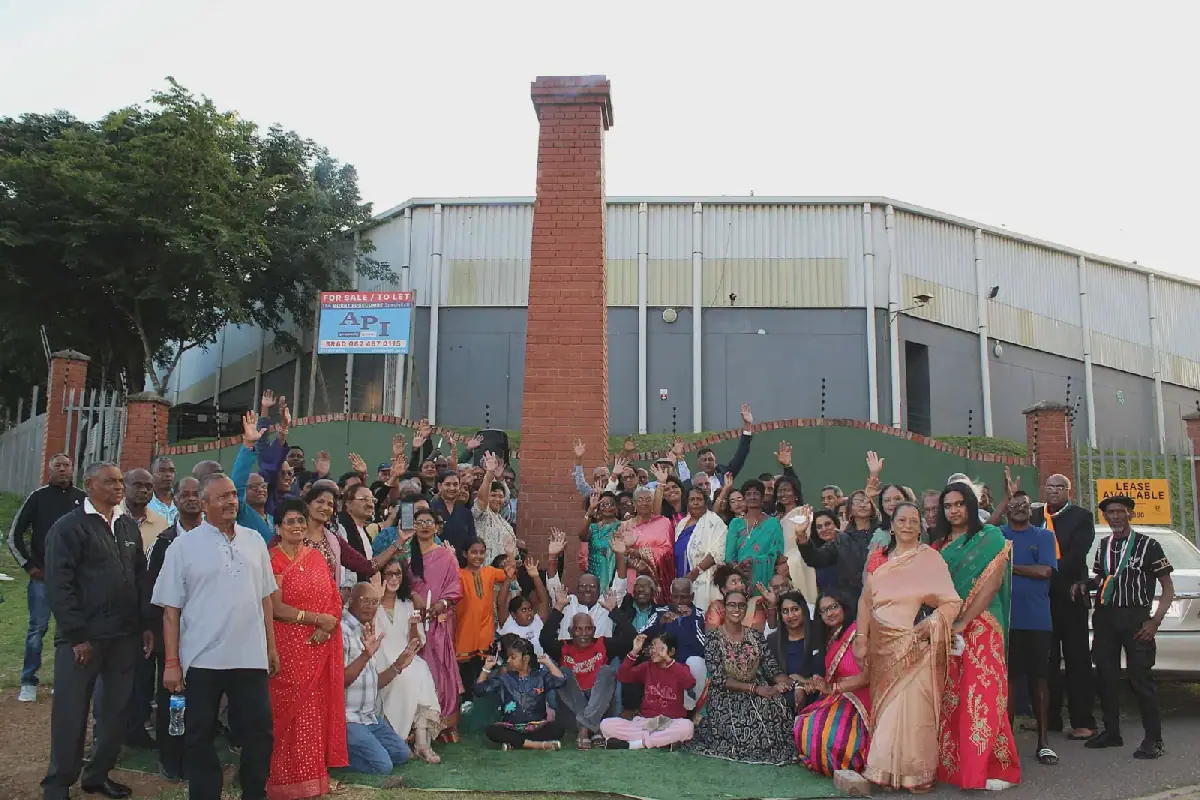
The Mount Edgecombe and Estates Community Association (MEECA) recently commemorated the 166th anniversary of the arrival of Indian indentured labourers in South Africa. The event took place at the historic Mount Edgecombe Sugar Mill Chimney Heritage Site on November 16. This site is one of the area's few surviving landmarks of its sugar-producing past. The commemoration marked another important chapter in preserving the area's history. MEECA is preparing to adopt the heritage site as part of its commitment to honouring the pioneers who helped establish Mount Edgecombe as a prominent sugar-producing community in Natal.
The commemoration coincided with Arrival Day, which marks the arrival of the first group of Indian indentured labourers aboard the SS Truro on November 16, 1860. This event marked the beginning of a migration that would profoundly influence the social, economic, and cultural development of KwaZulu-Natal. Between 1860 and 1911, approximately 152,184 Indian indentured labourers arrived in Natal. Many were assigned to sugar estates along the North Coast, including those surrounding Mount Edgecombe.
For MEECA, the commemoration held particular significance given the area's close historical ties to the indenture system. The generations of families whose lives became intertwined with the growth of the sugar industry were also recognised. According to Selvan 'Patchie' Naicker of MEECA, Mount Edgecombe's history as a sugar-producing settlement dates back to 1859. William Smerdon established the Mount Edgecombe Sugar Estate that year. As sugar production expanded, plantation owners increasingly relied on indentured labourers from India to meet the industry's growing workforce demands.
Historical accounts indicate that on March 4, 1862, Smerdon recruited members of the Abraham family. They were among the earliest Indian workers employed at Mount Edgecombe. By 1864, further groups of Indian labourers had been recruited to work in the cane fields. This contributed to the estate's expansion and the development of the surrounding settlement. The estate later became associated with prominent figures in the Natal sugar industry, including Marshall Campbell and David Don.
The consolidation of neighbouring sugar properties helped establish Mount Edgecombe as a major centre of sugar production. However, behind the development of the industry were generations of workers who endured considerable hardships under the indenture system. Labourers were responsible for planting, weeding, harvesting, and transporting sugar cane. Others worked in the mills or maintained the infrastructure required to sustain production. Their working lives were often characterised by long hours, low wages, strict supervision, and harsh disciplinary conditions.
Despite these challenges, many established permanent roots in Natal, building families and communities that would endure long after their contracts had ended. Beyond their contributions to the economy, these early settlers carried with them their languages, religions, customs, and traditions. This laid the foundations for the multicultural community that Mount Edgecombe would eventually become. One of the earliest examples of this determination to preserve cultural and religious identity was the establishment of the Shree Emperumal Temple in 1875.
MEECA regards the Mount Edgecombe Sugar Mill chimney as more than a remnant of the sugar industry. It views the chimney as a monument to the perseverance of indentured labourers and the community that emerged from their efforts. The association's plans to adopt the heritage site reflect its commitment to preserving this history. The site also holds considerable educational value, offering an opportunity to explore the history of Indian indenture in Natal and the development of the sugar industry.
Key points
- The Mount Edgecombe and Estates Community Association is set to adopt the historic Mount Edgecombe Sugar Mill Chimney Heritage Site.
Reporting sources
- Mount Edgecombe honours 166 years of Indian indenture at historic sugar mill site · Rising Sun Lenasia