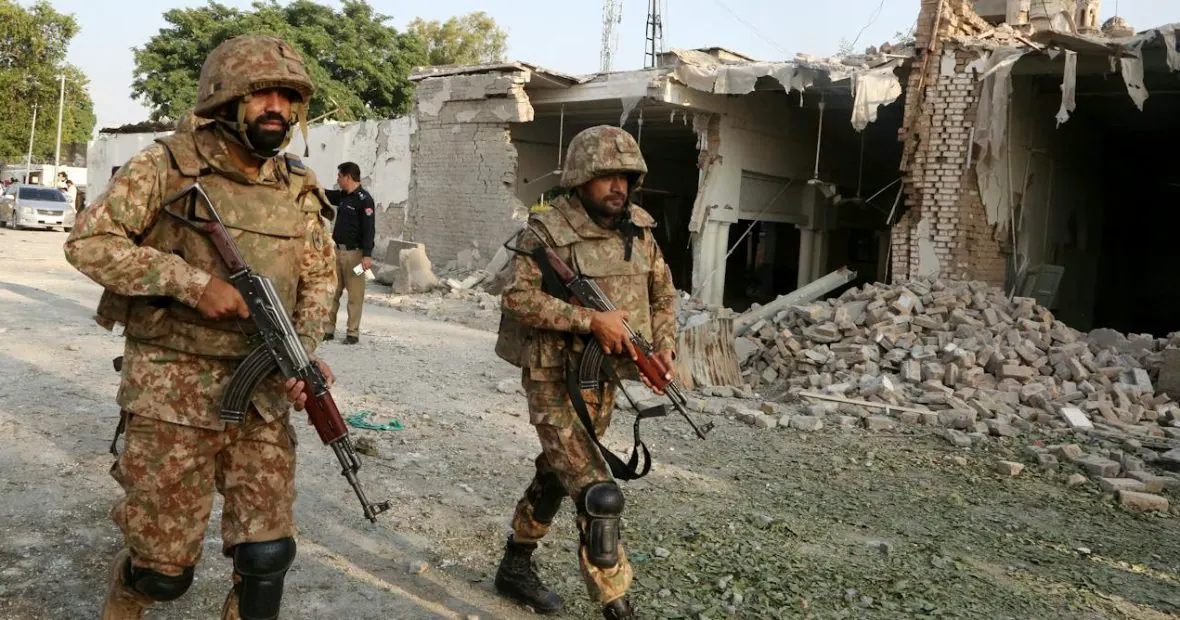
A devastating suicide bombing and gun attack occurred on September 18, 2026, in the city of Kohat, in Khyber Puktunkhwa province, northwest Pakistan. The assault targeted a mosque inside a police complex, resulting in 31 deaths, including 16 police officers, and over 100 injuries. The attack was claimed by supporters of the militant group Ittehad-ul-Mujahideen Pakistan (IMP) on encrypted apps like Telegram.
The IMP is a jihadist coalition formed in April 2025 from three smaller militant factions. By late 2025, it had become the most active jihadist group in Pakistan after the Tehrik-i-Taliban Pakistan. The IMP's main objectives are to weaken the Pakistani state through attacks on police and security forces and advance Islamist rule. Its operations are largely concentrated in northwest Pakistan, along the Afghan border.
Pakistan responded to the Kohat attack by conducting airstrikes in Afghanistan, home to at least one of the gunmen. This has further strained the already tense relationship between the two countries. Pakistan accuses Afghanistan of harboring terrorists, while the Afghan Taliban has condemned the attack. The incident has highlighted the complex and evolving extremism landscape in the region.
The IMP's recent propaganda includes a video by a religious cleric urging unity among jihadists, aligning with the message of Al-Qaida in the Indian Subcontinent (AQIS). However, the Kohat attack has prompted an intra-jihadist quarrel, with the Pakistani Taliban and Jamaat-ul-Ahrar releasing statements denouncing the attack and disavowing any role.
The attack has also damaged AQIS's efforts to promote the IMP as a model affiliate and a unifying force in the contemporary jihadist landscape. AQIS had showcased IMP as one of its global fronts, but the fallout from the Kohat attack has undermined this narrative. The incident highlights the dynamics of convergence and competition among extremist groups in the region.
Pakistan is facing its most serious security crisis in two decades, ranking first in the Global Terrorism Index. The country is experiencing a combination of organizational convergence and competition among extremist groups, including local and transnational jihadist groups, as well as separatist groups in Balochistan. The Islamic State Khorasan Province remains hostile to various groups in the region, encouraging extreme violence.
The evolving extremism landscape has significant implications for regional stability. The complex relationships between militant groups, coupled with interstate tensions, sustain the dynamics of violence. The Kohat attack serves as a stark reminder of the fragile security situation in Pakistan and the need for a comprehensive approach to address the root causes of extremism.
Key points
- The IMP's emergence as a unified front of jihadist factions in Pakistan has significant implications for regional security.
- The complex relationships between militant groups, including the Pakistani Taliban, AQIS, and IMP, drive the dynamics of violence in the region.
- The strained relationship between Pakistan and Afghanistan, with Pakistan accusing Afghanistan of harboring terrorists, further exacerbates the security situation.